

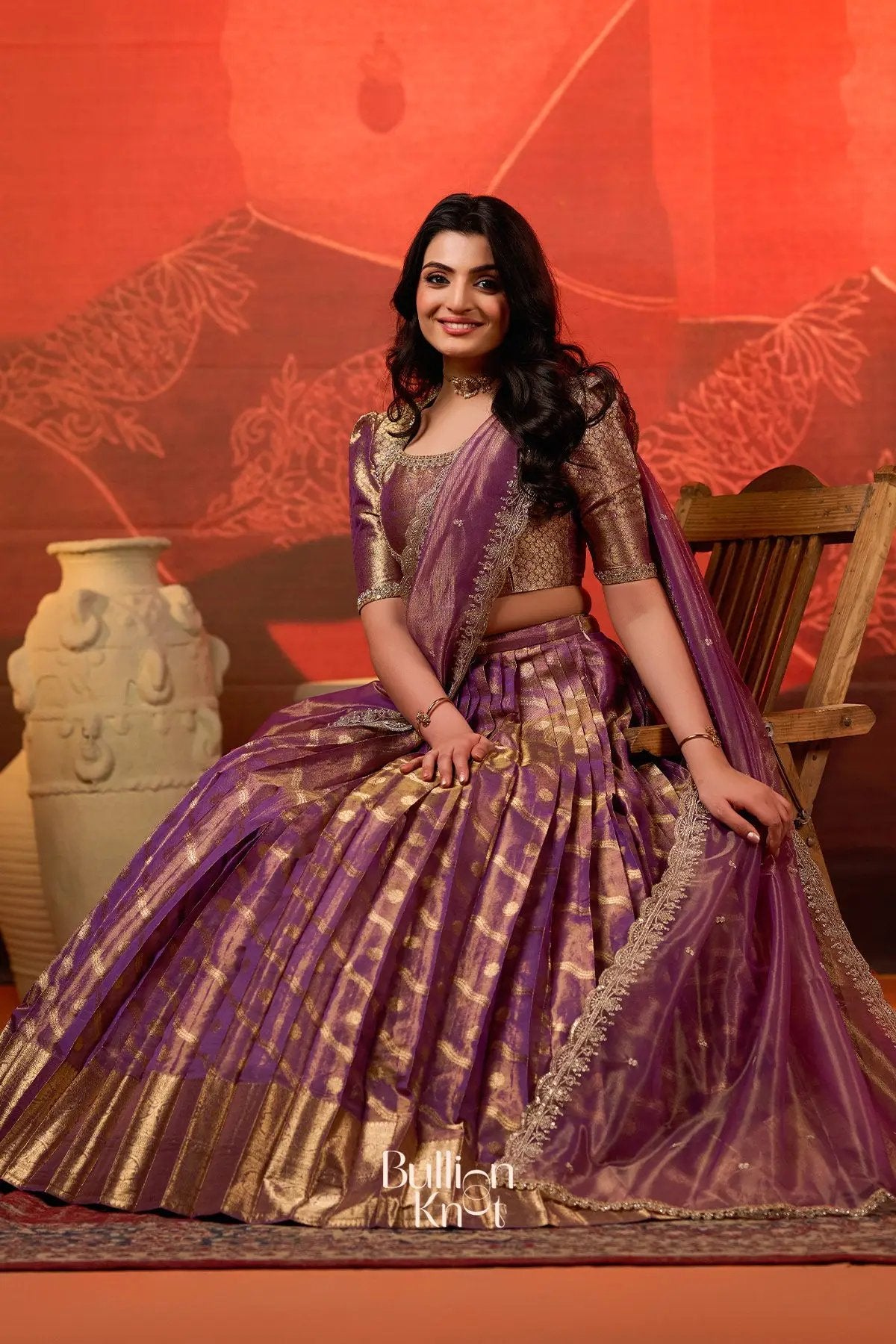
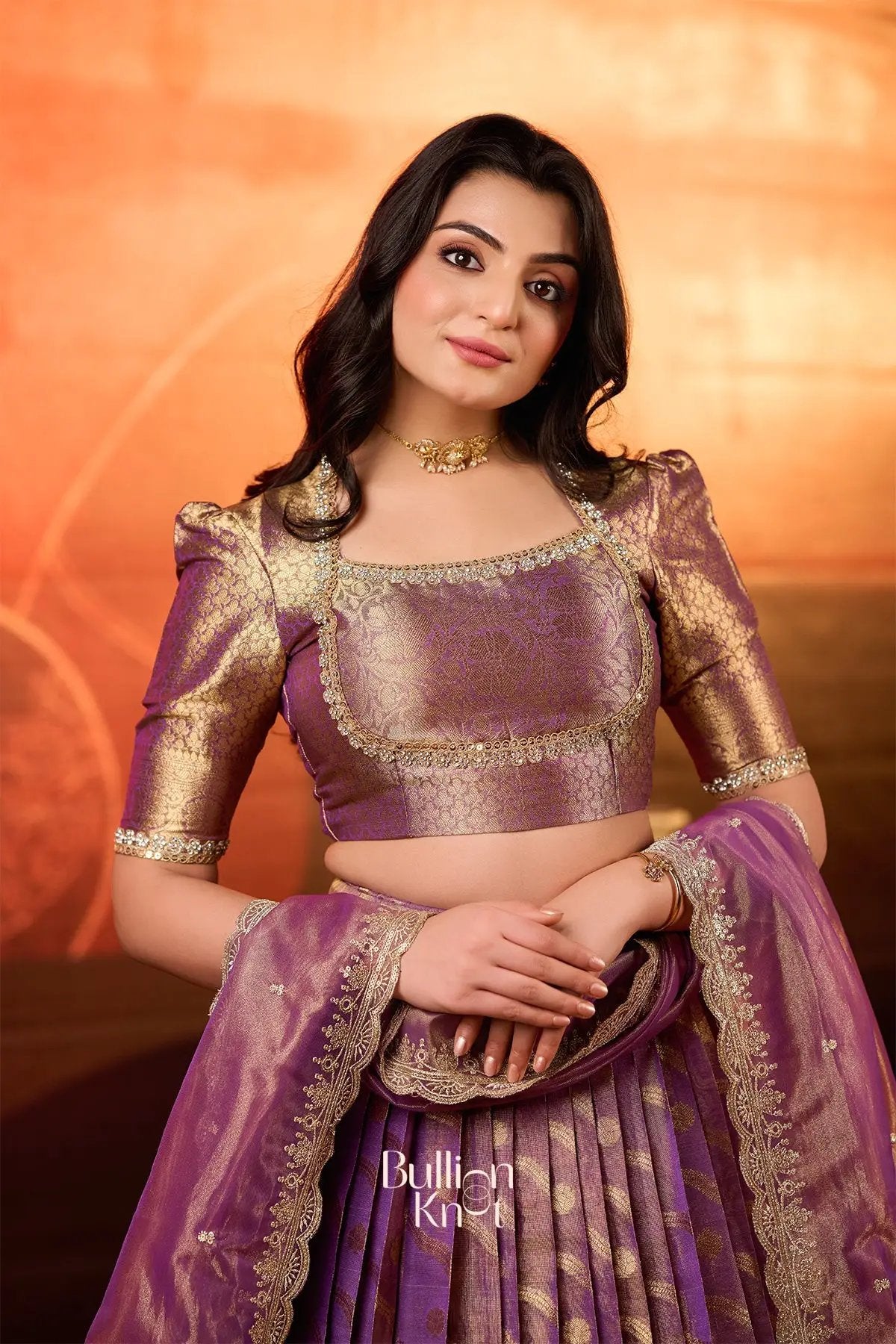
key Highlights
Fabric: Soft Kota Zari
Technique: Handwork
Model Height & Size: 5'8 inch | Wearing S
Occasion: Cultural festivals, pooja, wedding
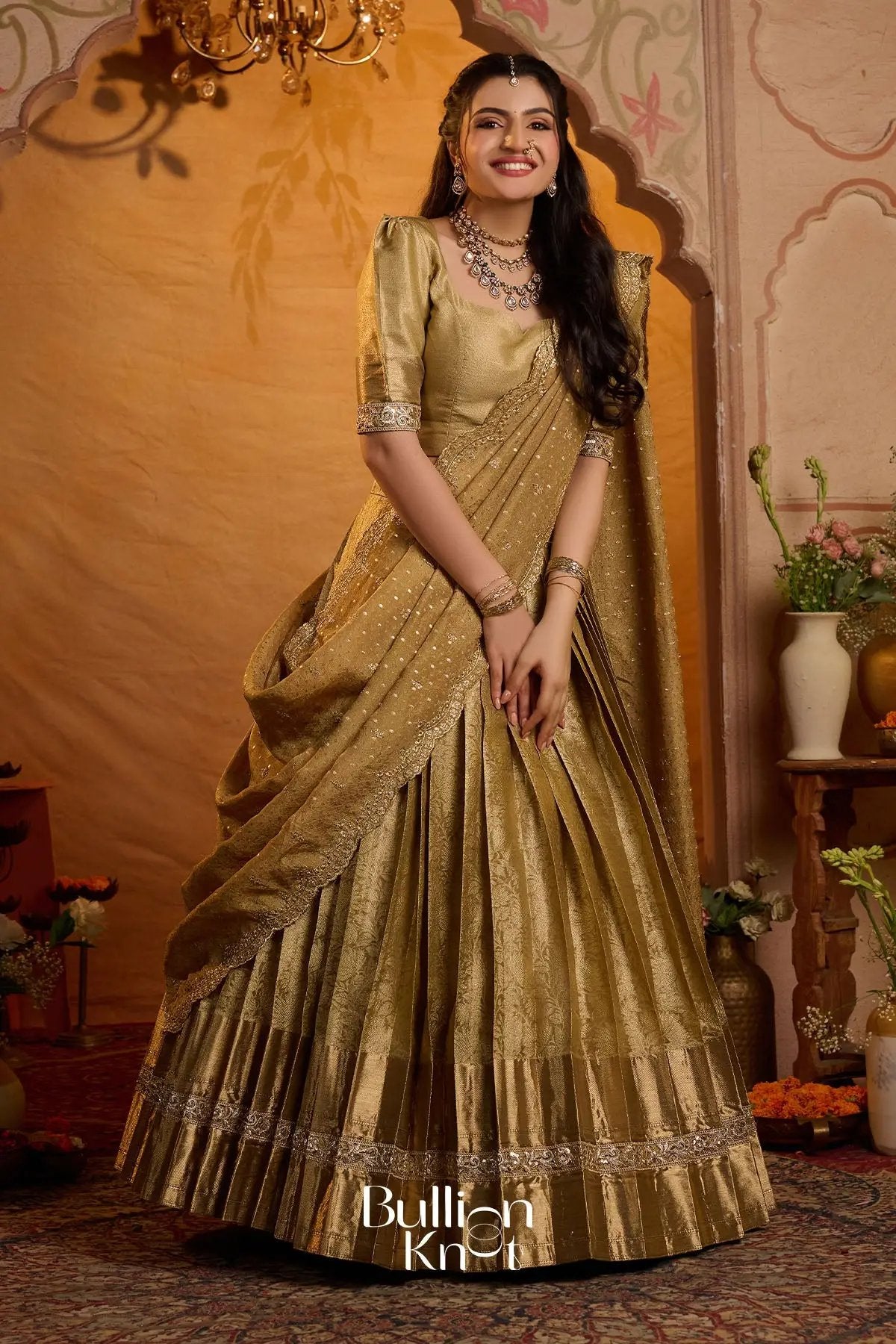
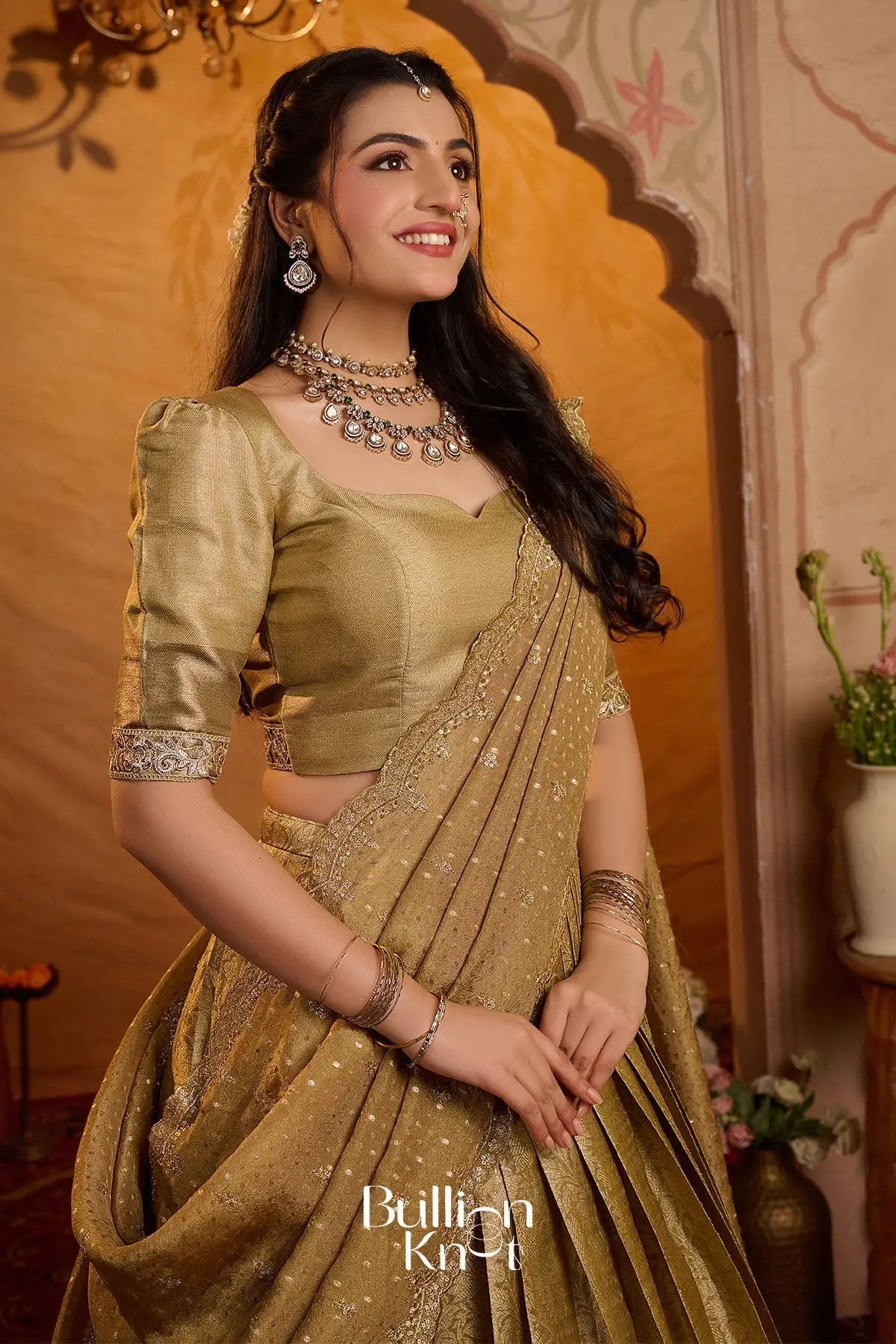
key Highlights
Fabric: Kanjivaram Silk
Technique: Handwork
Model Height & Size: 5'8 inches | Wearing S
Occasion: Weddings,Celebrations,Engagements,Receptions
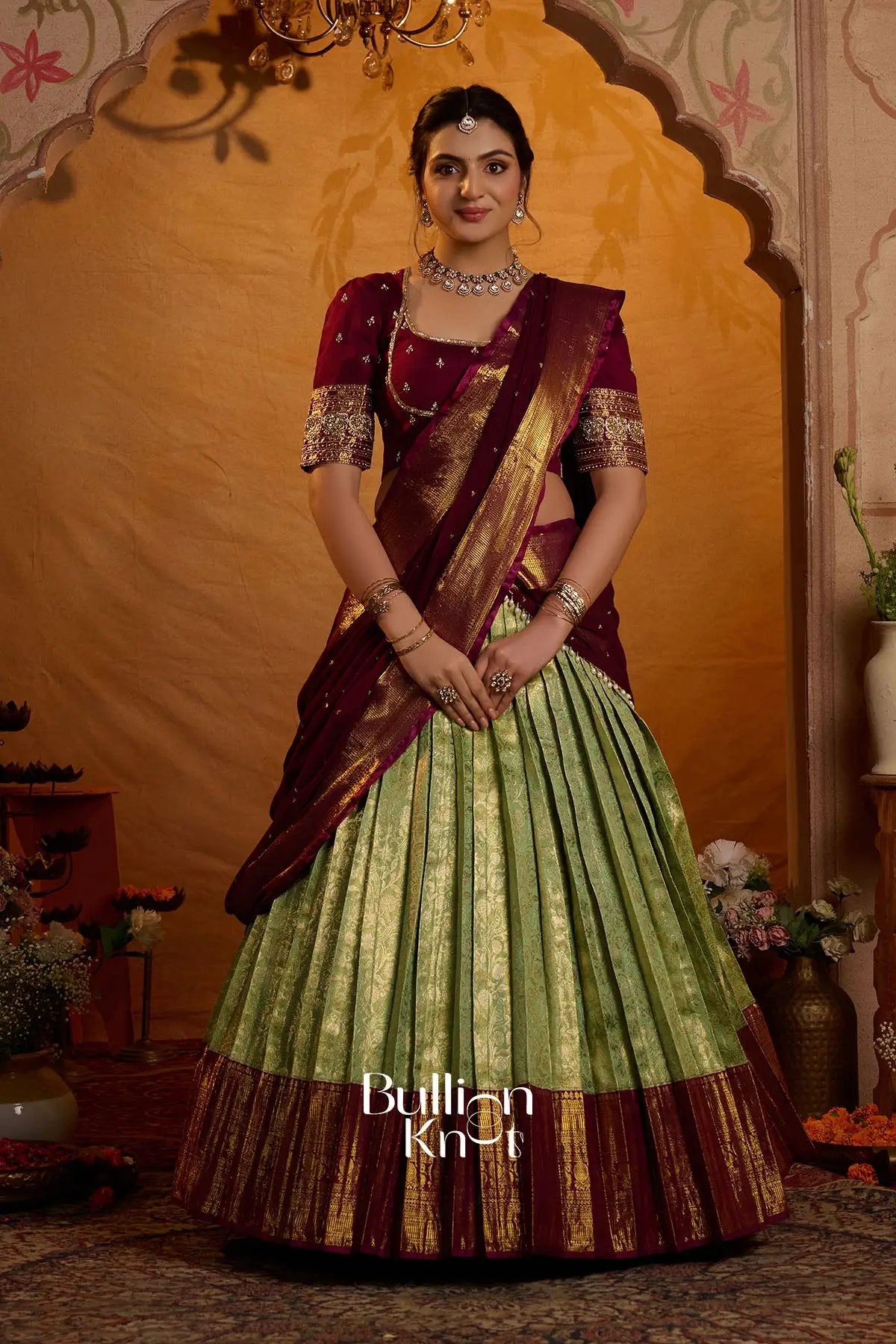
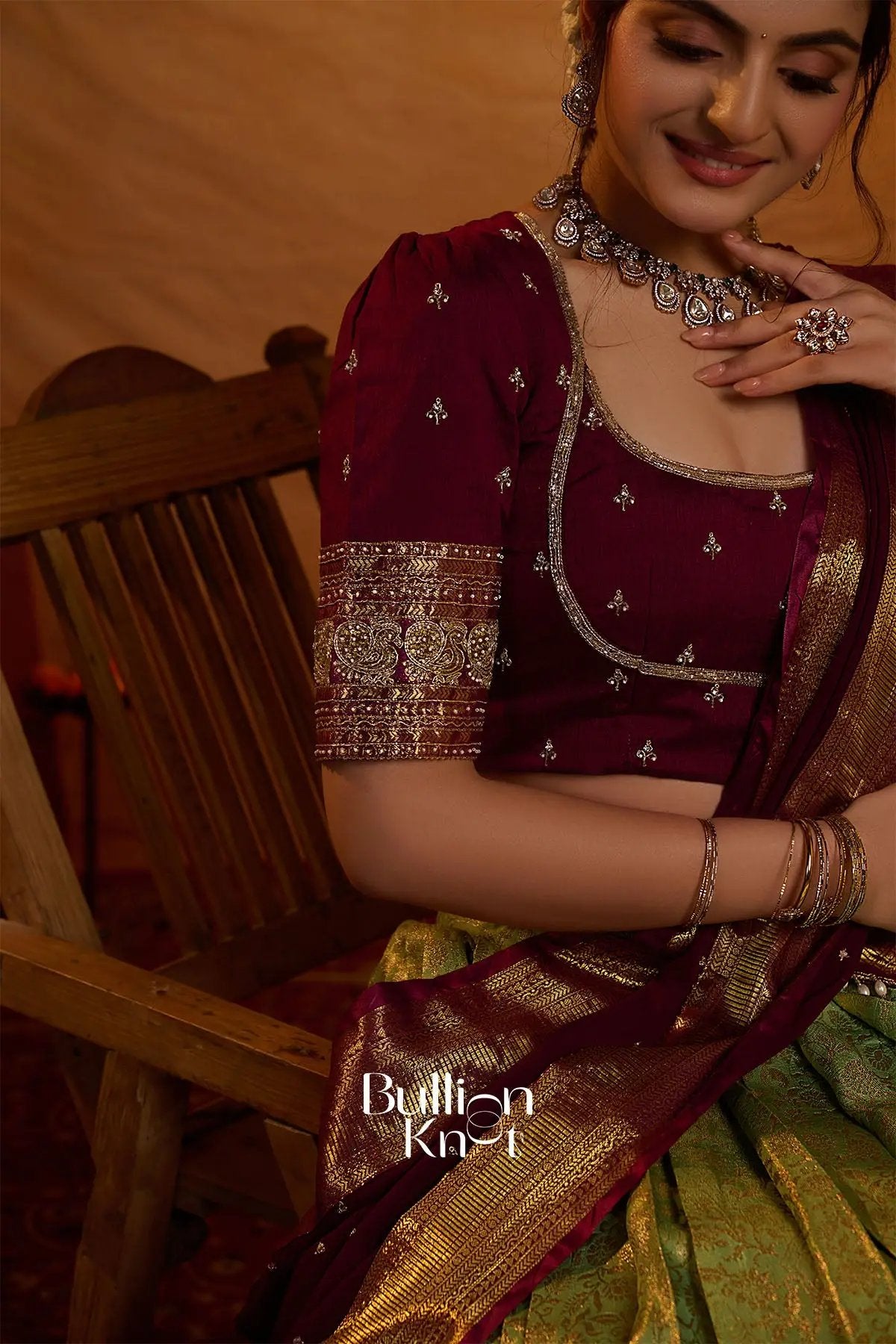
key Highlights
Fabric: Soft Silk, Semi Kanjivaram Silk
Technique: Handwork
Model Height & Size: 5'8 inches | Wearing S
Occasion: Weddings,Festive,Celebrations

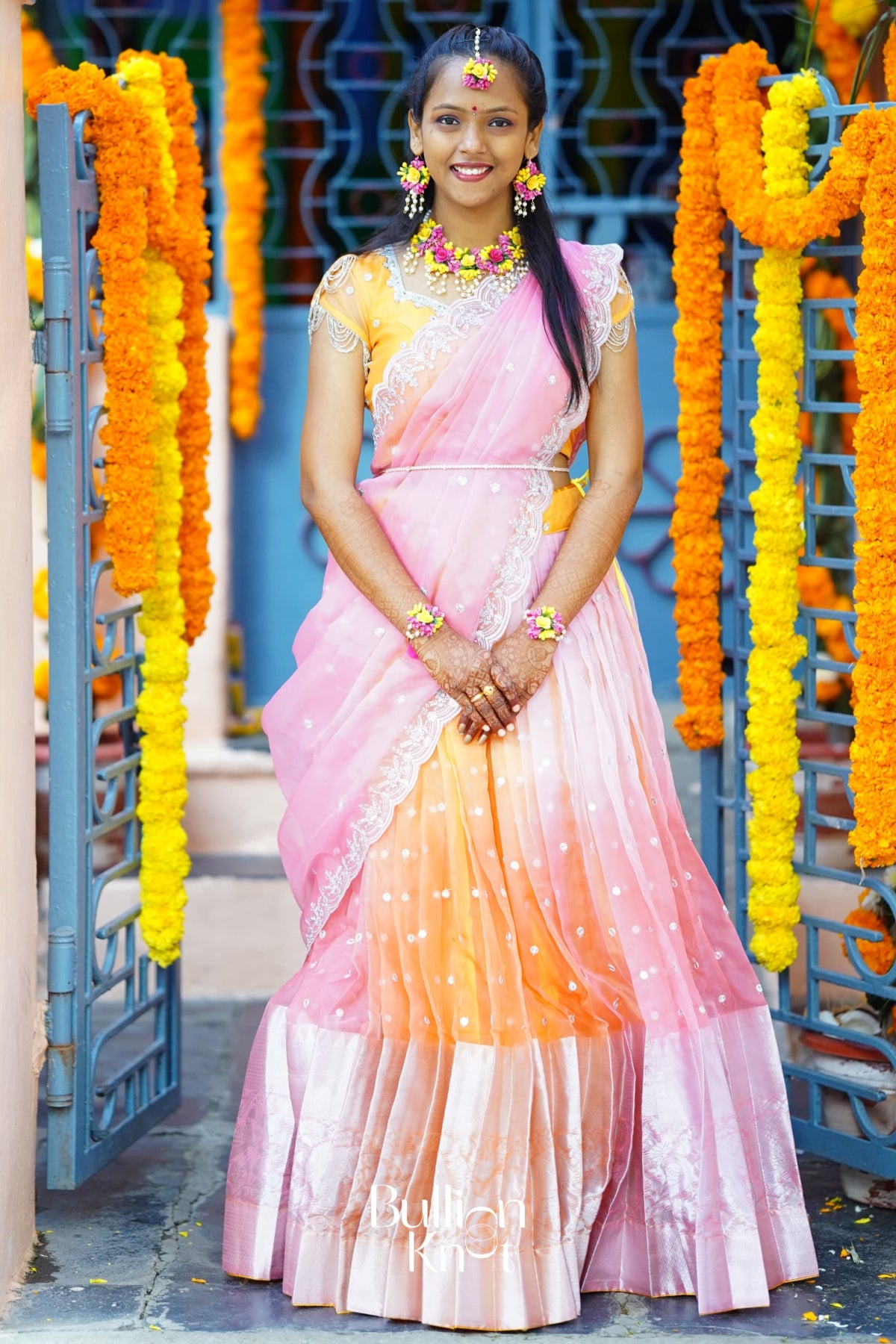
key Highlights
Fabric: Kota doria Organza
Technique: Embroidery work
Model Height & Size: 5’5 Inch | Wearing XS
Occasion: Outing, parties, college
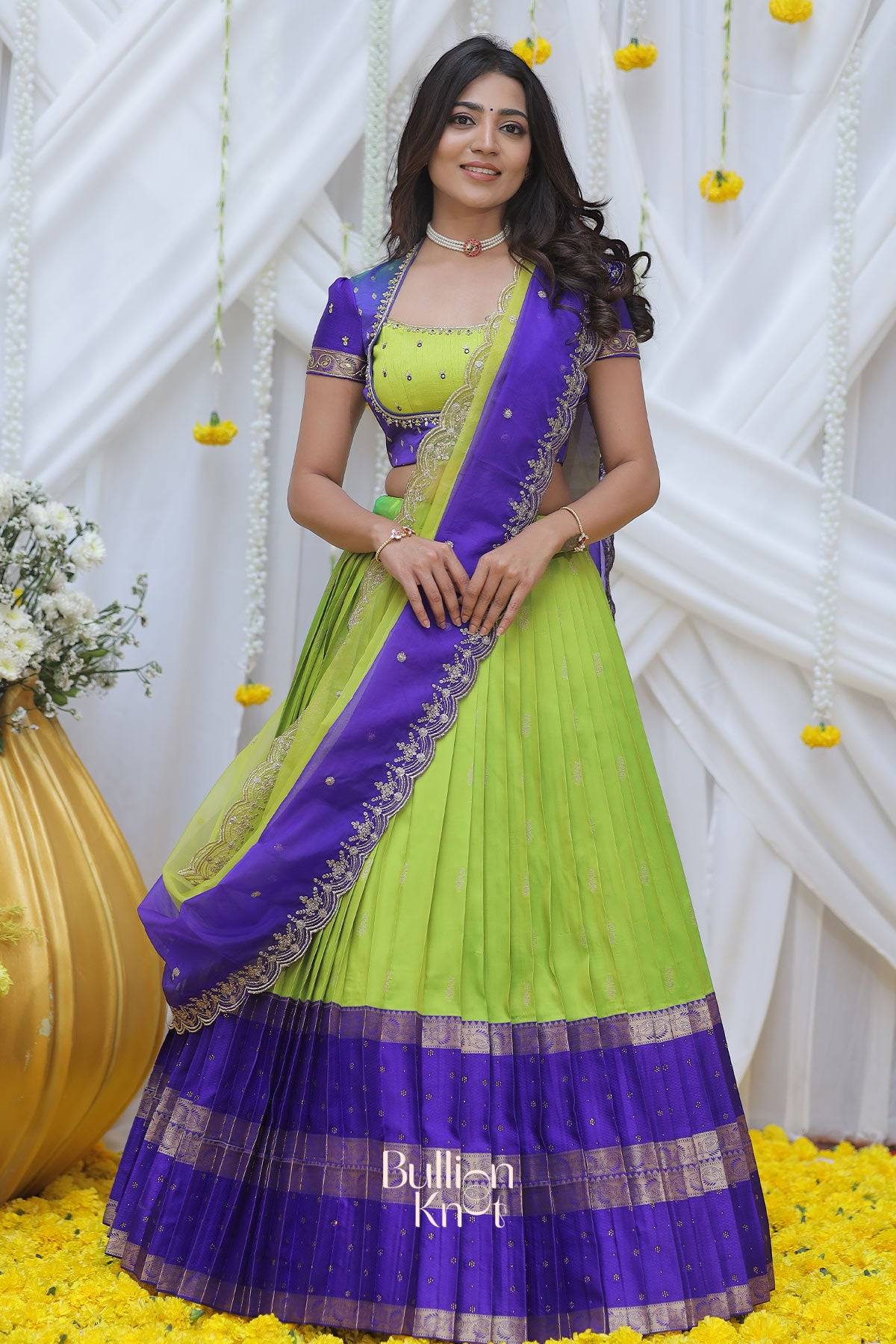

key Highlights
Fabric: Gadval Silk & Organza
Technique: Hand-work, Embroidery
Model Height & Size: 5'7 inch | Wearing Size S
Occasion: Cultural Festivals & Wedding
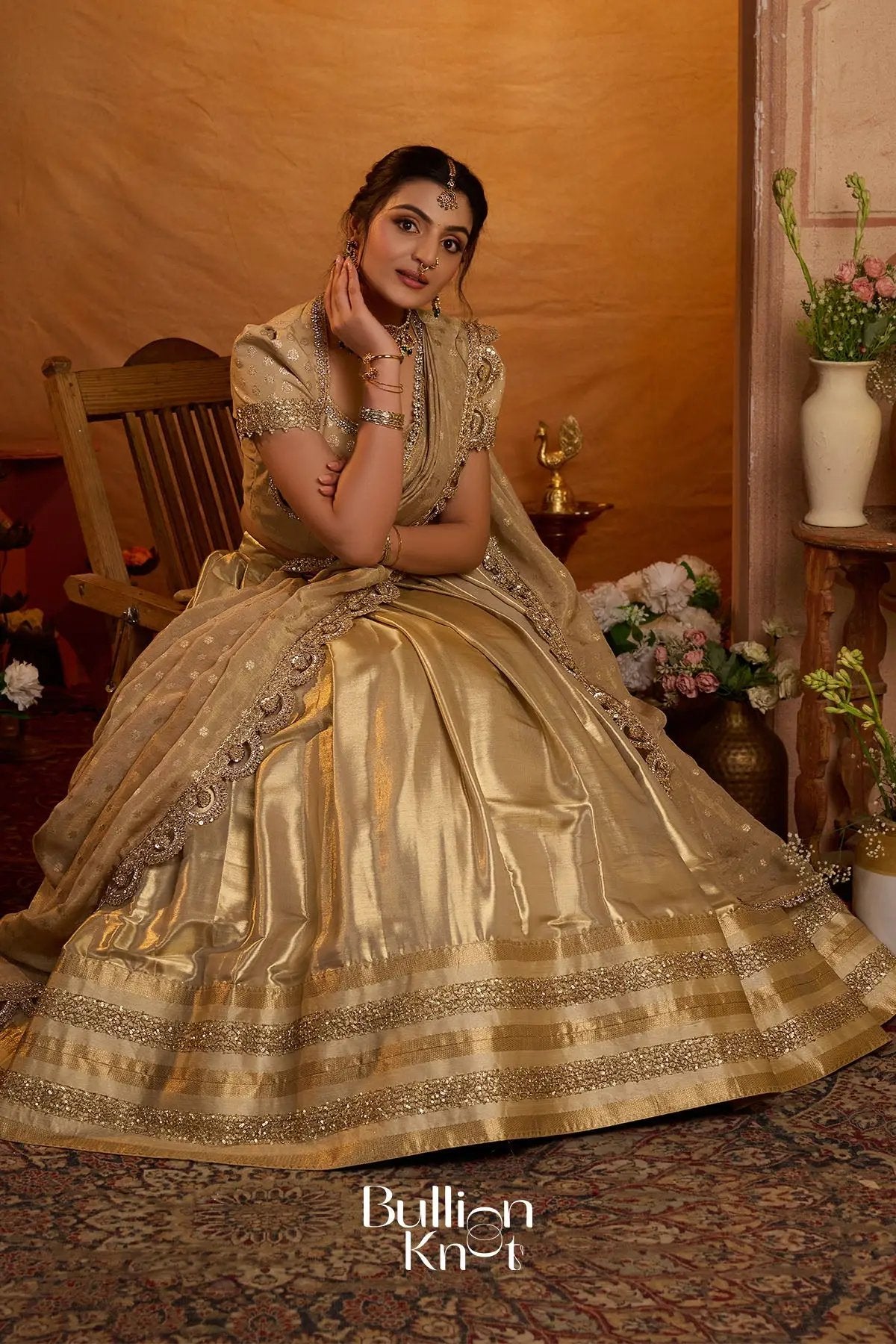
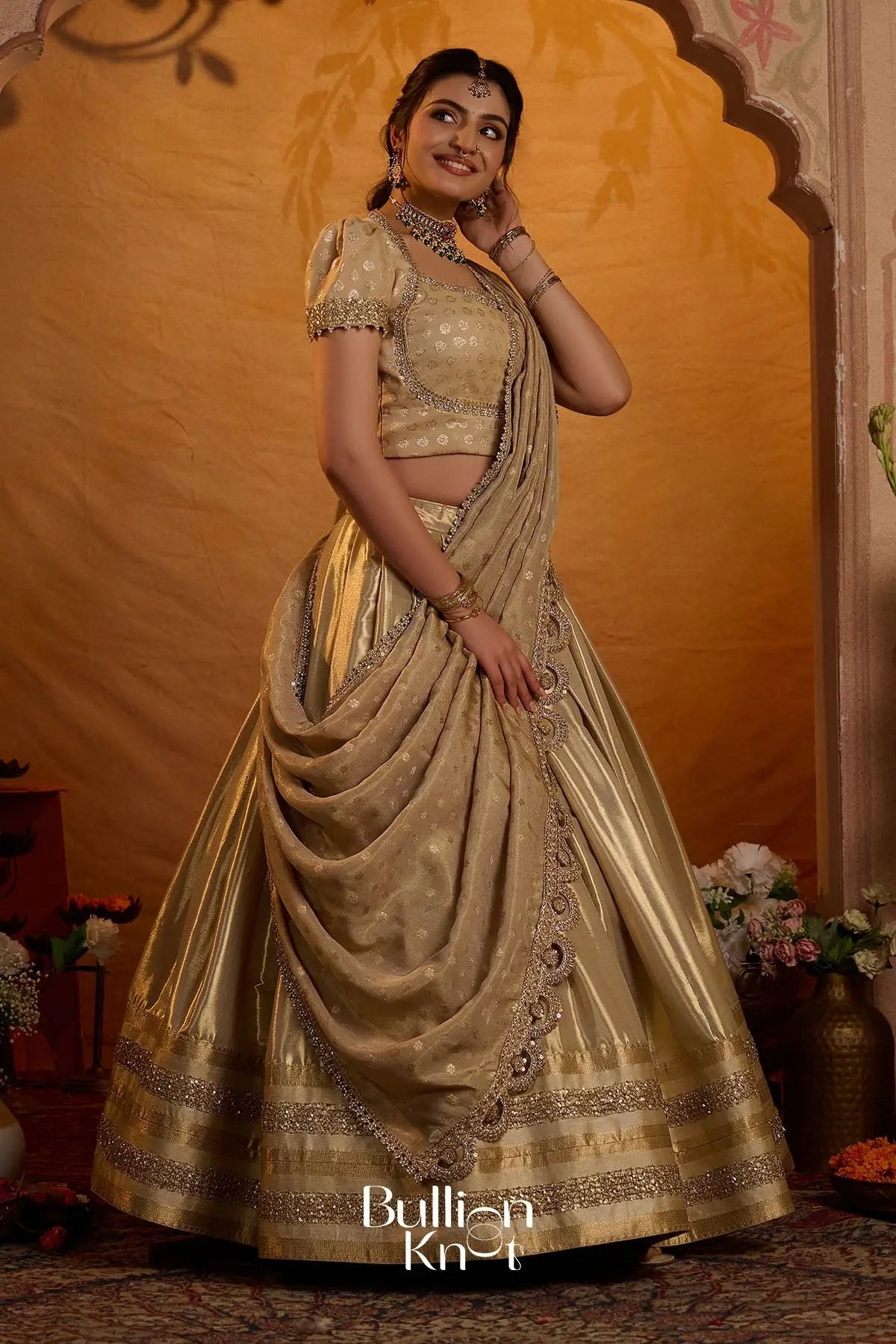
key Highlights
Fabric: Gadval Zari Silk
Technique: Lace Work
Model Height & Size: 5'8 inches | Wearing S
Occasion: Halfsaree fuction,Wedding,ceremony
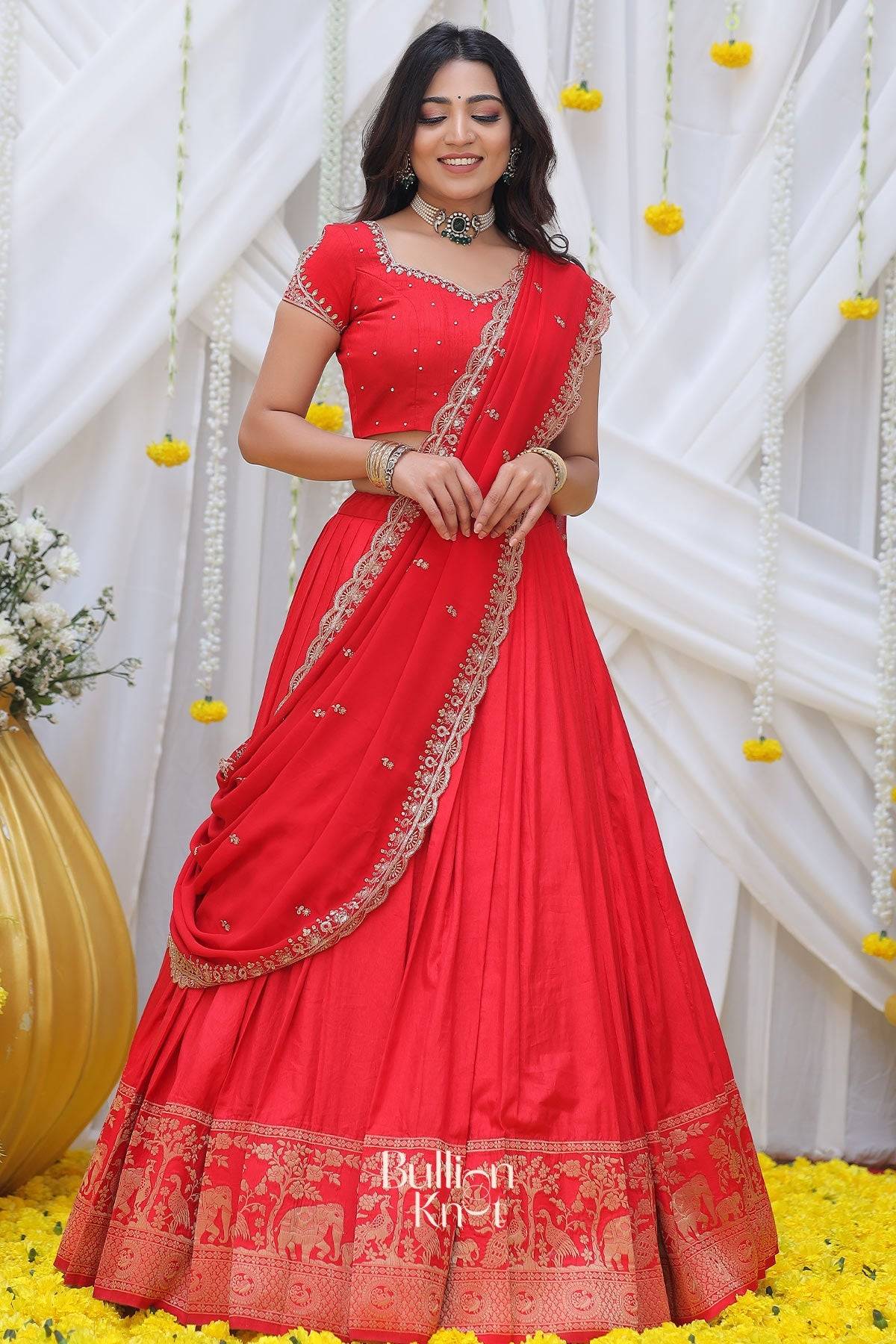
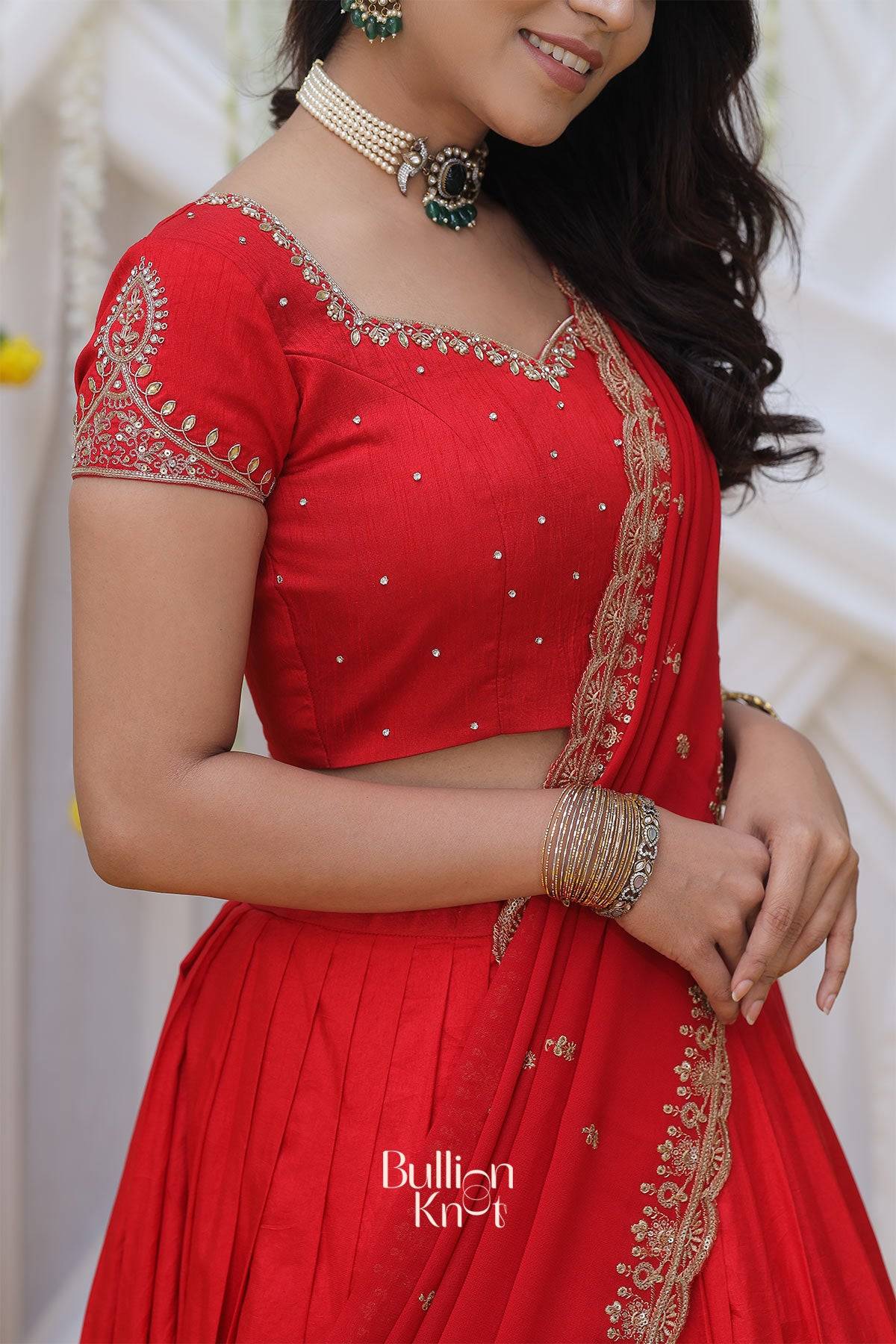
key Highlights
Fabric: Dola silk
Technique: Handwork, Sequence work
Model Height & Size: 5'7 Inches | Wearing S
Occasion: Wedding & traditional functions
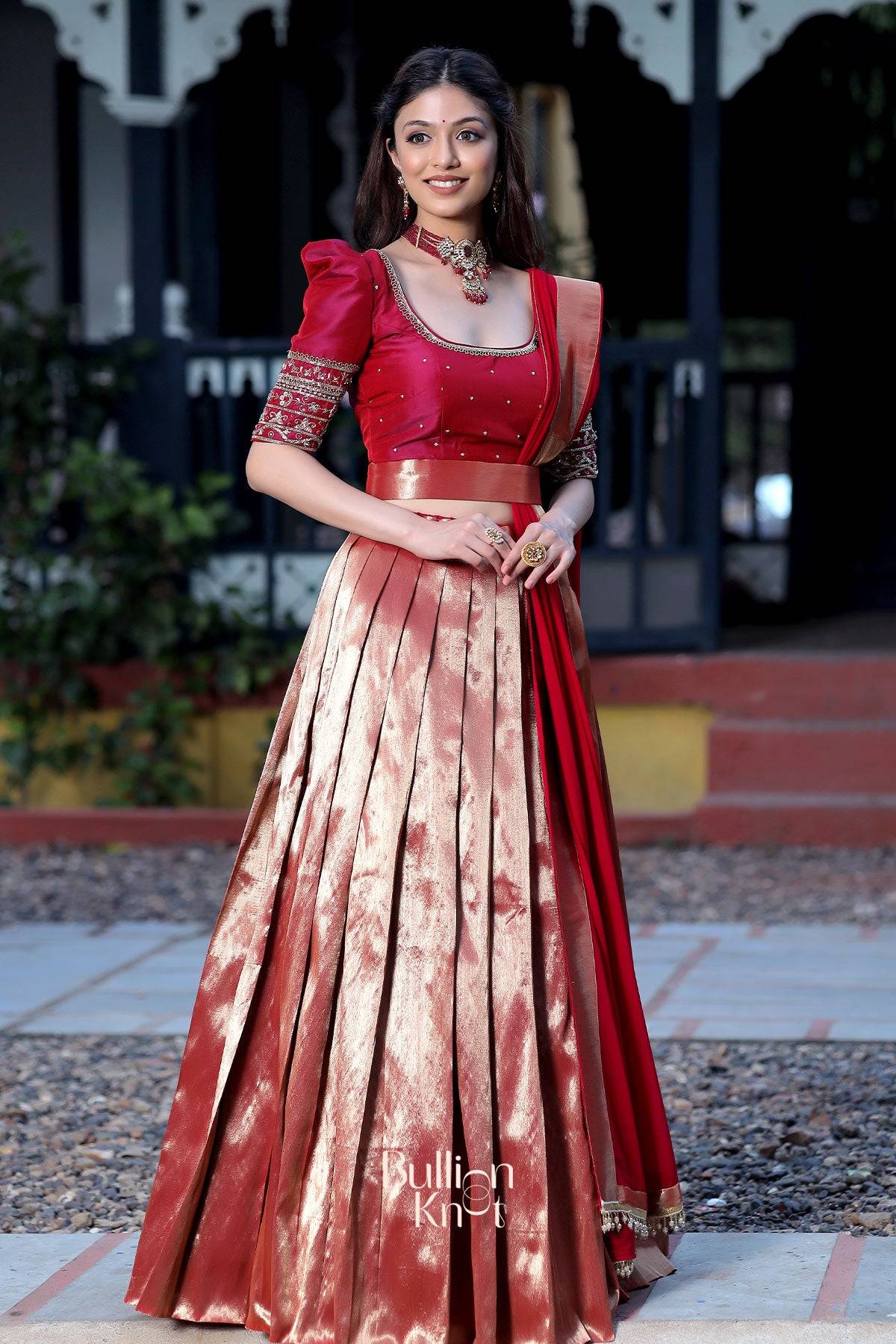
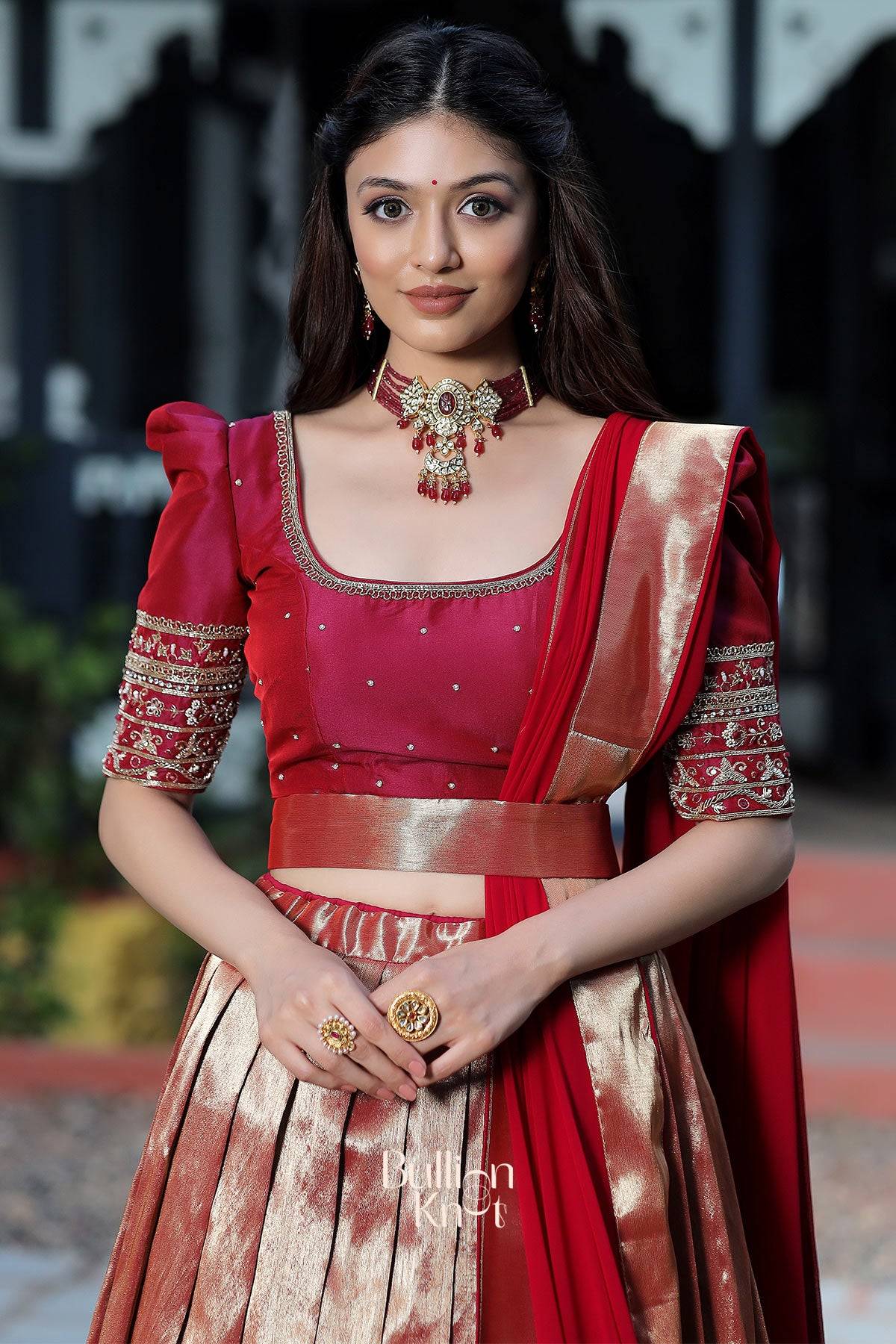
key Highlights
Fabric: Banarasi Silk
Technique: Handwork (Sequence)
Model Height & Size: 5'4 inch | Wearing XS
Occasion: Sangeet, festival, reception
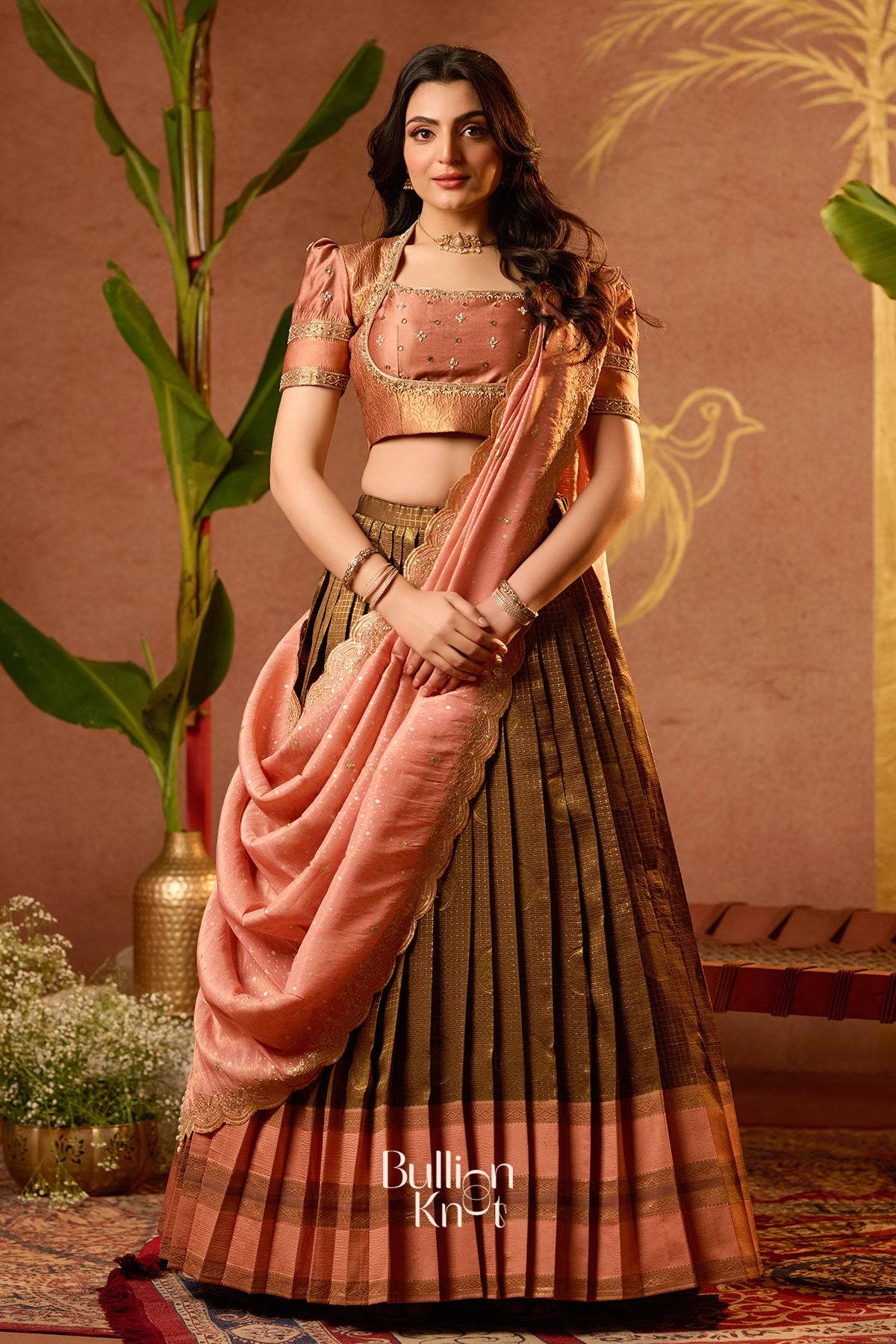

key Highlights
Fabric: Banarasi Silk
Technique: Handwork (Sequence)
Model Height & Size: 5'8 inch | Wearing S
Occasion: Wedding & special occasion
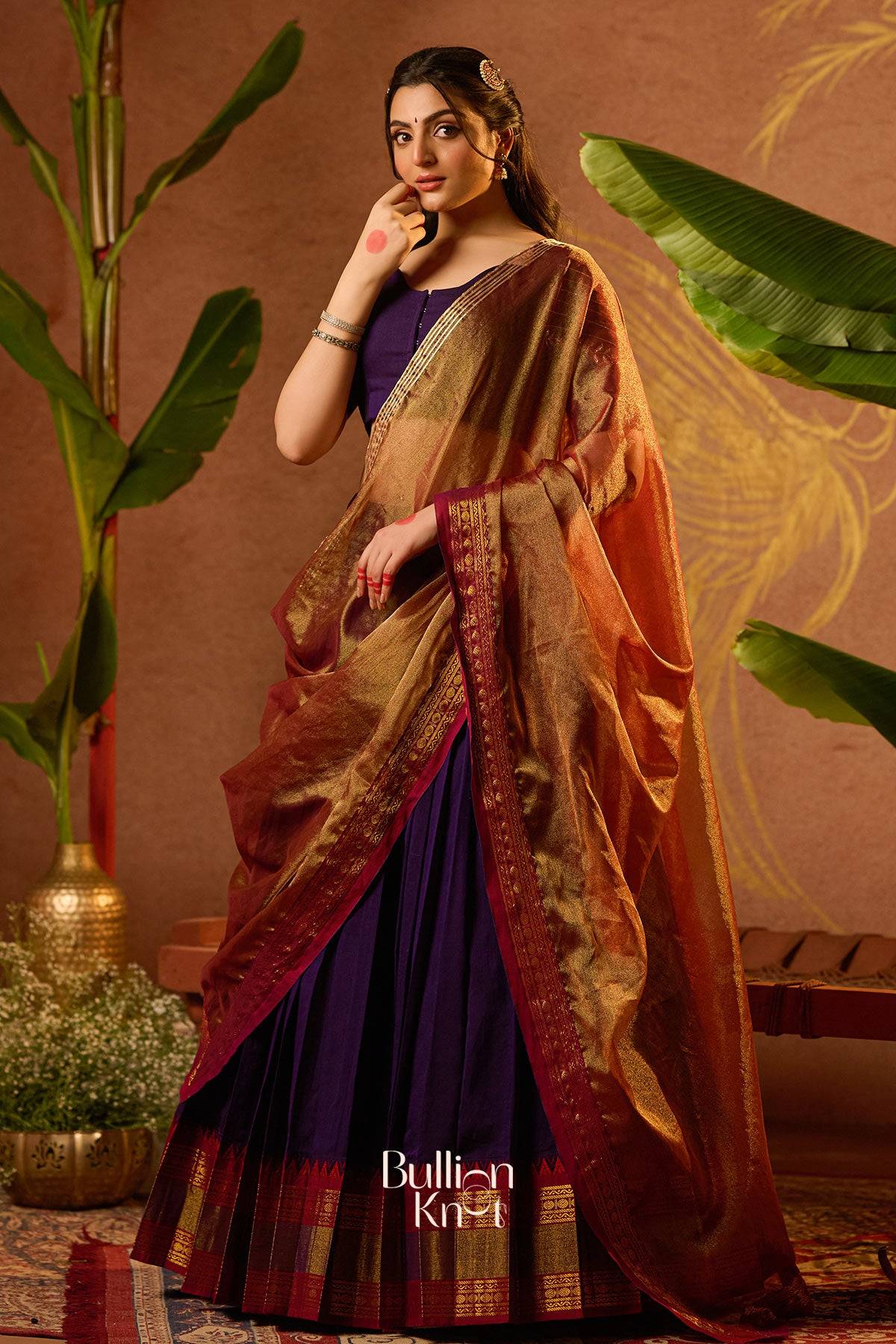
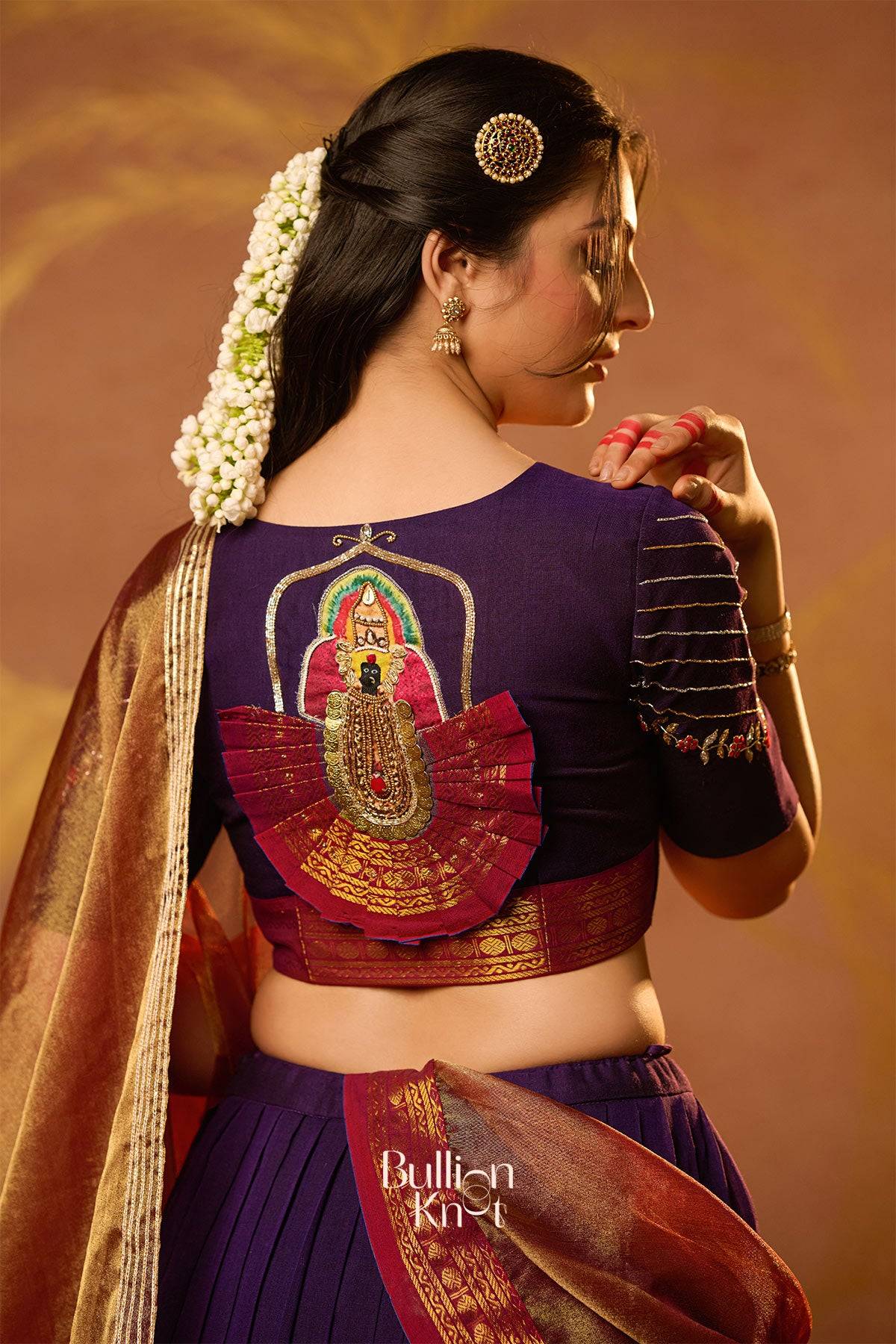
key Highlights
Fabric: Banarasi silk, Kotta Zari & Organza
Technique: Hand Work, Sequence Work
Model Height & Size: 5'4 Inches | Wearing XS
Occasion: Festival, wedding, photoshoot
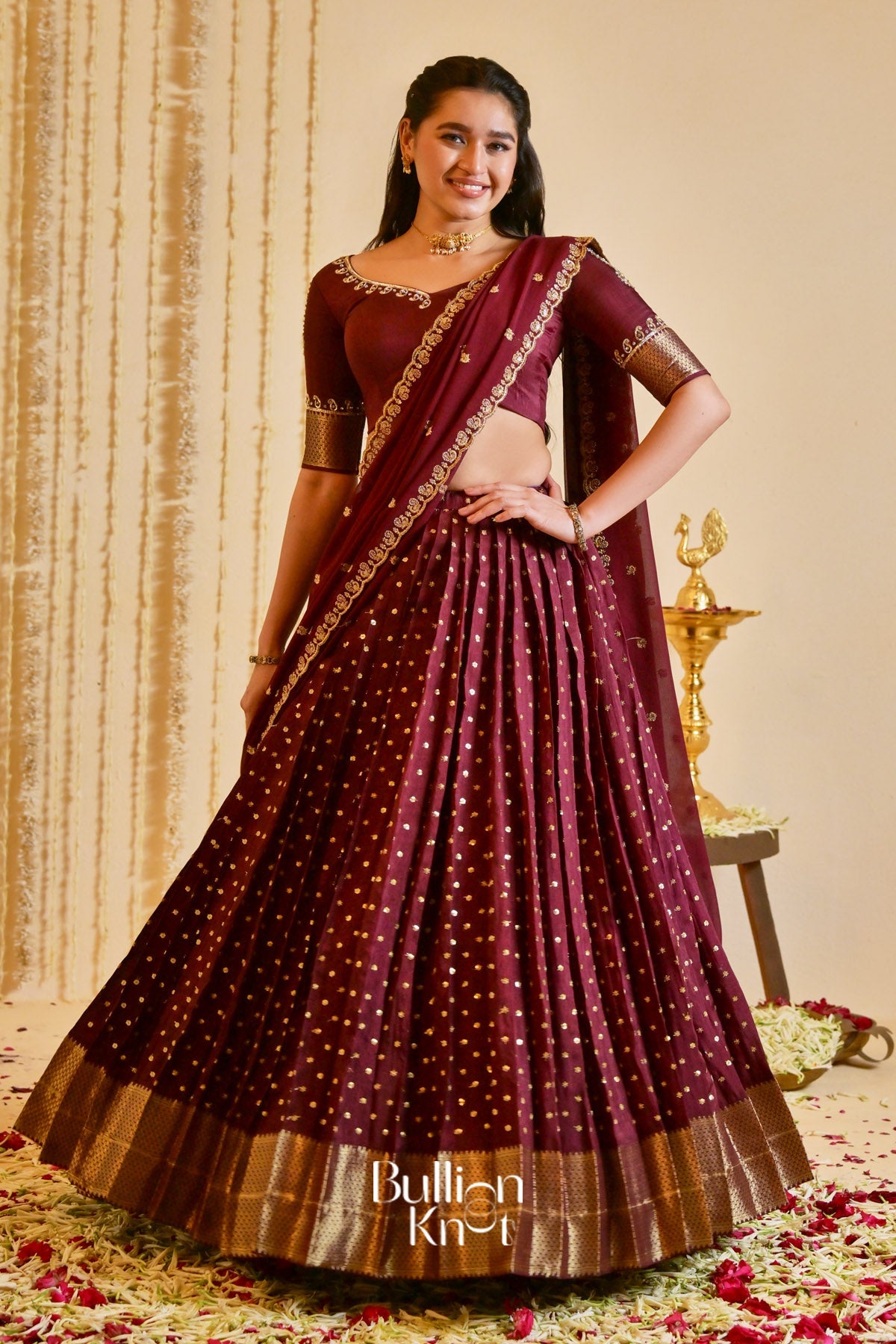
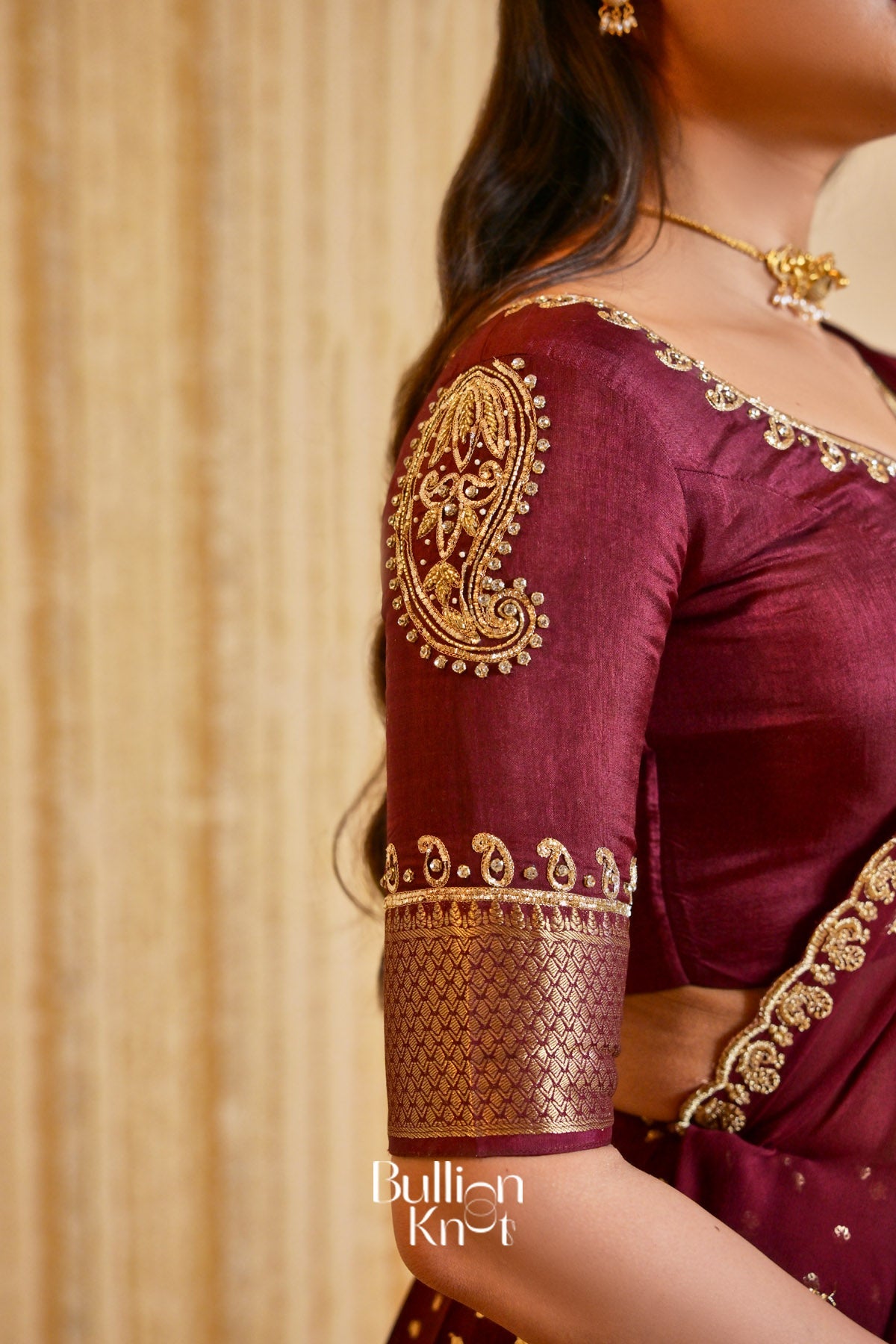
key Highlights
Fabric: Viscose Dola
Technique: Handwork,Machine Embroidery
Model Height & Size: 5’8 Inch | Wearing XS
Occasion: Engagements, Housewarming, Poojas,bridesmaids
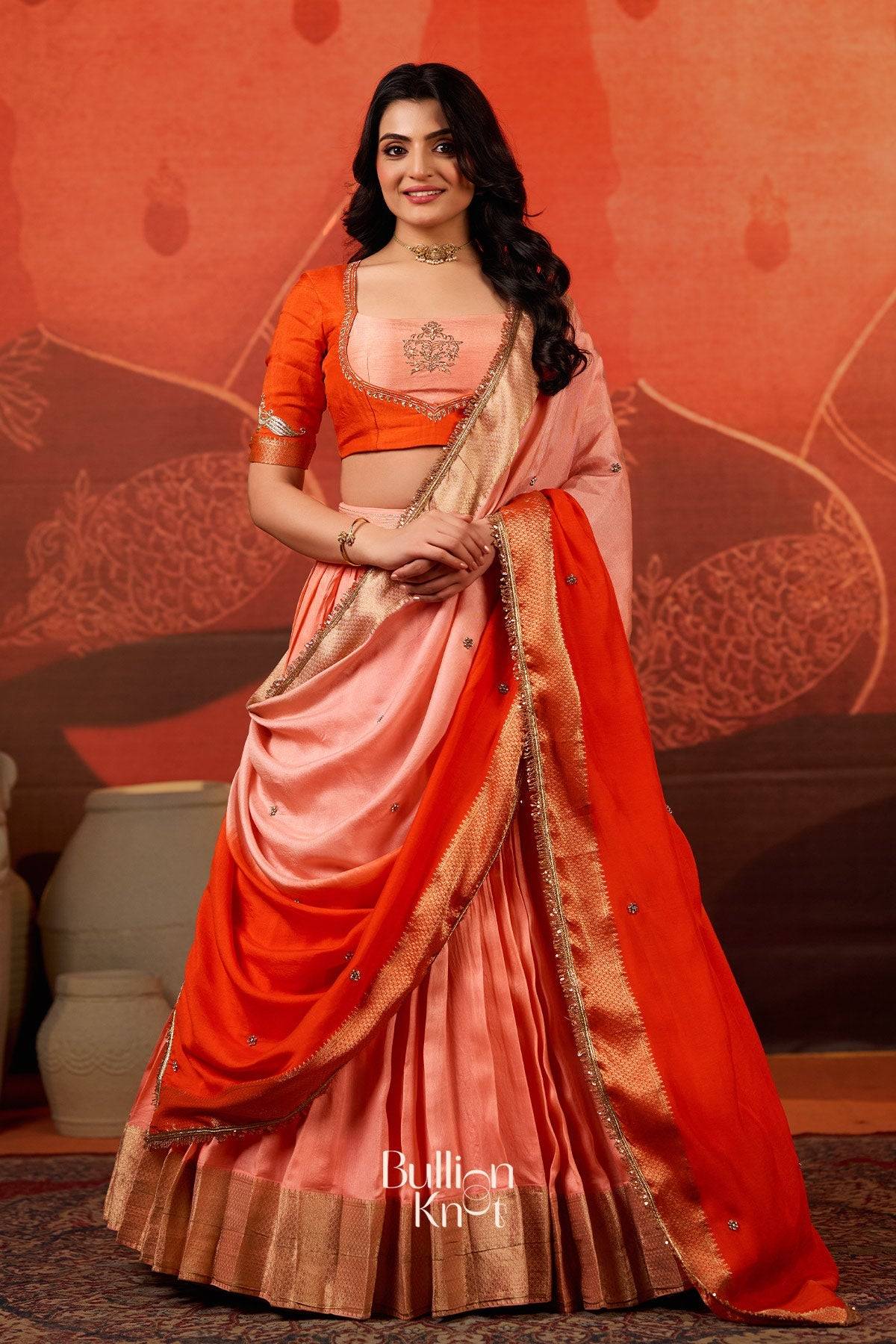
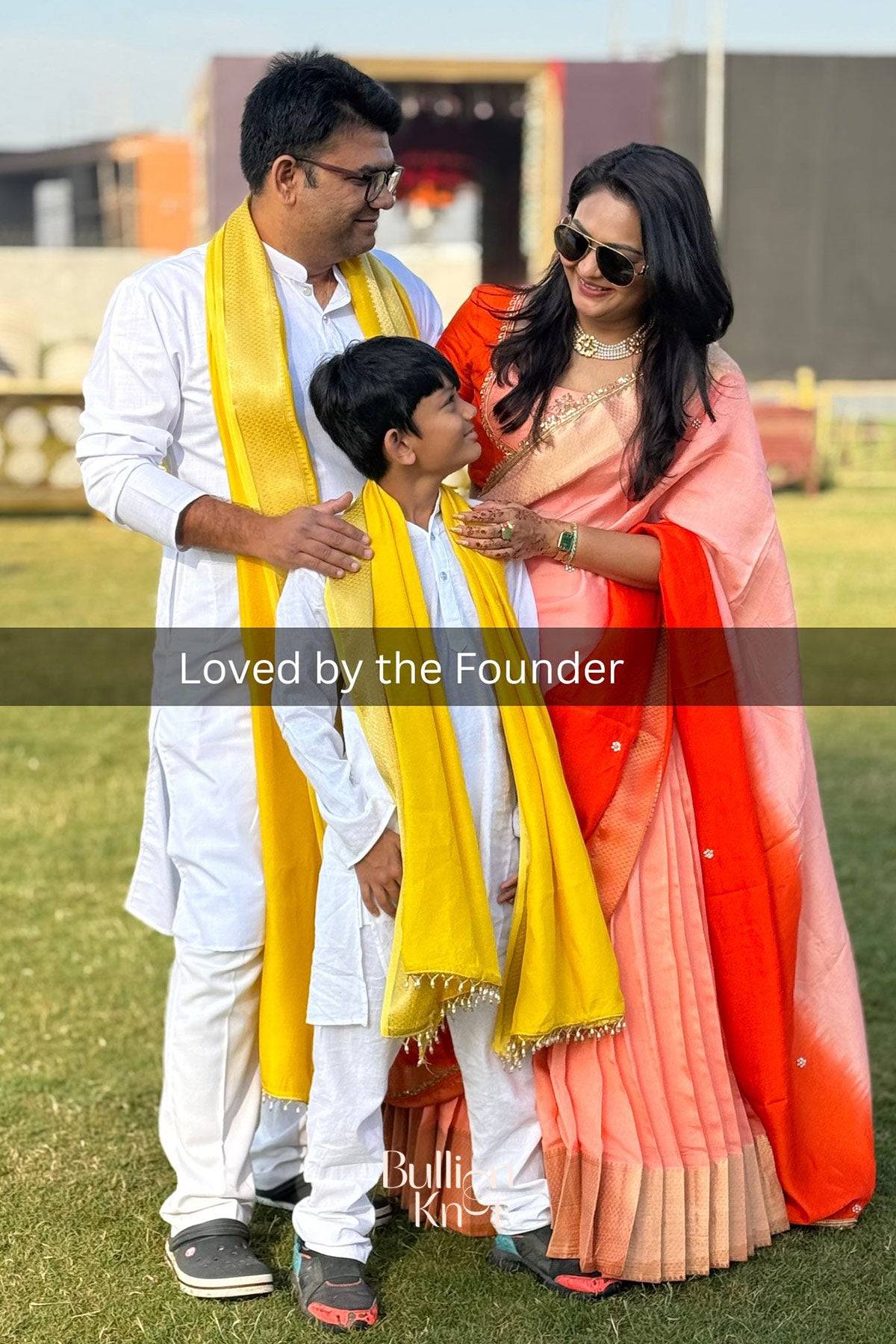
key Highlights
Fabric: Viscose Dola
Technique: Pitawork
Model Height & Size: 5.8 Inch | Wearing S
Occasion: Wedding, reception, festival
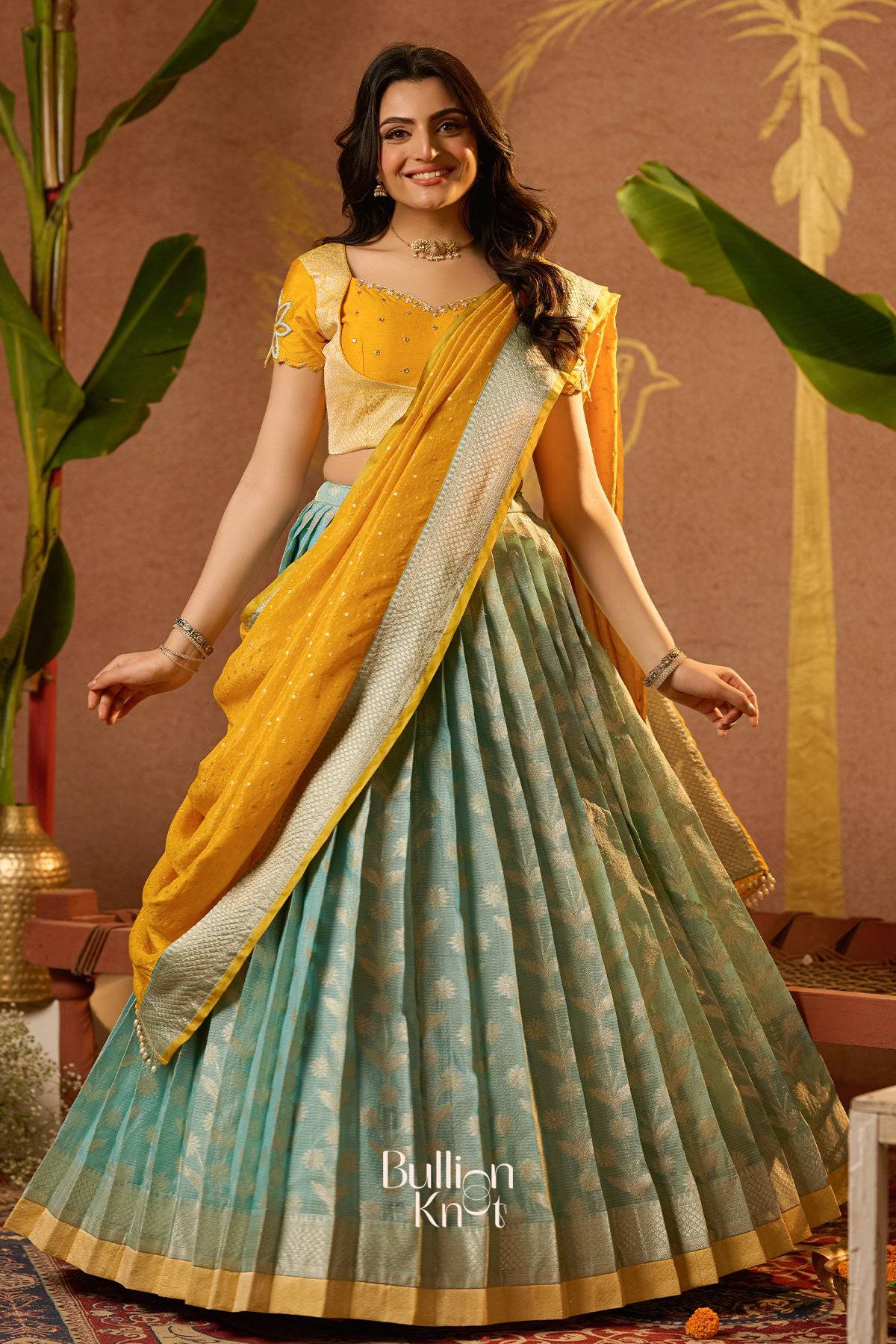
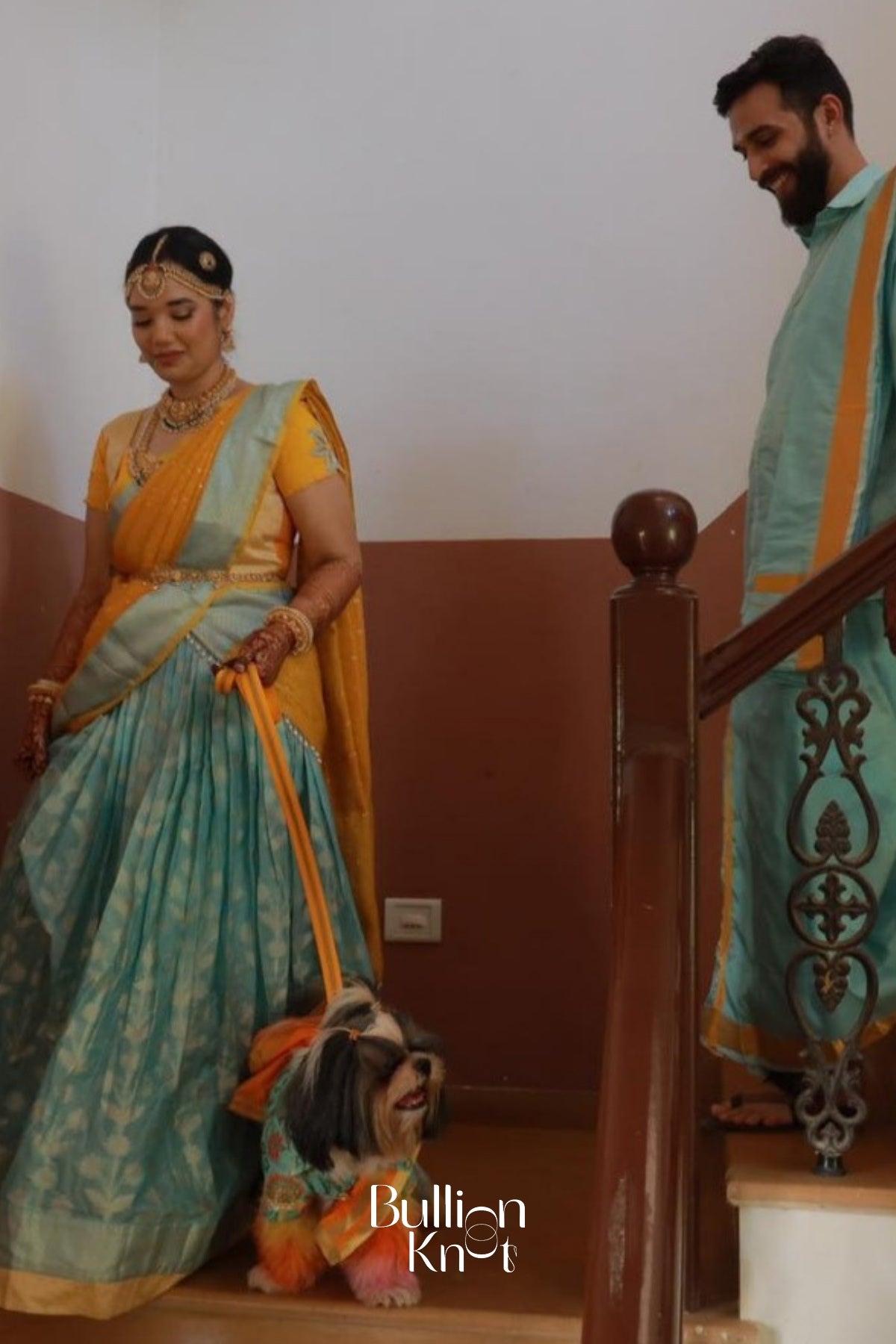
key Highlights
Fabric: Kotta Zari Silk
Technique: Handwork
Model Height & Size: 5'8 inch | Wearing S
Occasion: Festival events & Haldi function
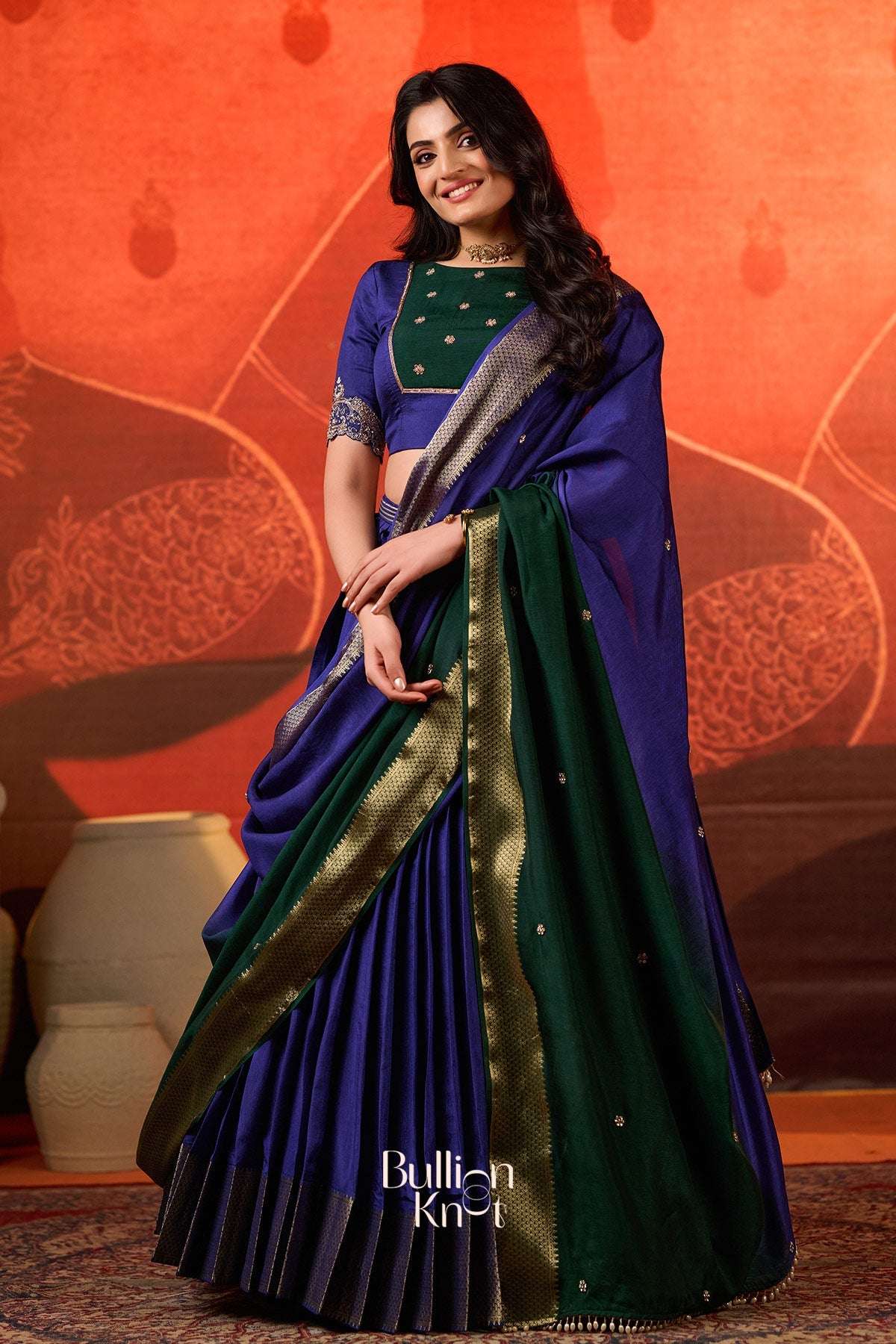
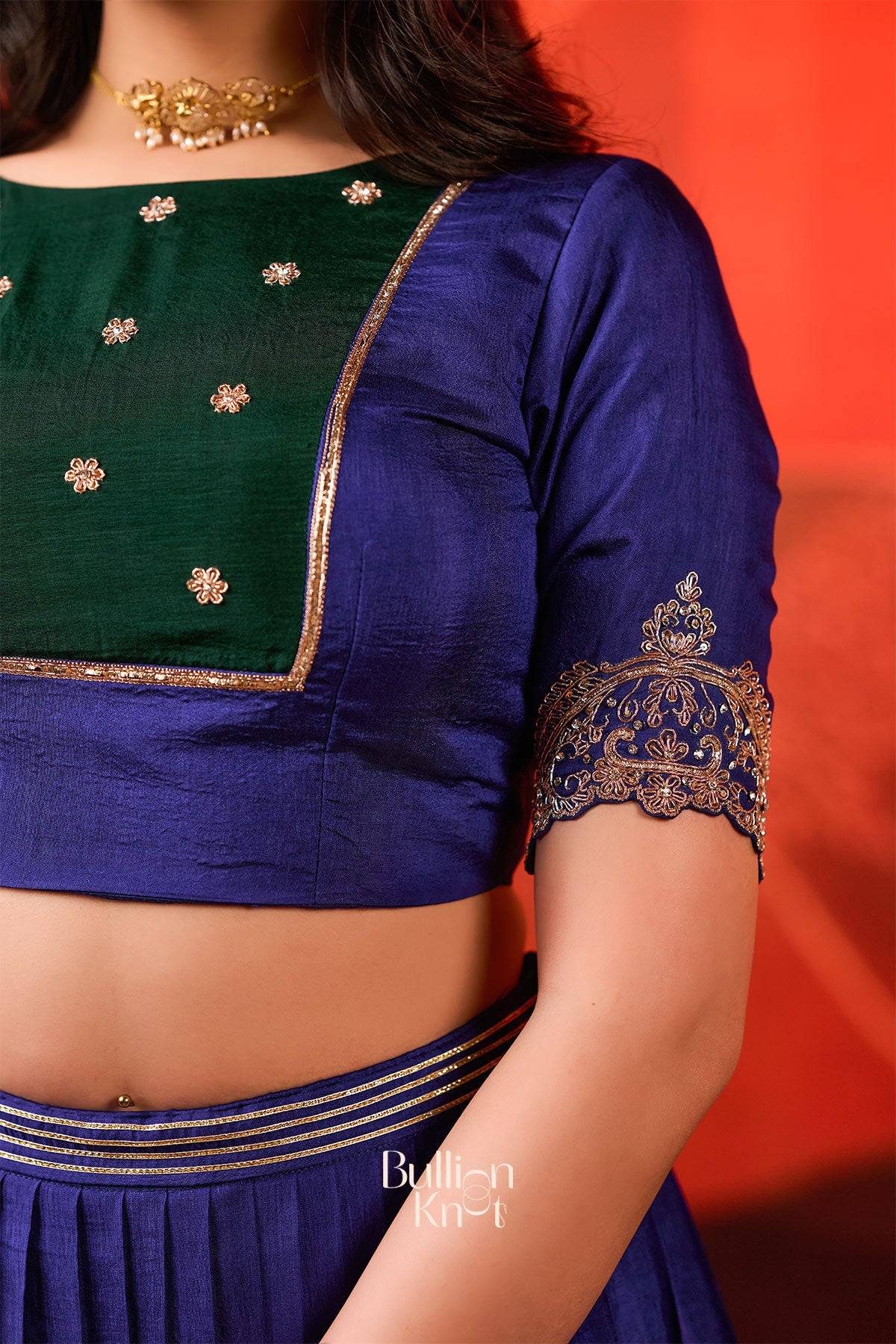
key Highlights
Fabric: Viscose Dola
Technique: Handwork
Model Height & Size: 5’8 Inch | Wearing S
Occasion: Wedding, special function, festival
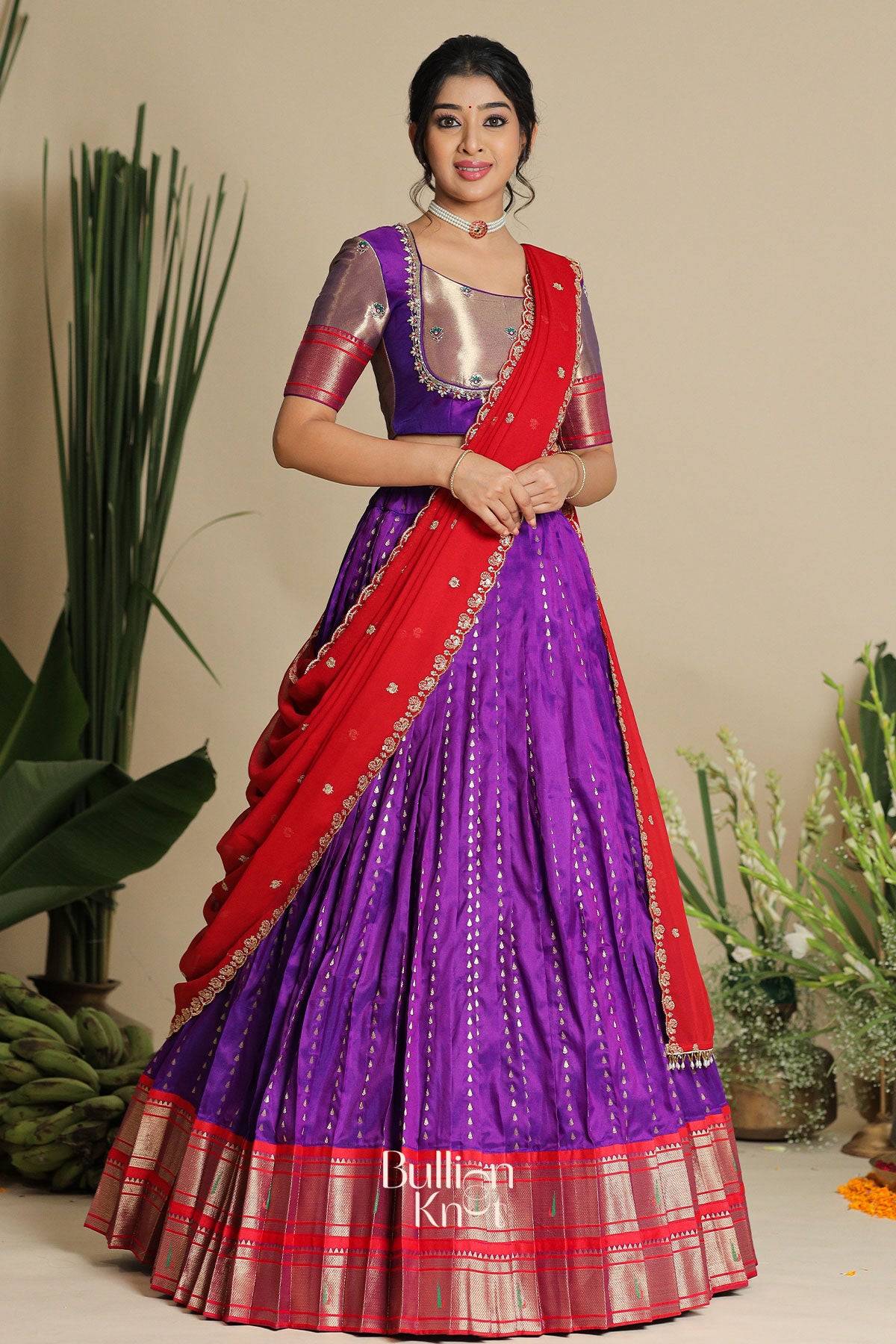
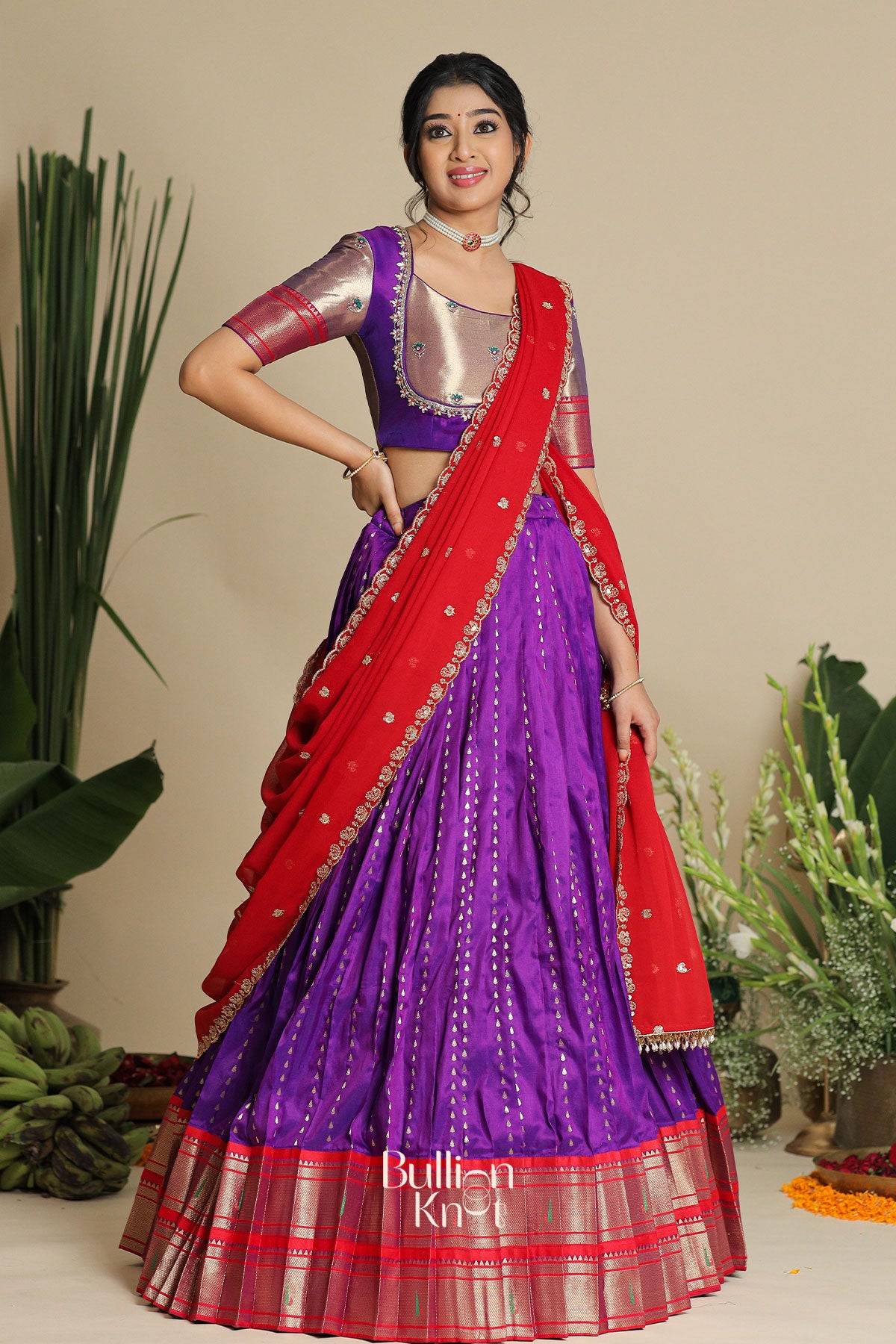
key Highlights
Fabric: Pure Jacquard Pethani
Technique: Handwork (Sequence)
Model Height & Size: 5'4 inch | Wearing XS
Occasion: Family celebrations, wedding, housewarming


key Highlights
Fabric: Soft Silk
Technique: Moc Work, Hand work
Model Height & Size: 5’8 Inch | Wearing XS
Occasion: Festive occasions,Weddings,Traditional celebrations
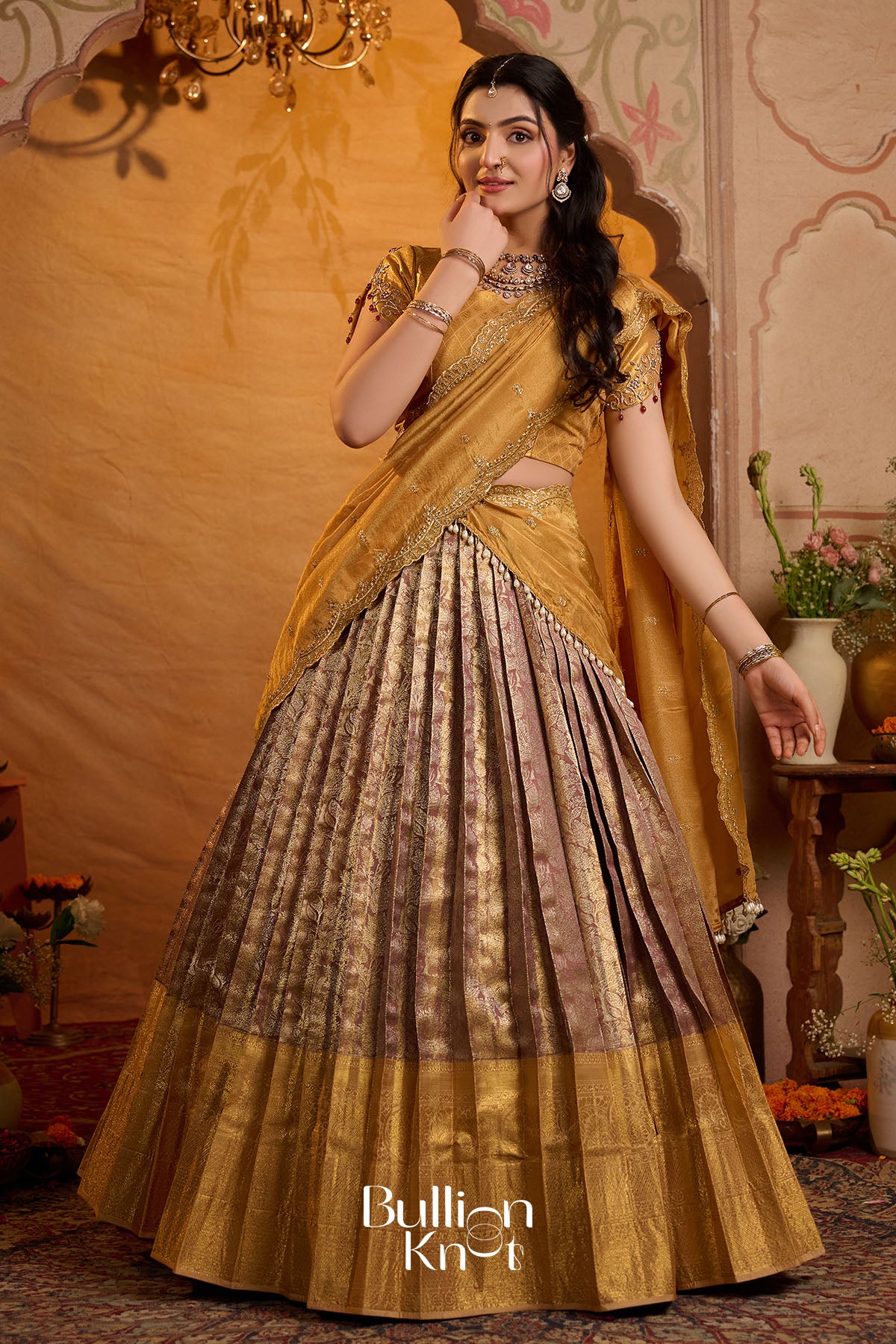
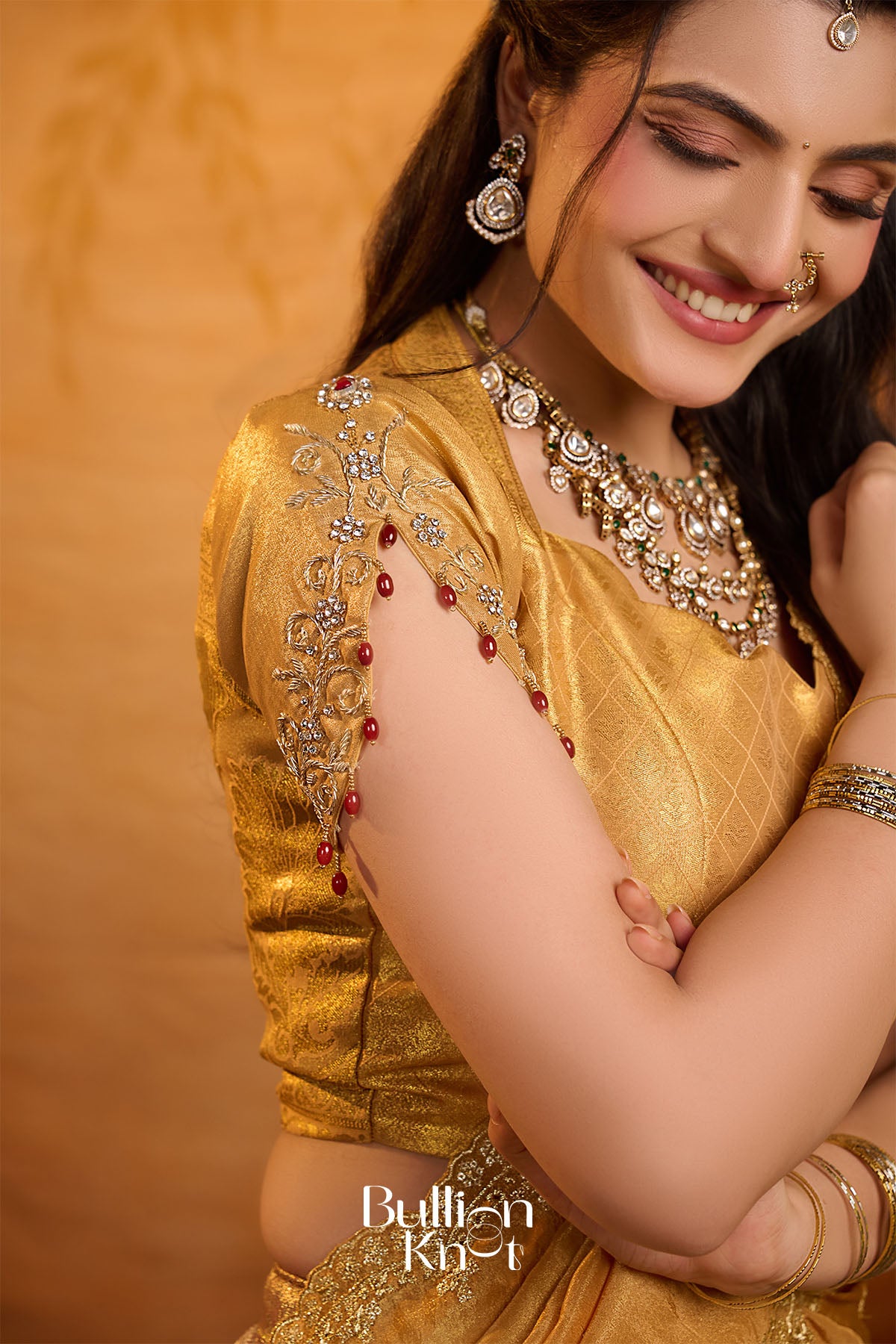
key Highlights
Fabric: Soft Silk, Semi Kanjivaram Silk
Technique: Handwork
Model Height & Size: 5'8 inches | Wearing S
Occasion: Weddings,Festive,Celebrations
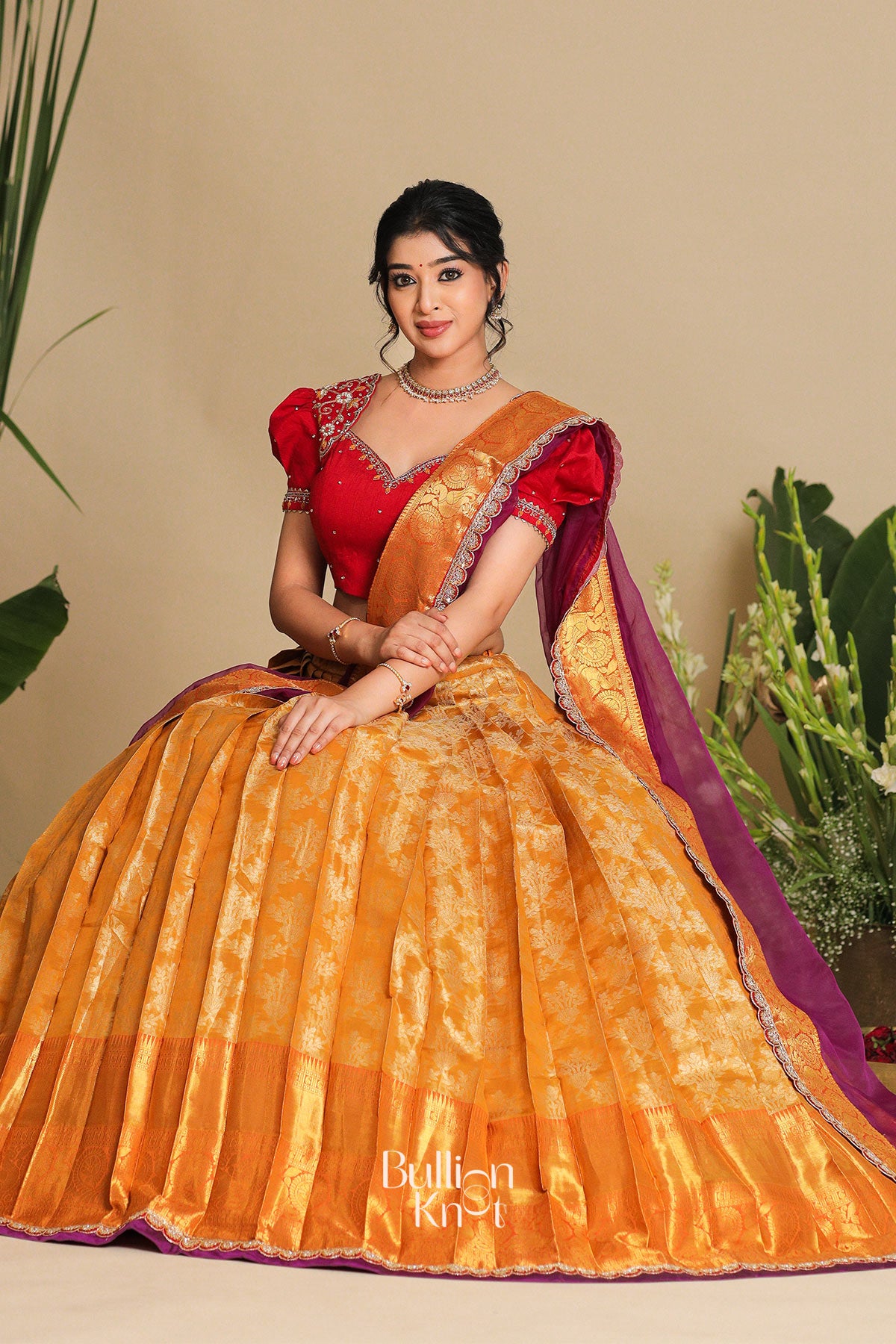
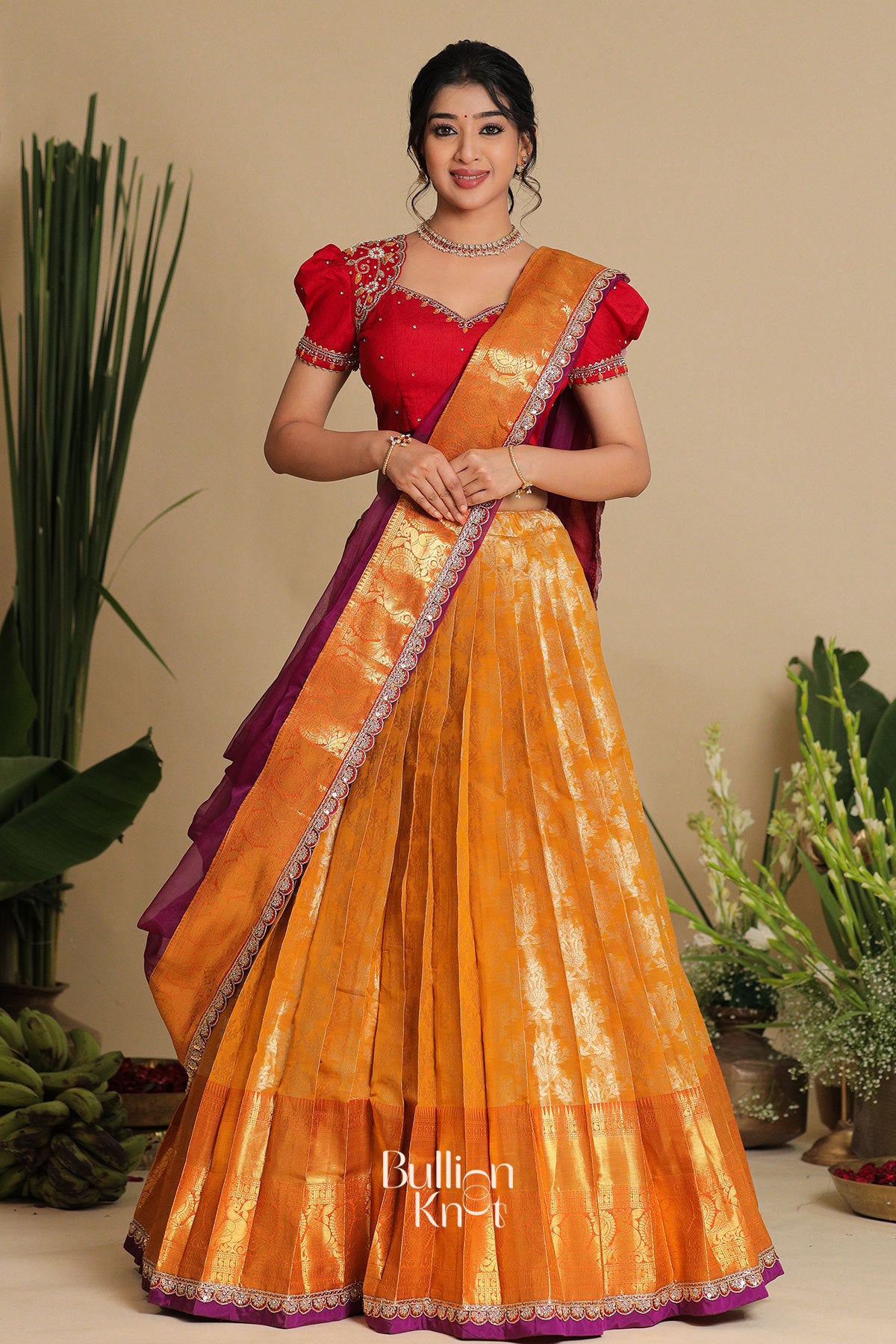
key Highlights
Fabric: Banarasi Silk & Organza
Technique: Handwork, Lacework
Model Height & Size: 5'4 Inches | Wearing XS
Occasion: Wedding, poojas, special occasion
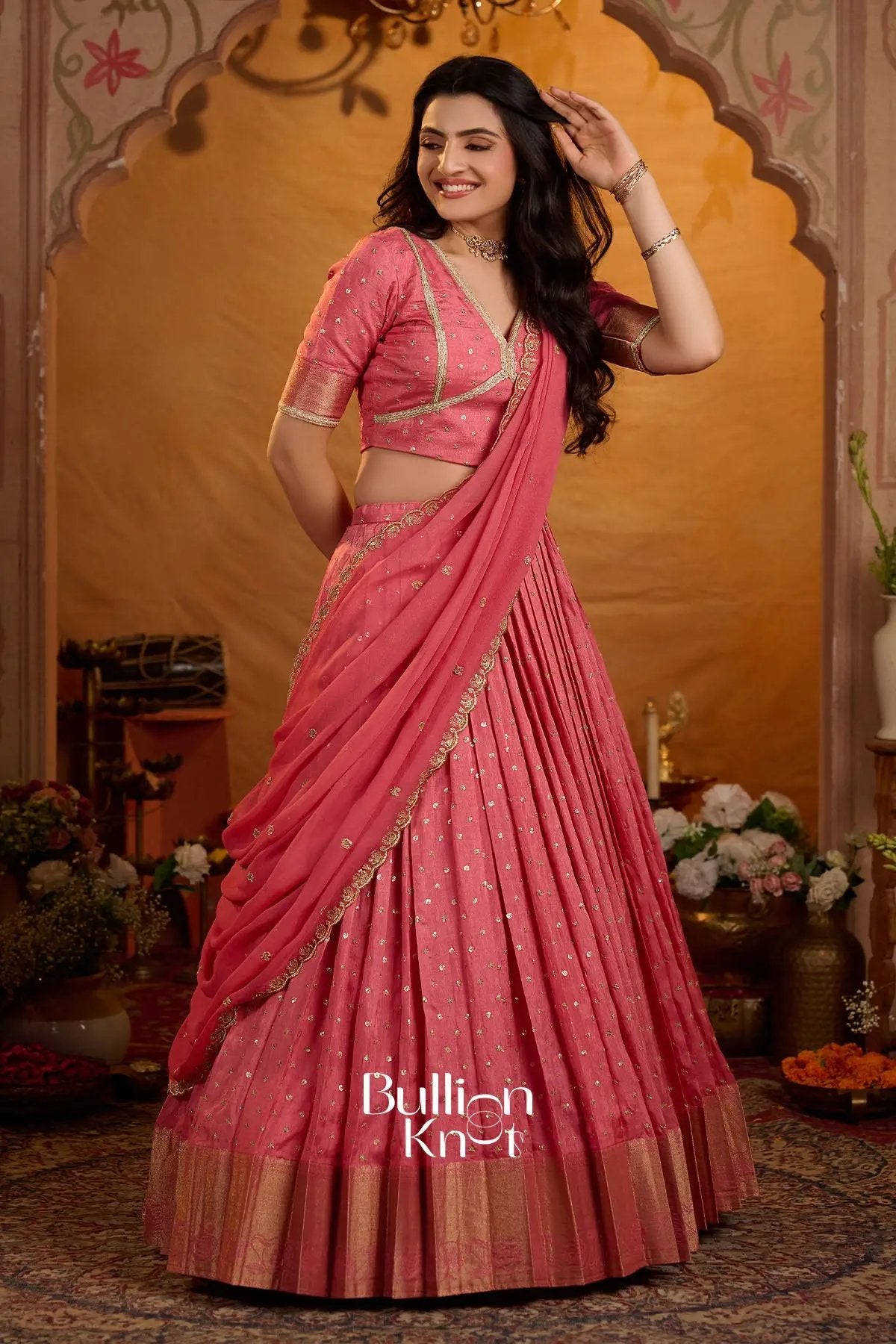
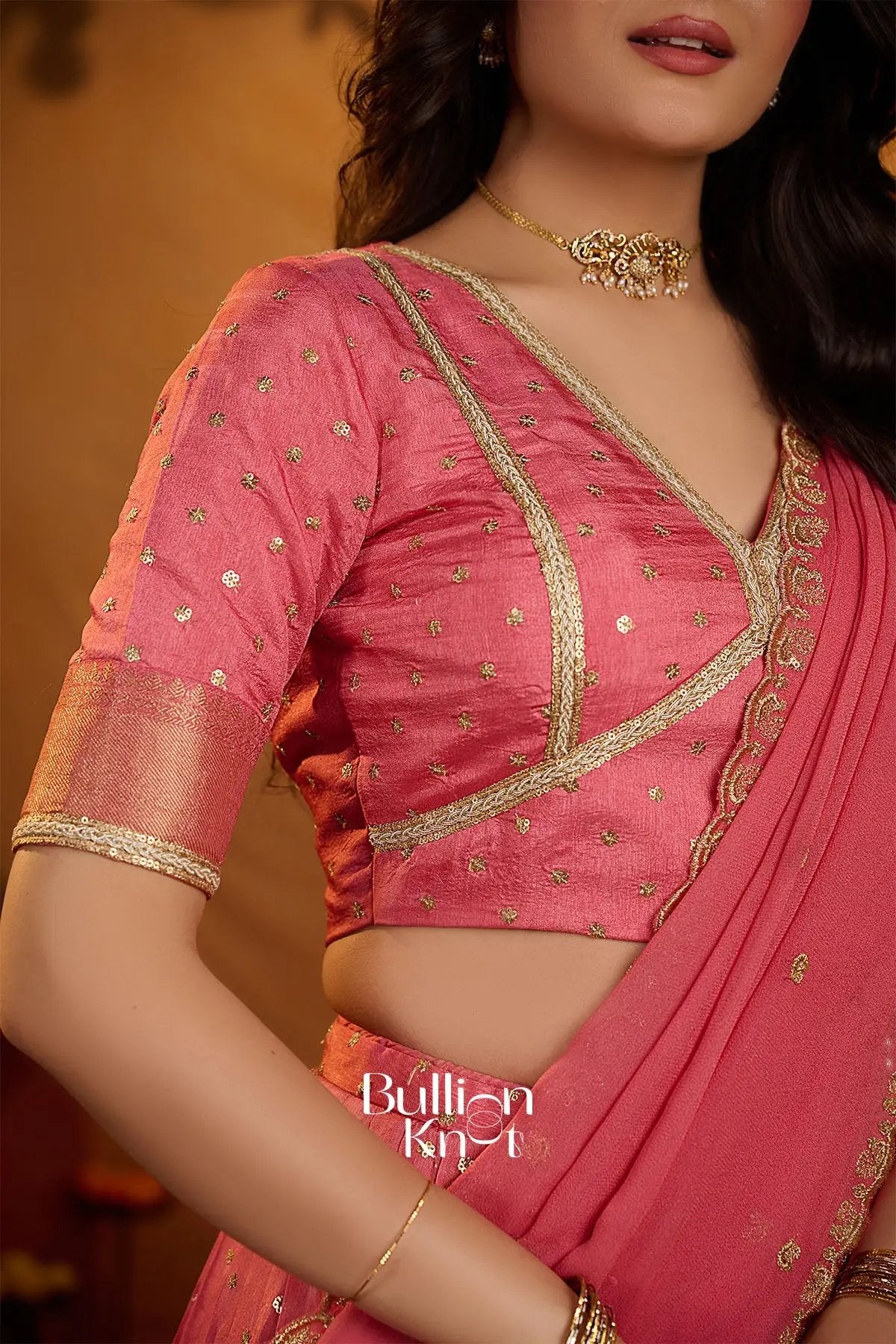
key Highlights
Fabric: Viscose Dola
Technique: Mock work
Model Height & Size: 5'8 inches | Wearing S
Occasion: Weddings,Festive occasions,Grand celebrations
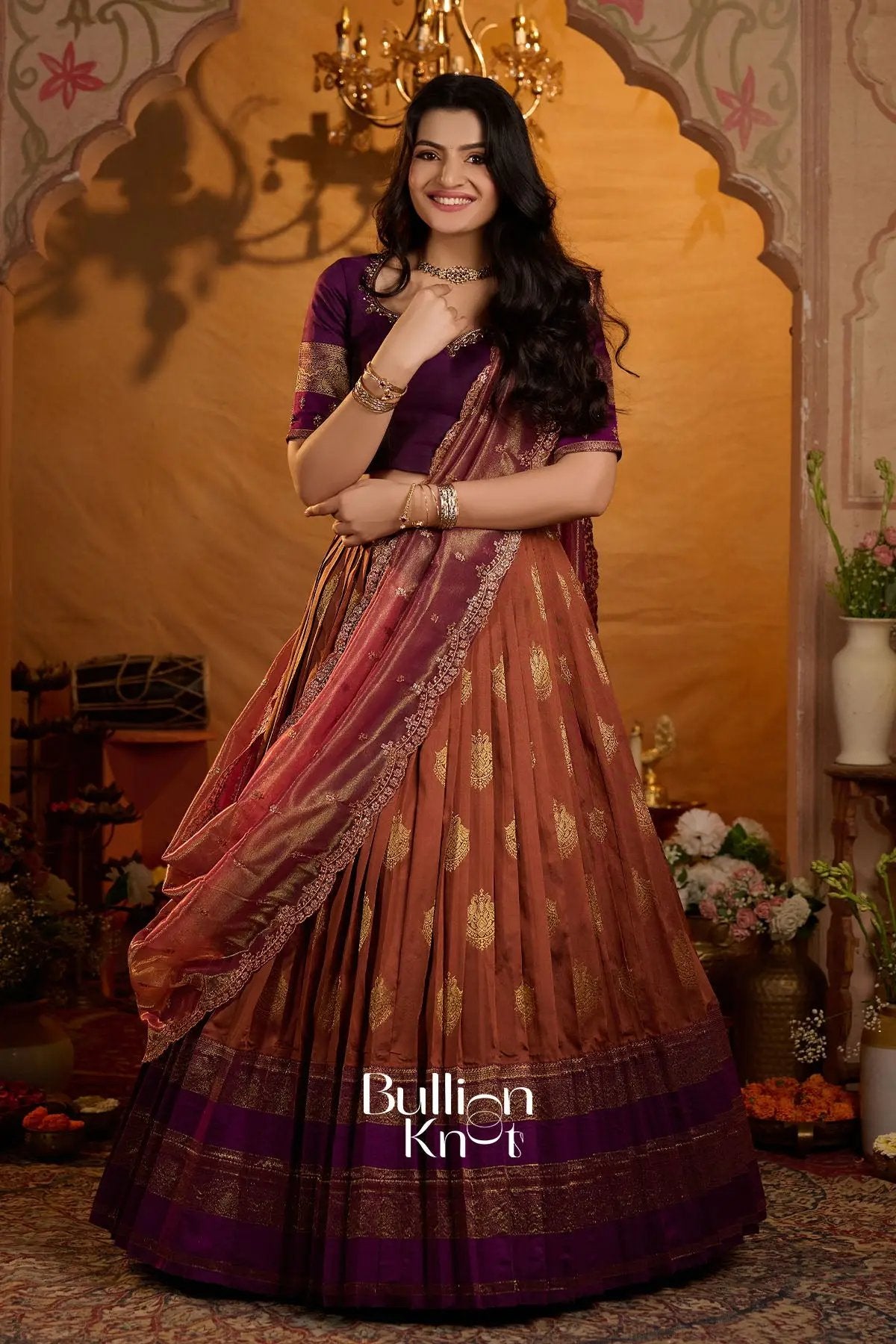
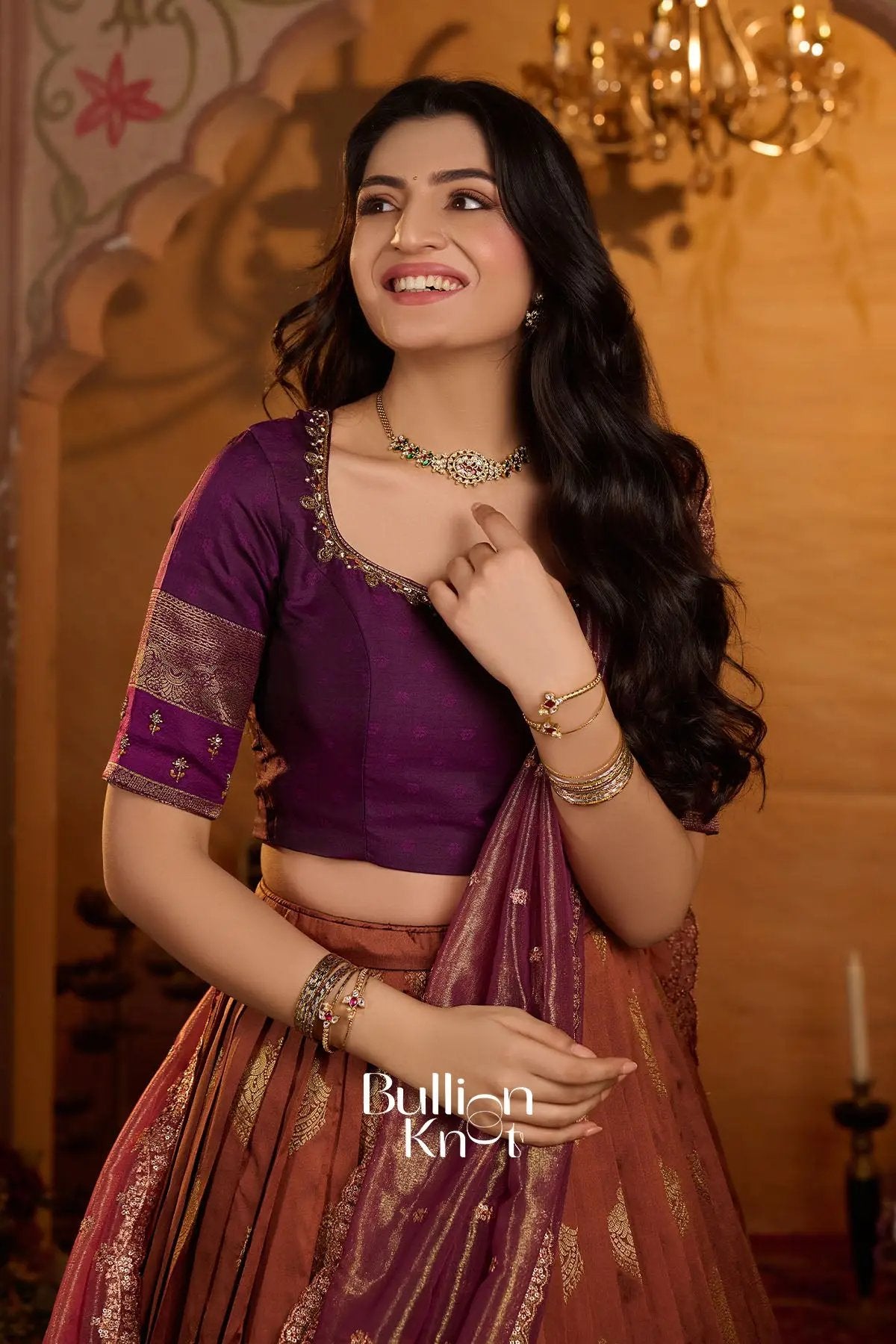
key Highlights
Fabric: Gadval Silk
Technique: Handwork
Model Height & Size: 5’8 Inch | Wearing XS
Occasion: Festival,Halfsaree function,Ceremony
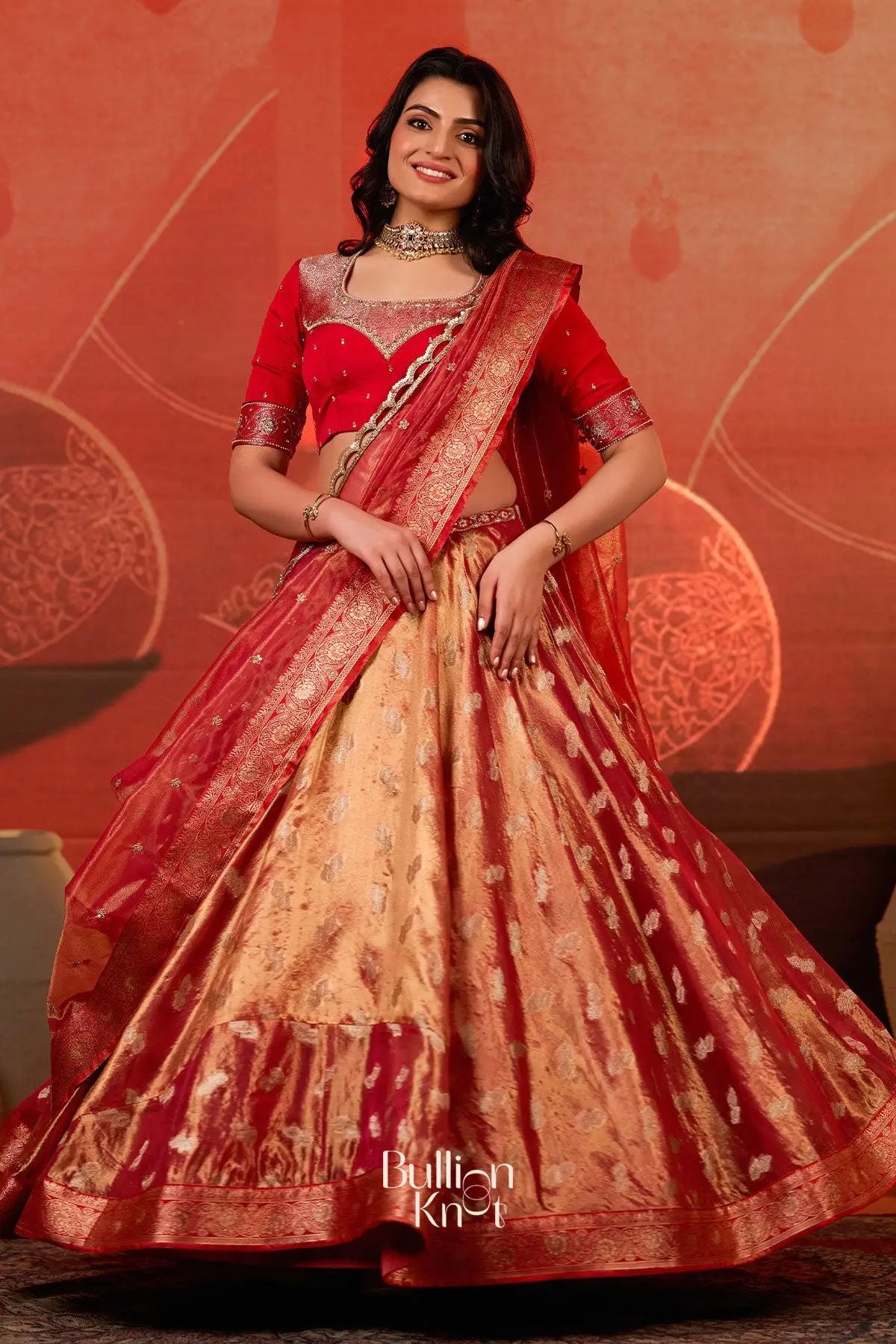
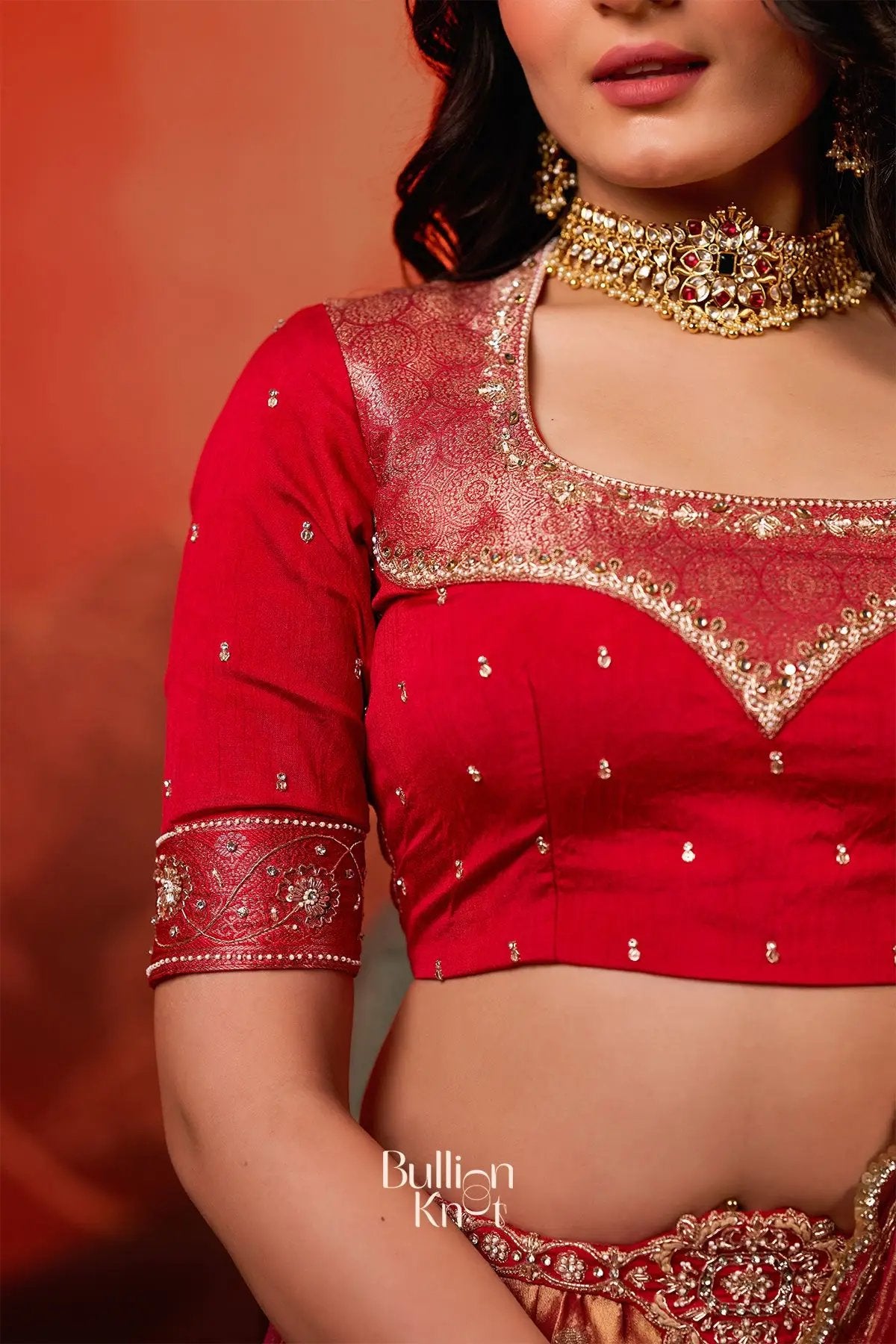
key Highlights
Fabric: Tissue Zari
Technique: Handwork
Model Height & Size: 5'8 Inches | Wearing S
Occasion: Reception, bridesmaid, family function
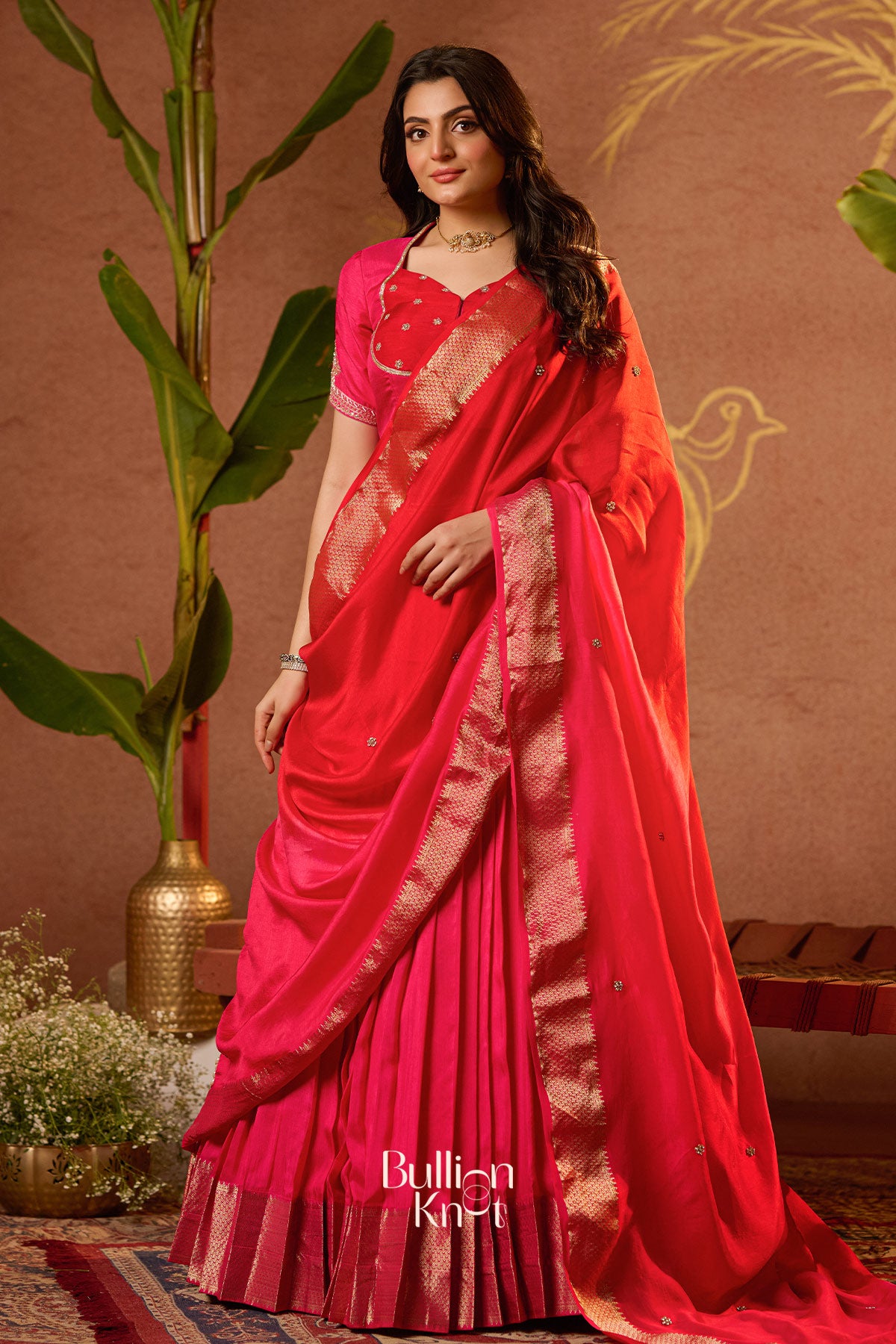
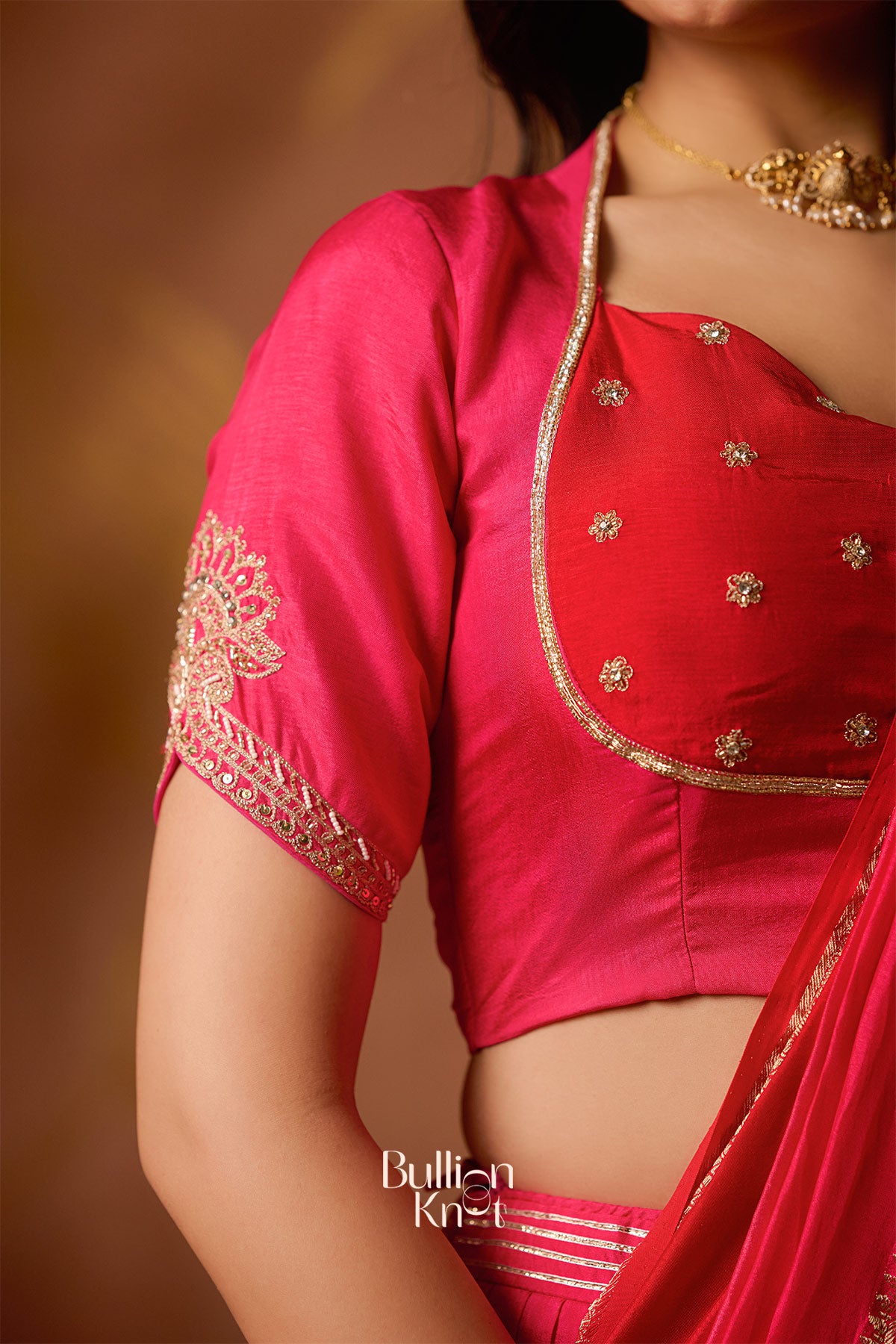
key Highlights
Fabric: Viscose Dola
Technique: Handwork (Marodi)
Model Height & Size: 5’8 inch | Wearing S
Occasion: Cultural festivals, pooja, family gathering
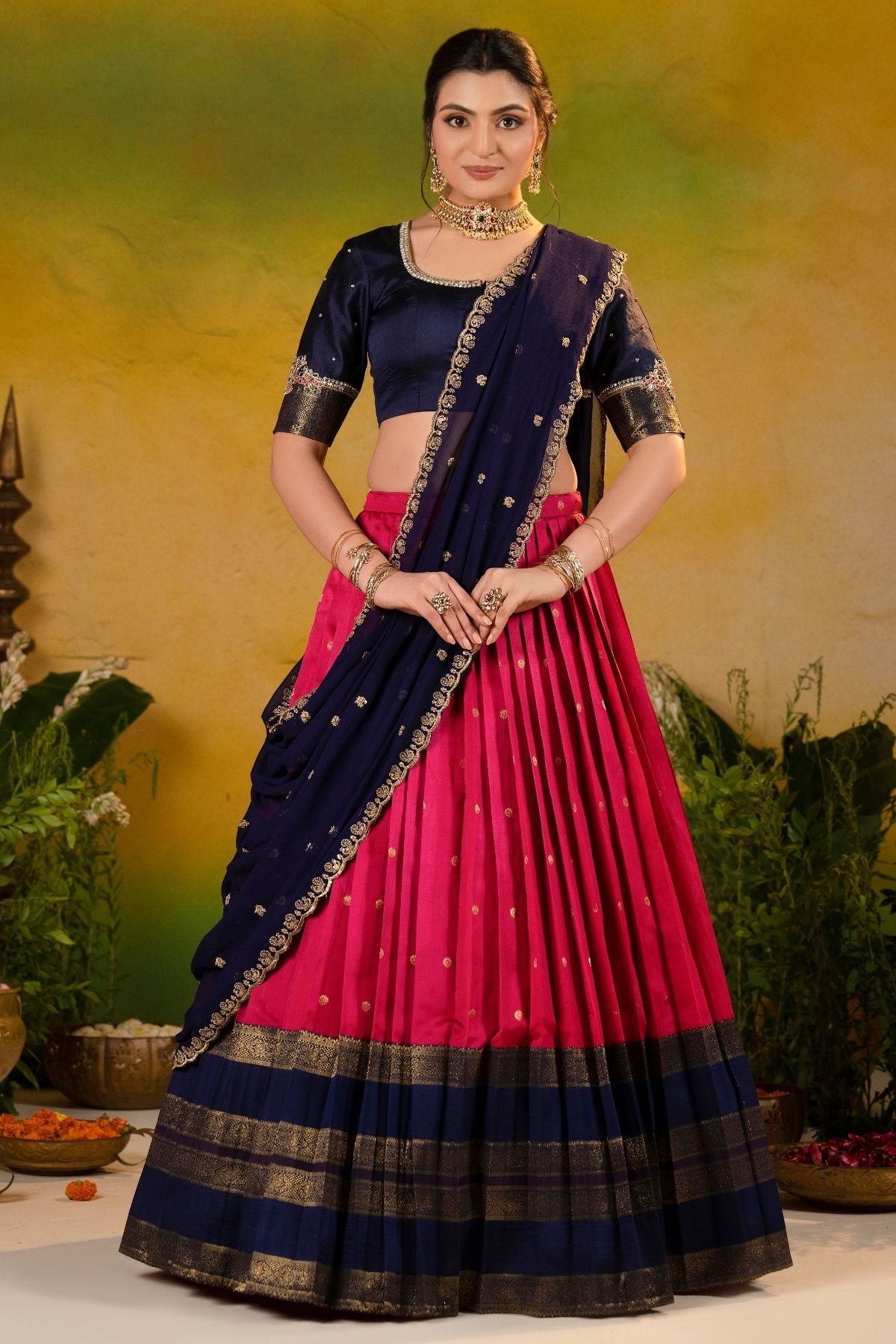
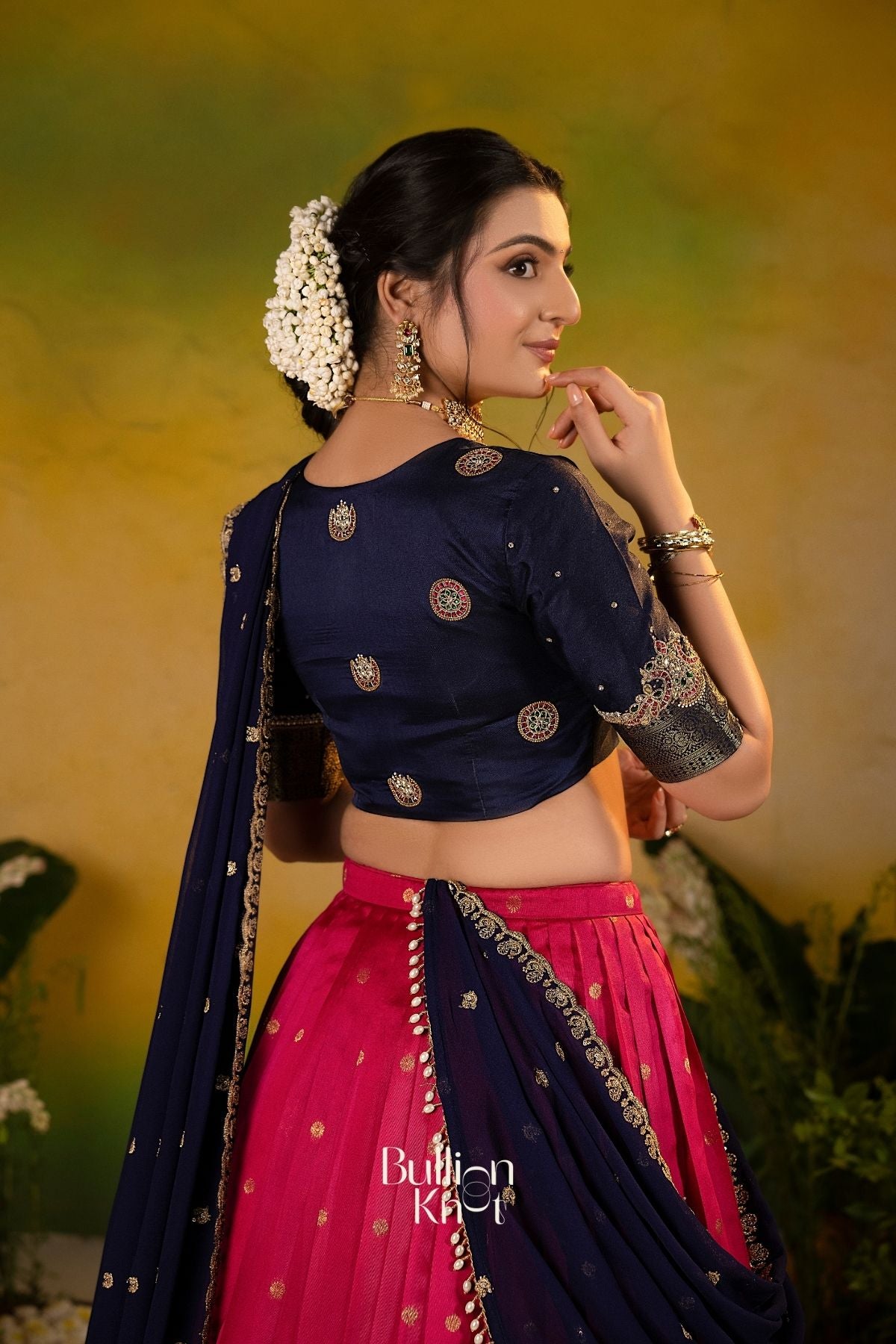
key Highlights
Fabric: Soft Silk
Technique: Handwork
Model Height & Size: 5'8 inches | Wearing S
Occasion: Festival, Bridemaids,Wedding
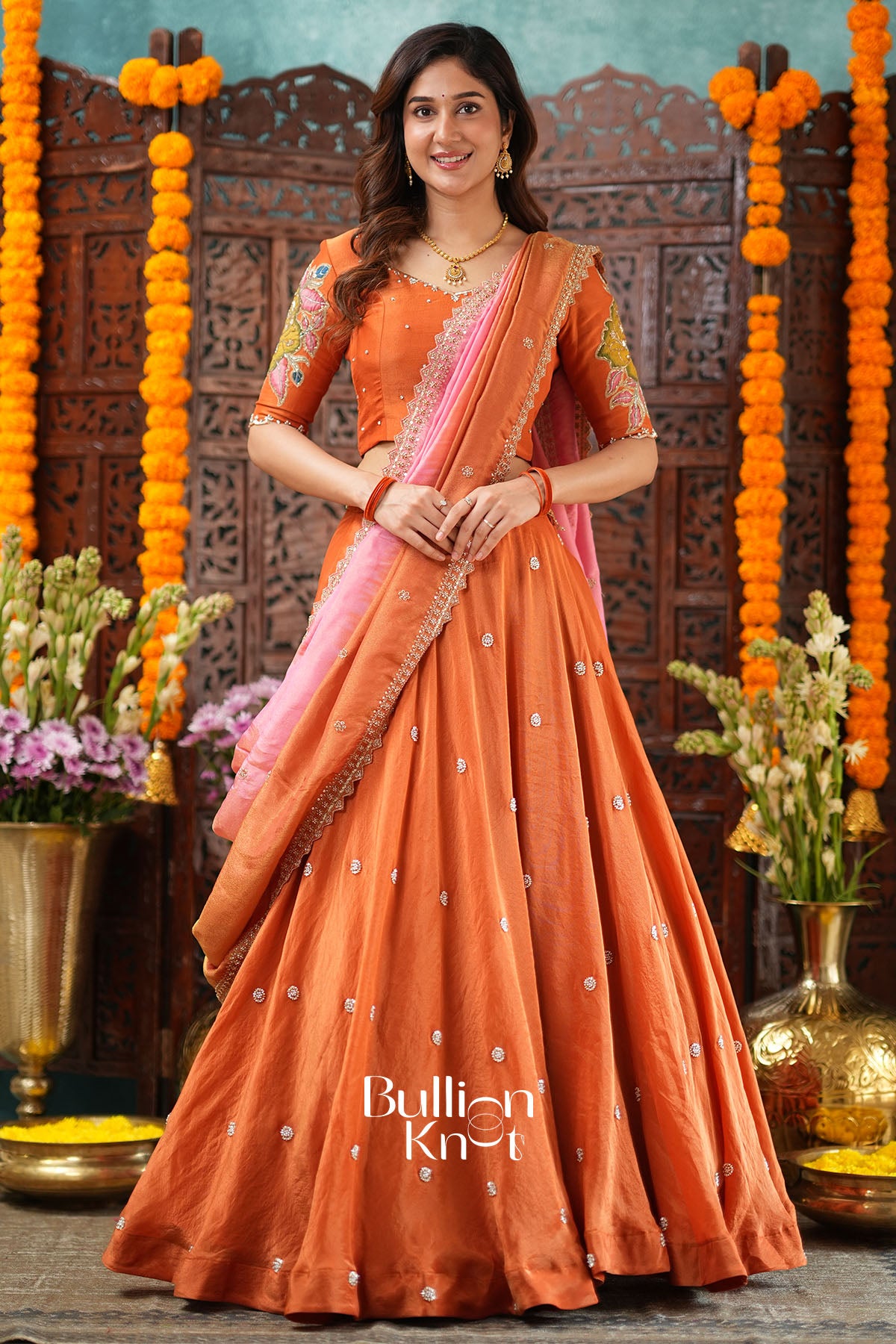
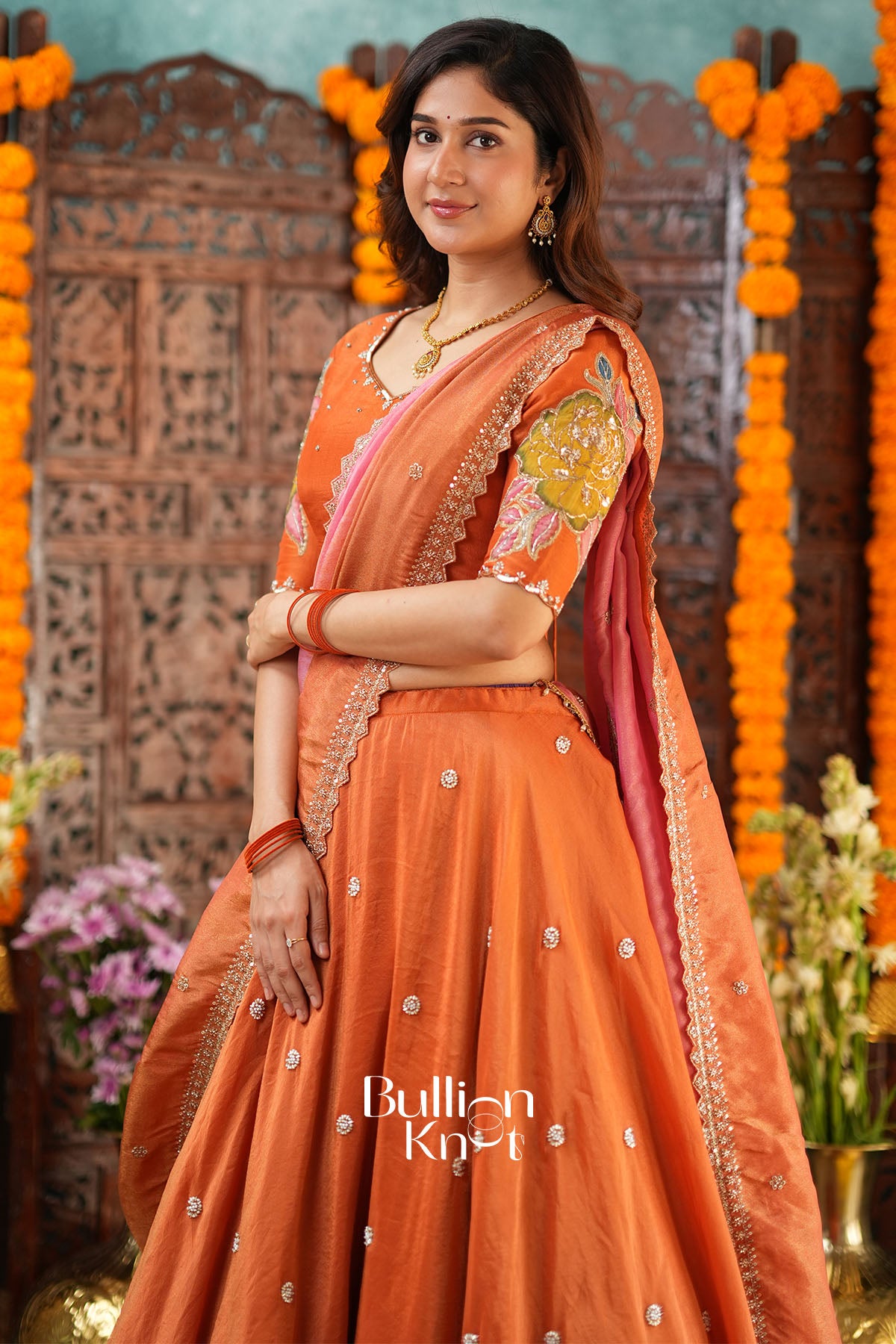
Reception Lehengas - Grand, Glamorous & Built for the Spotlight
The muhurtham is over. You've touched feet, accepted blessings, and smiled for a hundred photographs with relatives you see once every few years. Now comes the reception, and the rules of dressing change completely.
This is the function where you walk into your own party. The lighting is finally in your favour. The crowd is waiting for you, not the priest. Your lehenga for the wedding reception doesn't need to carry tradition on its shoulders tonight. It just needs to look extraordinary.
Reception lehengas have a very unique place in the bride's cupboard, and brides who treat them as a "quieter second outfit" almost always regret it. A reception lehenga for the bride is the boldest outfit statement of the entire wedding. The heavier needlework on it, bold shapes, and colour that would look pretty in the wedding album.
Before you decide to buy, here's everything you should know.
How is the reception lehenga unique?
While muhurtham lehengas give more importance to the ceremonial aspect, where silk material, colours, and weaving patterns hold their priority, lehengas for receptions are quite different from each other in many ways. In this case, the occasion is arranged in the evening and happens inside. The use of theatrical lights gives more importance to embellishments.
In case of receptions, lehengas usually prefer designs that are rich in embroidery patterns like zardozi, stonework, or sequins, because these fabrics tend to shine more than woven fabrics do. This is why a heavy embroidered lehenga South Indian reception looks so well; it catches light, adds depth in photographs, and instantly feels occasion-ready without relying only on colour. A well-chosen reception lehenga doesn't just complement the ceremony outfit; it becomes the look people remember most from the evening.
On the other hand, the shape of such lehengas is fashionable, while the colour combinations are brighter. Additionally, the volume of the skirt will be greater due to the fact that you'll be standing up for at least three to four hours.
In conclusion, a reception lehenga is much more complex.
Reception Lehenga Silhouettes
Silhouette determines the fabric, design to be done, and its appearance in photos. What type will be better for the reception lehenga in a South Indian wedding? An A-line or circular lehenga for reception function — both have their own qualities, choose accordingly.
A-Line
The A-line is fitted at the waist and flares downward in a clean, controlled manner. It works on most body types because the flare is gradual rather than dramatic. Under reception venue lighting, the structured fall of an A-line photographs incredibly well.
No awkward bunching, no fabric fighting the frame. If you want a lehenga that looks polished in every shot without much effort, this is it.
Circular Flare
A circular lehenga is pure drama. Maximum volume, maximum movement, the kind of skirt that photographs beautifully mid-motion, which is exactly why so many brides choose it for the reception rather than the muhurtham. The trade-off is fabric weight.
A circular cut needs a heavier fabric like tissue, silk, or Banarasi to hold its shape properly. In lighter materials, it tends to collapse. Get the fabric right, and this silhouette steals every photograph.
Mermaid Cut
Of the three silhouettes, the mermaid style is the trendiest one. It fits well until the hip and thigh areas, from which point it flares out in a dramatic way from the knees down.
It is a perfect choice to wear for full-length long photos and is best suited for larger-sized picture frames, so it can flare out easily. It is relatively easy for you to move around in a mermaid-style lehenga.
Trending Colours for Designer Reception Lehenga 2026
Red was the muhurtham colour. Now, it's time to dress how you dreamed of and want to.
Popular colours for reception lehengas in 2026 designer trends include dusty rose, dark wine, champagne gold, heavily embroidered ivory, and sage green. Bride-to-be reception dress colour trends for those coming from the southern part of India will be other colours apart from red.
Many are choosing colours that complement their muhurtham Kanjivaram rather than repeat it — in gold tissue lehengas, champagne organza, or even midnight blue.
Pastels work particularly well under warm venue lighting, which is most Indian reception venues. Ivory and gold photograph exceptionally well. Wine and deep plum read as sophisticated without being predictable. The reception lehenga colour for a South Indian bride often comes down to what the venue lighting looks like. Ask your photographer. Choosing the right lehenga for wedding reception often comes down to how the colour interacts with lighting, rather than just what looks good in-store.
Fabrics That Command a Room
Evening functions under venue lighting reward fabrics with sheen and structure. It is essential to choose the proper fabric as it not only enhances the effect of embroidery and helps maintain the silhouette throughout the day, but also adds to its luxurious appeal.
Fabrics such as Banarasi Silk and Banarasi Organza for reception lehenga help you achieve a luxurious texture that clicks well for pictures as a wedding lehenga, and is also for brides who prefer something in between traditional and contemporary designs. Velvet is an excellent choice for brides tying the knot in winter and having their evening receptions in a cool environment, while dark velvet with zardosi work looks stunning in amber light. If you want to add volume without increasing the weight, an overlay of organza can do wonders.
Stay away from materials that will droop after heating up. Georgette and chiffon may be difficult. Go for structure.
Reception Lehengas by Price Range
The reception lehenga market in India has many available options at multiple price points. You don't need to spend bridal-lehenga money to look like you did.
Under Rs. 7,999
You're looking at embroidered net, sequin work lehengas, and some organza options. The embroidery won't have the weight of a more expensive piece, but under reception lighting, a well-chosen design at this price point photographs beautifully. Explore our lehengas under ₹7,999 to find your perfect match.
Under Rs. 9,999
This is where selection genuinely opens up. Better fabric quality, heavier embroidery, and more considered silhouettes. A reception lehenga under Rs. 9,999 in India at this price point can look considerably more, especially if the embroidery placement is good and the skirt volume is right.
The truth is, venue lighting is forgiving. A Rs. 9,500 lehenga with good embellishment beats a Rs. 7,000 lehenga with sparse detail every single time in photographs.
Ready to Ship — For the Bride Who Plans Smartly
Wedding timelines are not flexible. The venue is booked, the caterer is confirmed, the priest has a date, and your lehenga needs to arrive on time, full stop. Bullion Knot's ready-to-ship lehenga collection is made for exactly this situation. No waiting on production, no anxiety about delays.
These pieces ship within days, which means you can finalise your reception look weeks after confirming your ceremony outfit without any added stress. At the end of the day, the right reception lehenga for bride balances comfort, lighting, and personal style because you'll be wearing it longer than any other outfit that day.
Answers You Are Curious About
1. What lehenga silhouette photographs best under reception venue lighting — A-line, circular, or mermaid?
A-line lehengas photograph the most consistently well. They fall neatly, don't overwhelm your frame, and look flattering from almost every angle. Circular lehengas look beautiful in twirl shots but need good lighting to show their volume. Mermaid styles are more fitted and stylish, but they can feel restrictive during long receptions.
2. Should a South Indian bride choose a Kanjivaram-inspired or net lehenga for the reception?
It really depends on the vibe you want. Kanjivaram-inspired lehengas feel more traditional and connect beautifully with the ceremony look. Net lehengas are lighter, easier to move in, and feel more modern. Many brides now mix both—like a silk skirt with a lighter dupatta—for comfort without losing that traditional richness.
3. What embroidery work — zardosi, sequin, or mirror — is trending for reception lehengas in South India?
There's no single winner right now. Zardosi is still loved for its rich, traditional finish. Sequins are popular because they catch light beautifully during evening functions. Mirror work is trending for a more contemporary look. Most brides are actually choosing a mix, keeping it balanced instead of going all-in on one style.
4. How heavy should a reception lehenga be for comfort through a 4–5 hour function?
Ideally, keep it between 3–5 kg. That's comfortable enough to move, sit, and dance without feeling exhausted halfway through the event. Heavier lehengas might look grand initially, but they can become tiring quickly, especially when you're constantly walking around and interacting with guests.
5. What colour reception lehenga works best when the bride wears red at the muhurtham ceremony?
Going for contrast works best. Shades like emerald green, royal blue, wine, or even soft pastels create a fresh look without repeating the ceremony vibe. Metallics like champagne or rose gold also photograph beautifully and feel modern while still looking bridal enough for a reception.
6. Is it appropriate for a South Indian bride to wear a non-traditional colour for her reception?
Yes, completely. Most brides stick to tradition for the ceremony, so the reception is where they experiment. Colours like pastel pink, lavender, champagne, or even navy are widely accepted now. As long as the outfit still feels festive and well-styled, non-traditional colours are no longer seen as unusual.
7. What is the price difference between a bridal lehenga and a reception lehenga at the same quality level?
At the same quality level, bridal lehengas are usually slightly more expensive because they tend to have heavier embroidery and more detailing. Reception lehengas focus more on comfort and movement, so they may use lighter work. The difference isn't drastic; it mostly comes down to how heavy and intricate the design is.