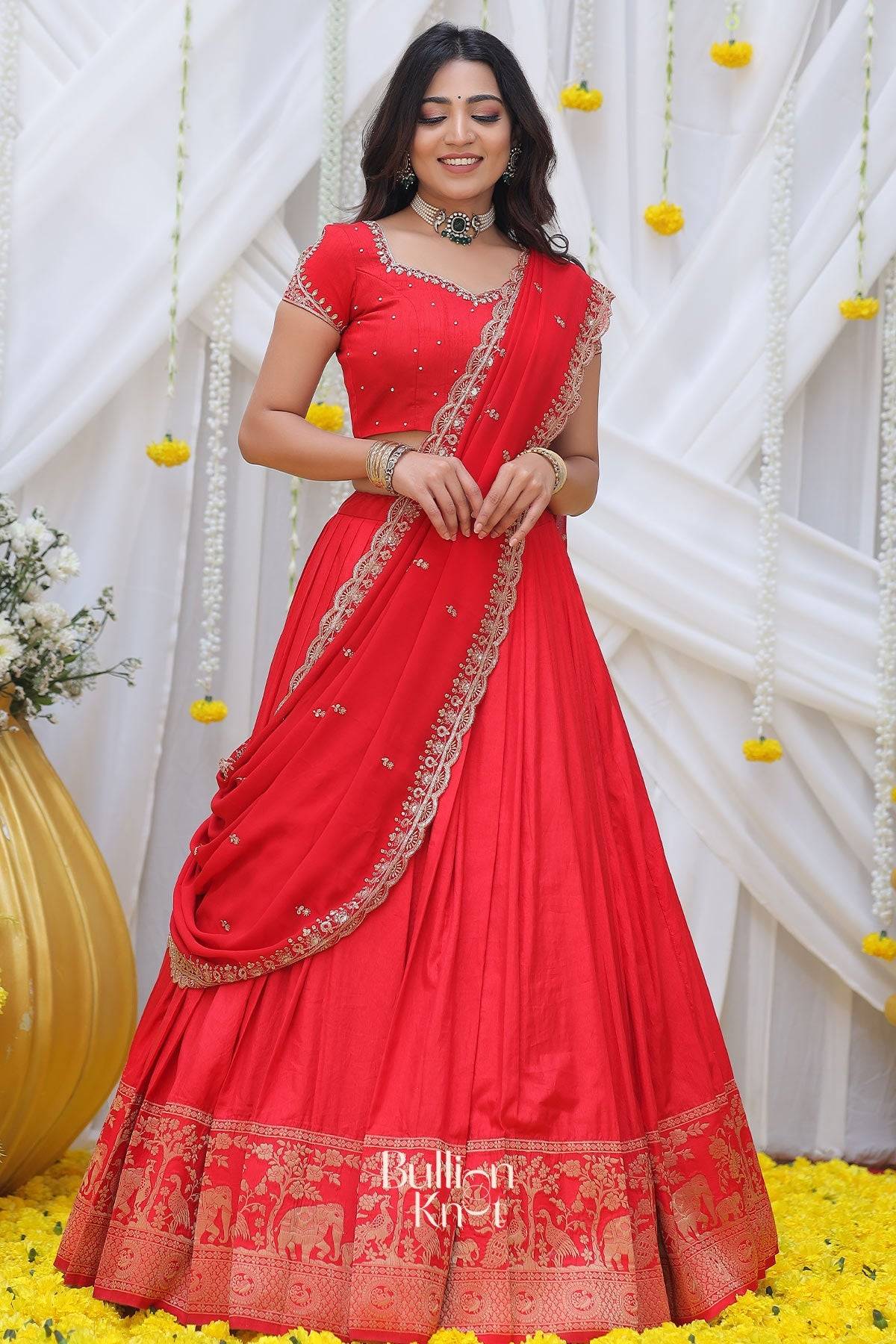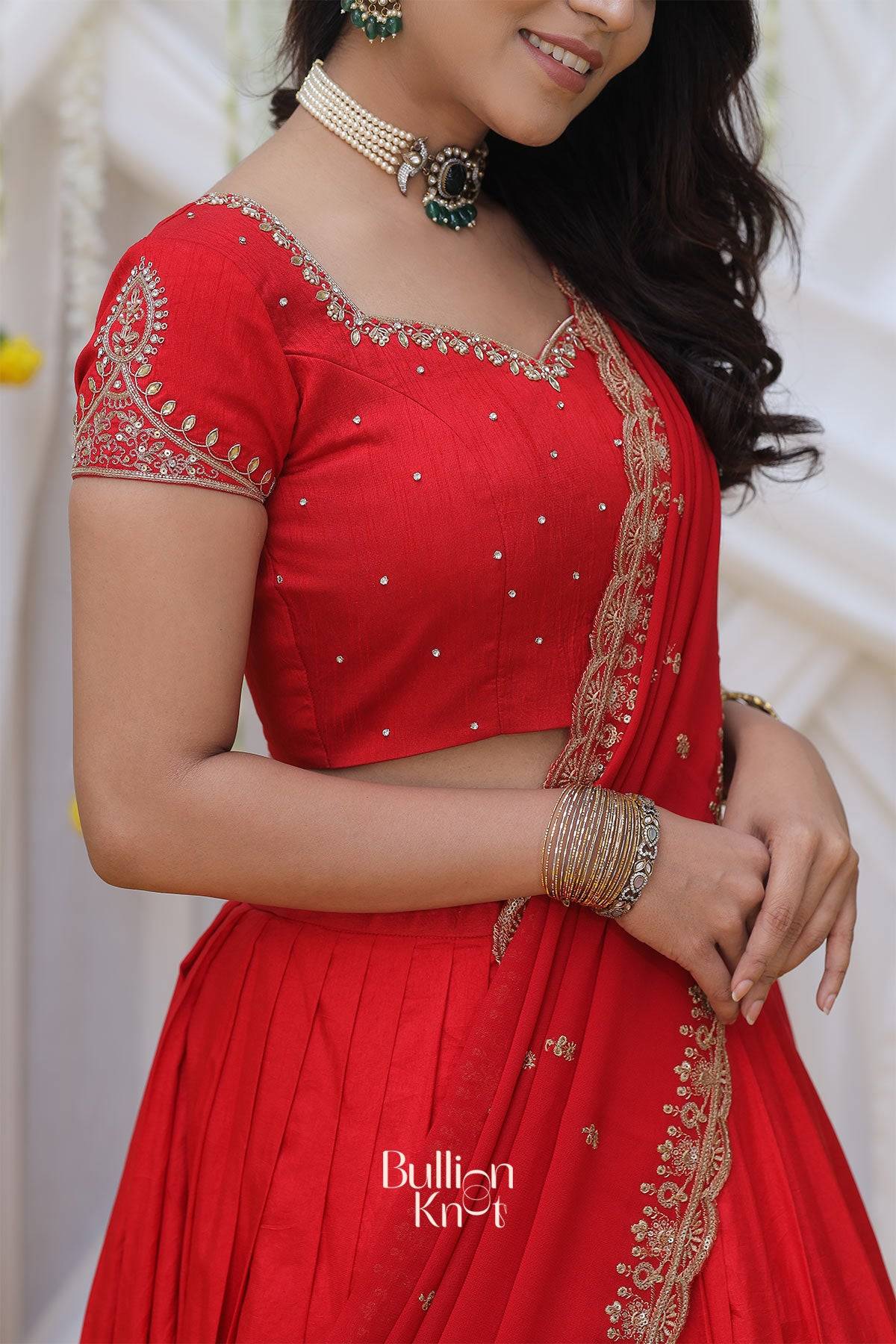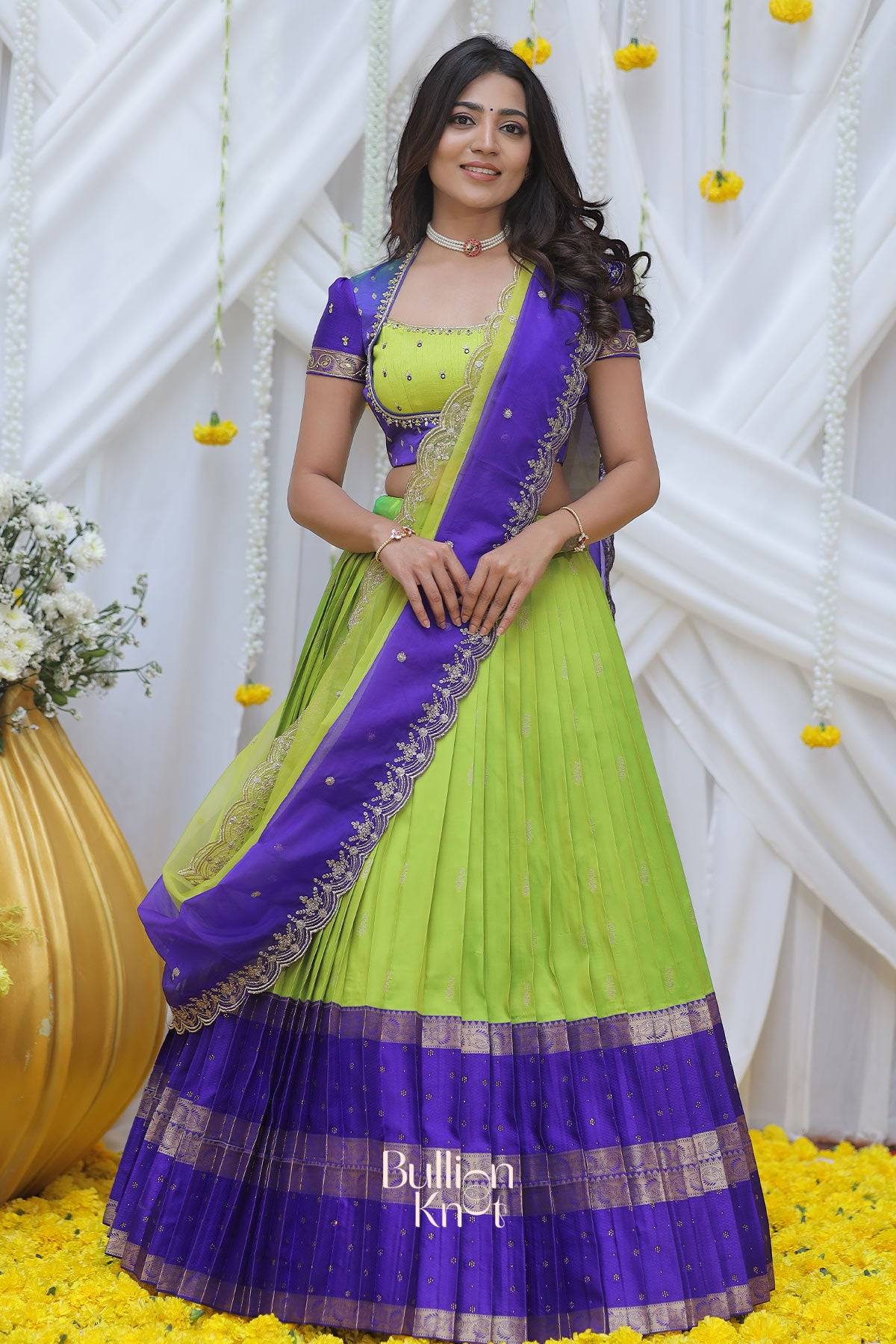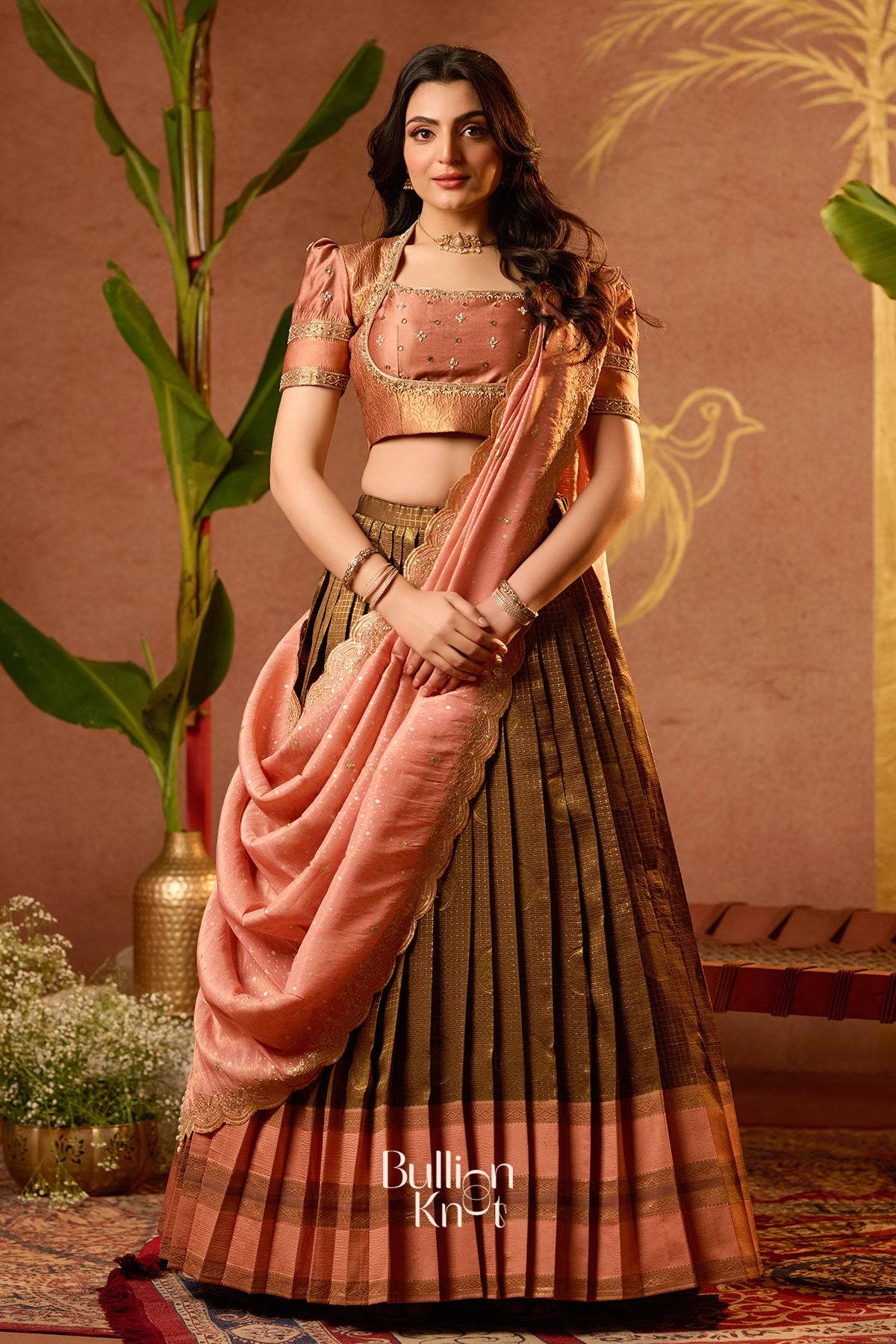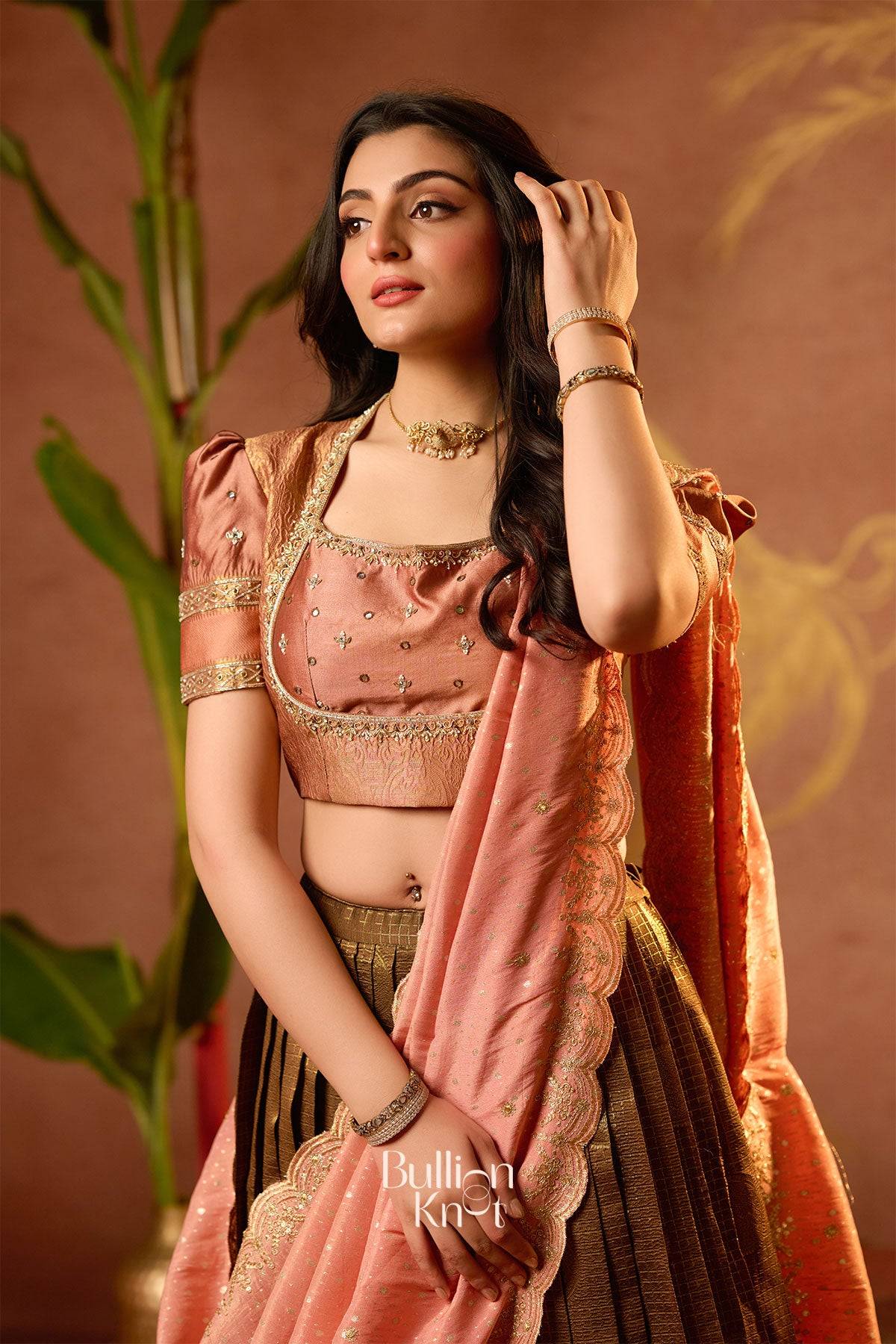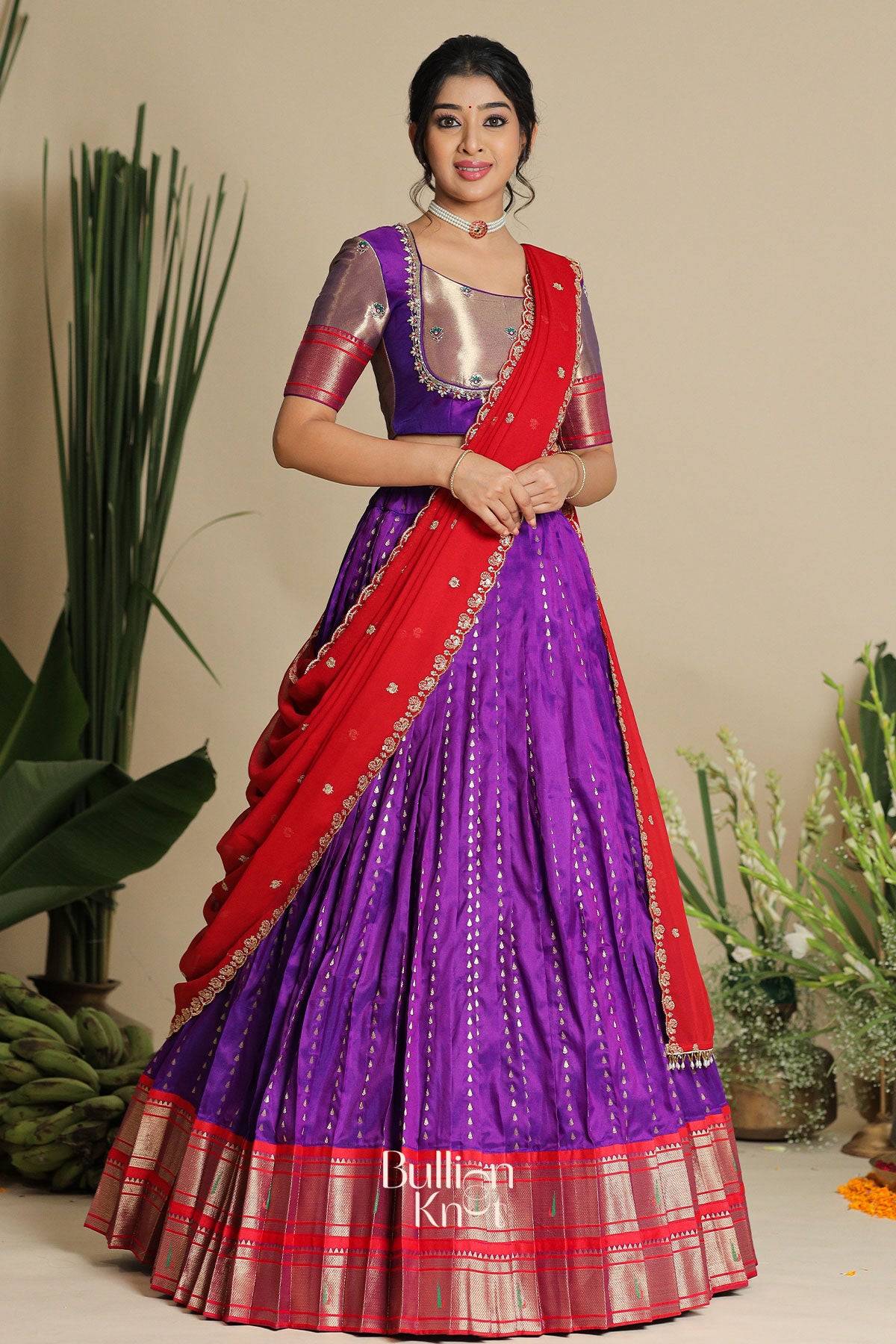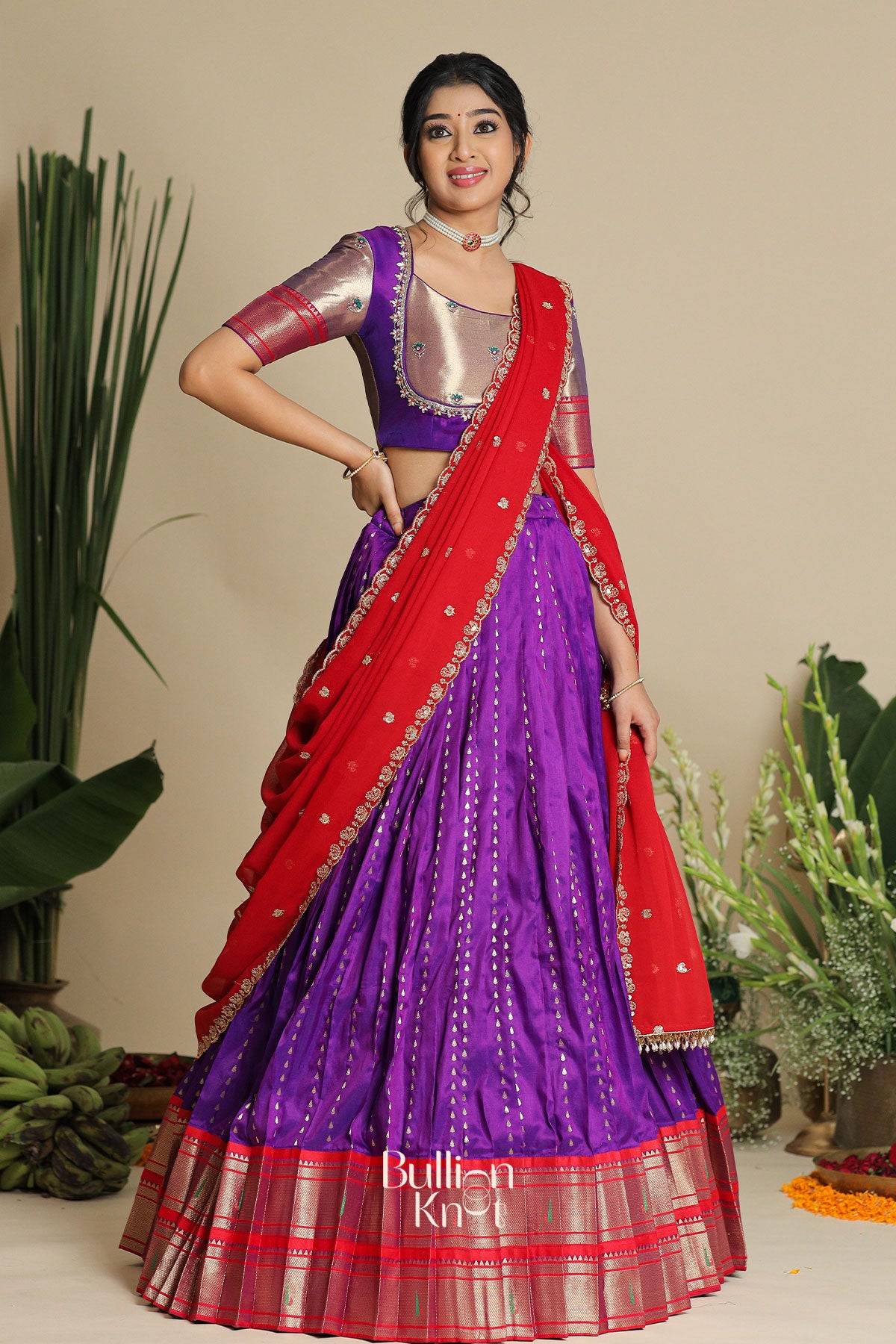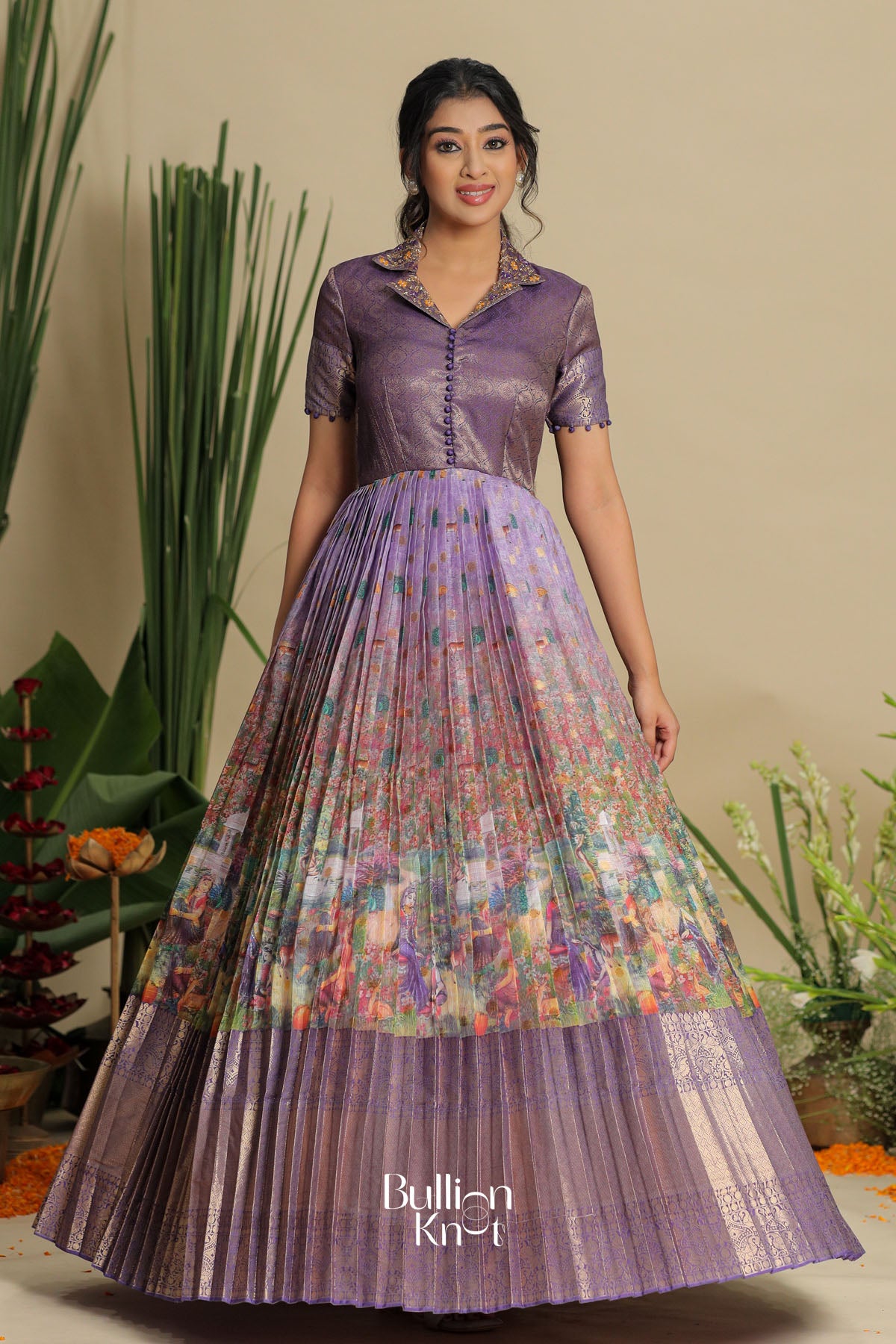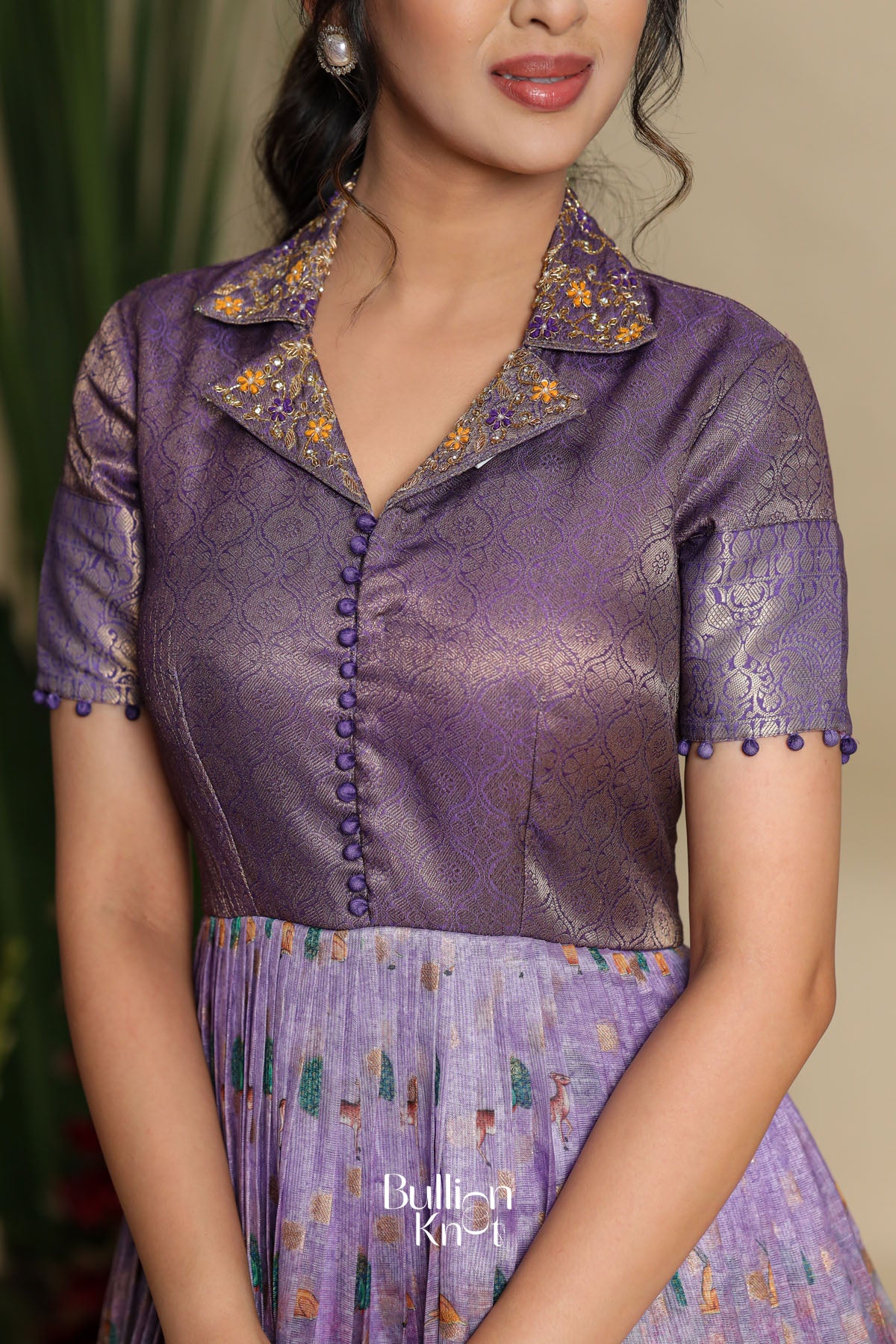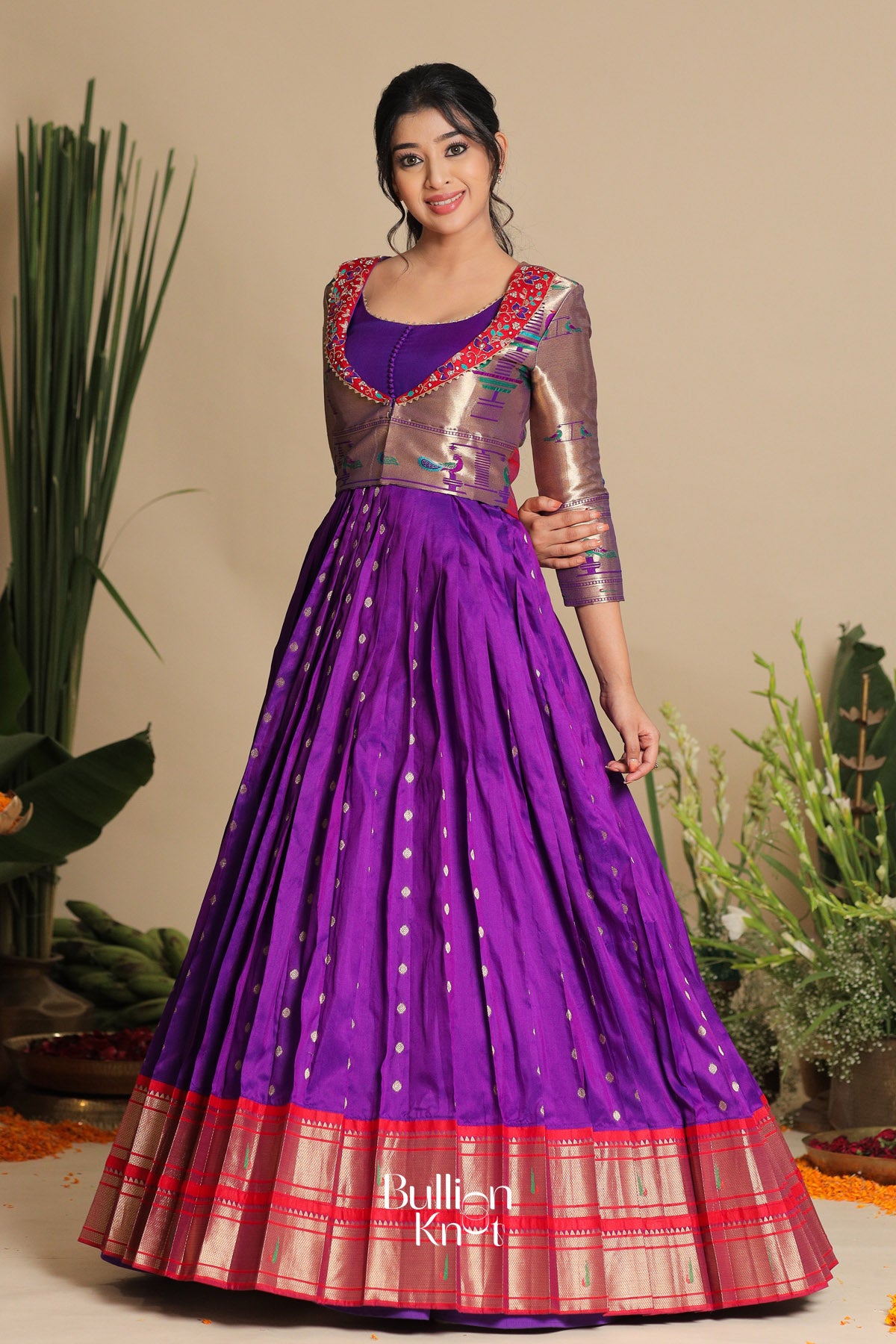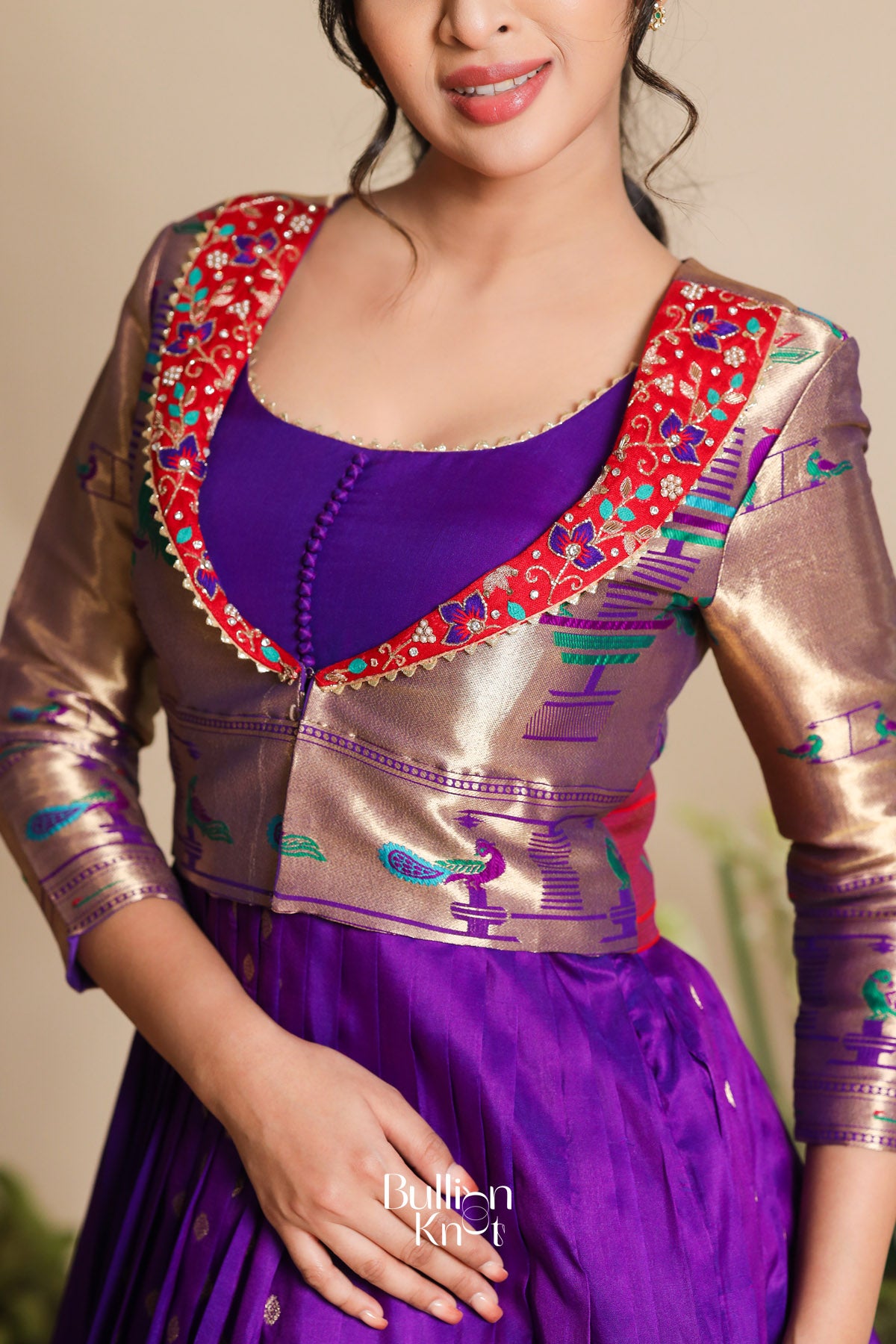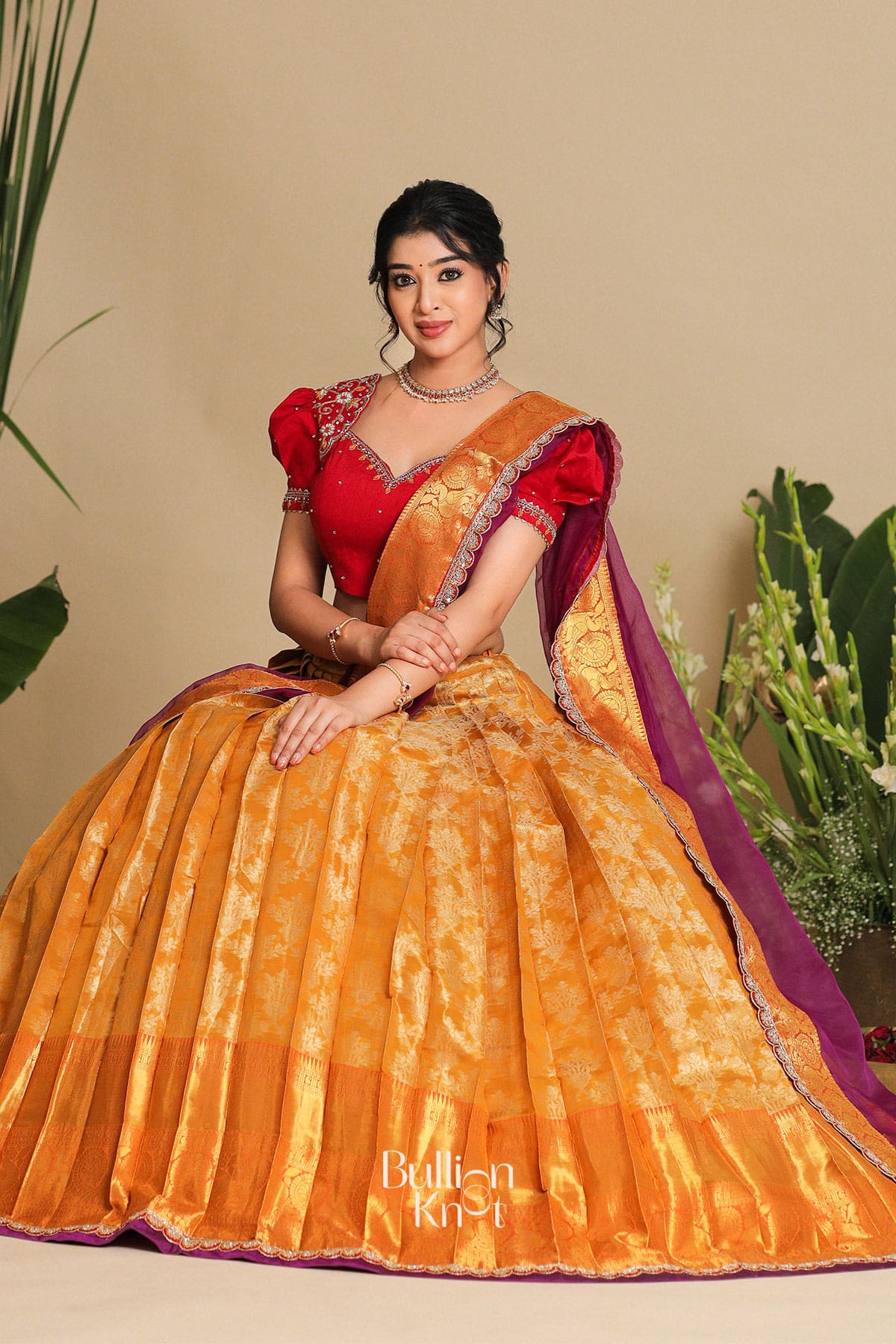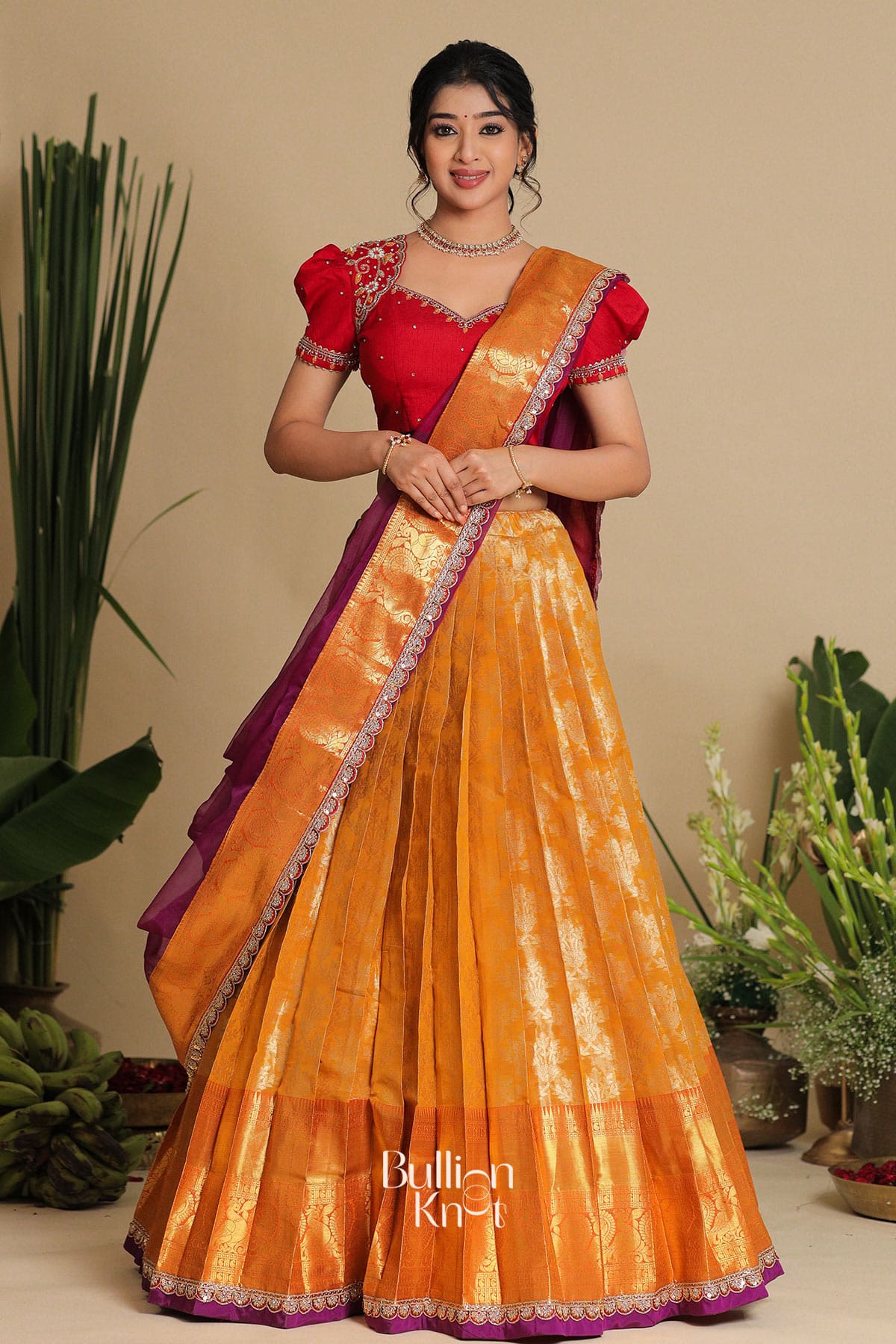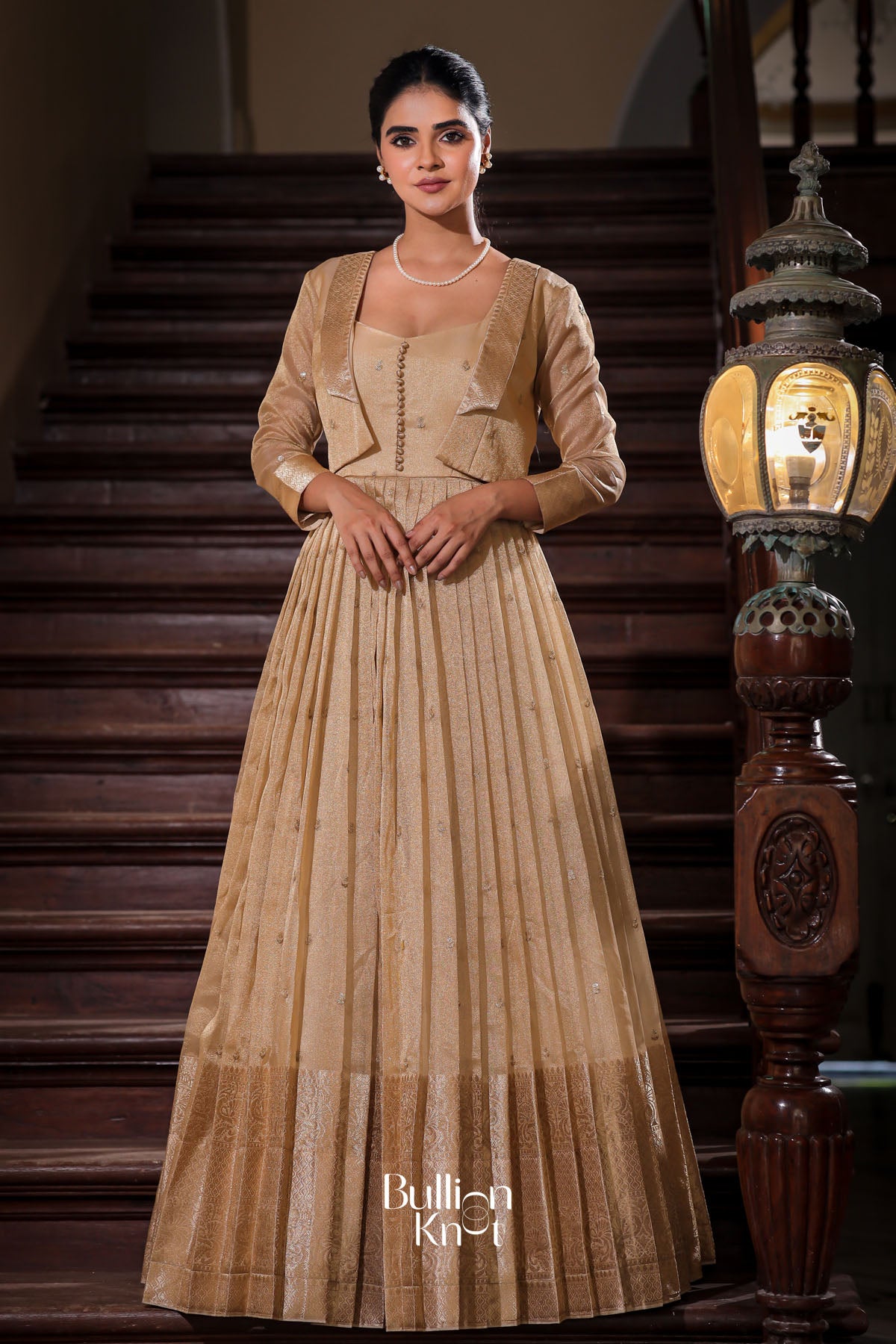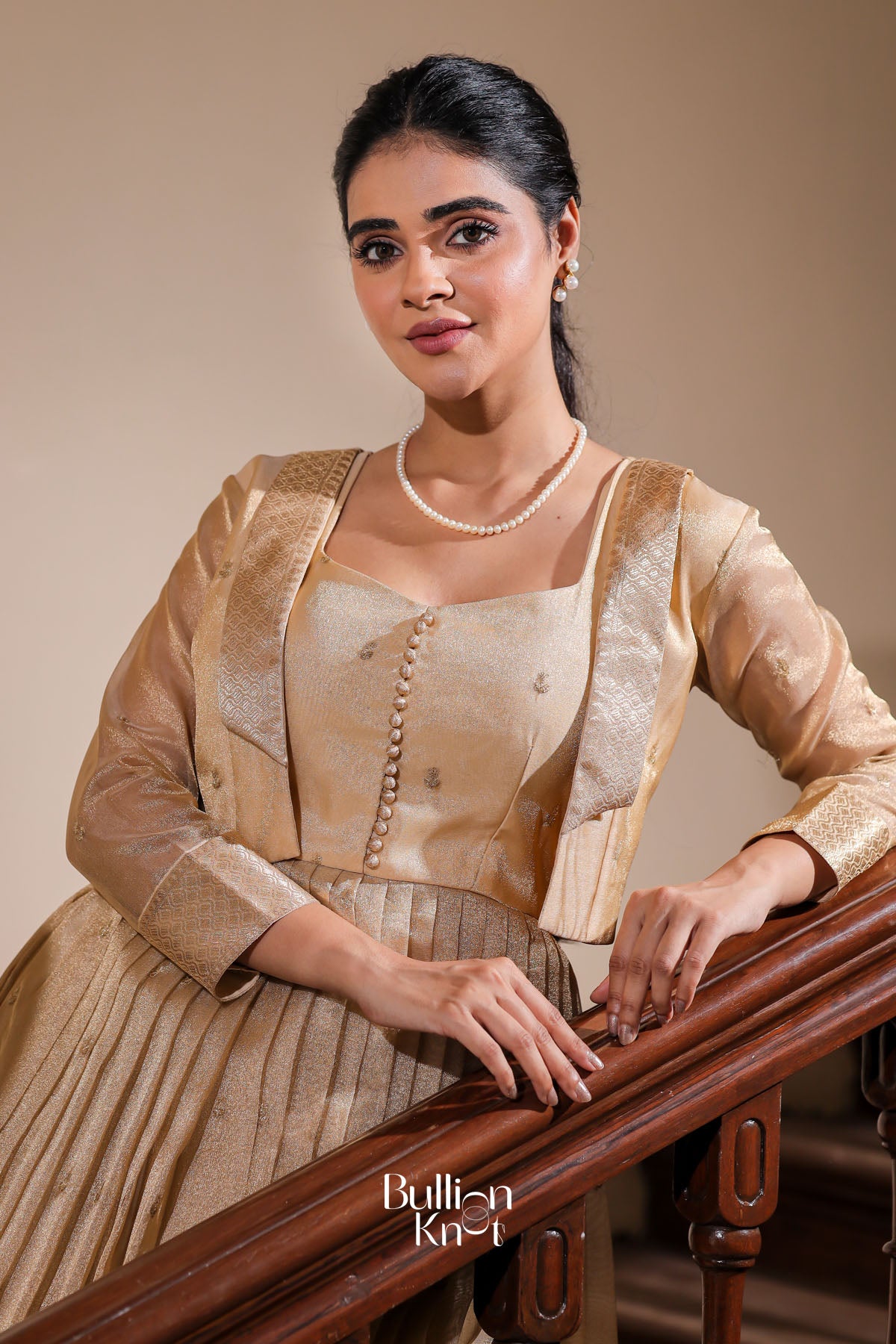


You know Banarasi lehenga is not a piece of cloth that makes you fashionable. Let me tell you the roots of the art of fabric belongs, in the ancient city of Varanasi, where weaving was not just a job or forced work to do. But it's a way of life where it came together to represent the culture and luxuriousness.
Banarasi fabrics were the commitment of royalty, rituals, and religious occasions. Before the invention of designer bridalwear, this was the hero product of special functions. Silk and zari were selected for their durability rather than their novelty.
Banarasi weaving is always based on the concept of legacy with richness. So without wasting more, let's discuss this banarasi lehenga weave guide where weaves, motifs & authenticity are explained.
The Birth of Iconic Design of Banarasi Weaving

In the earlier era of the Mughal empire, India permanently altered the Banarasi weaving. Indian craftsmanship with priceless aesthetics, which creates the brocades full of cultural and handwork. Banarasi textiles become the main objective of luxury and versatility when it blends with gold and silver zari into the kadhua weave banarasi lehenga.
The craft became known for its symmetrical designs, flowing creepers, and Mughal garden-inspired motifs. Dense flowers, jangla patterns, and kalga motifs found on Banarasi lehengas now are essentially remnants of the era's visual language.
These patterns endured because they were intensely meaningful and painstakingly created by hand, unlike fads.
The Human Story Behind Every Banarasi Lehenga

The work of talented artisans is the foundation of every Banarasi lehenga. Traditionally, weaving knowledge was taught at home rather than in formal institutions and was passed down through the generations.
The loom became an inheritance as well as a classroom. This consistency made sure that methods didn't vary as the times did.
It can take weeks or perhaps months to finish each Banarasi lehenga. The weaver interprets the design rather than just following it. Small inconsistencies in the weave are not defects; rather, they are indicators that human hands, not robots, sculpted the fabric. Banarasi lehengas get their spirit from this human presence.
Converting Into the Modern Wardrobe
The Banarasi lehenga changed with India's modernisation without losing its essence. Modern Banarasi lehengas are a reflection of evolving lives, whereas older models were heavier and more ceremonial. Traditional themes now coexist with lighter silks, sophisticated zari work, and modern styles.
The modern bride frequently chooses the tradition without rigidity and heritage with lightweight outfits. In response to the same, Banarasi lehnga have been reimagined by designers and their weavers with soft colours, adaptable drapes and wearable style.
The essential components are handwoven skills with intricate Banarasi motifs meaning and culturally made, which remain constant despite the same modifications.
Authenticity in the Present-Day Fashion
Banarasi workmanship has become more visible and vulnerable in the modern era. The difference between original and duplicate has become darker due to mass production, synthetic zari and machine-made attire.
These substitutes could be less expensive, but they don’t have the richness and same cultural important of how to identify authentic Banarasi lehenga.
The artisans are significant in preserving this legacy. Nowadays, genuine Banarasi fabric serves as a protest against quick fashion, reminding consumers that luxury requires patience, skill, and purpose.
The Art of Weaving and Techniques
The Banarasi lehenga's future depends on careful cooperation. In order to ensure fair processes which introduce modern aesthetics, designers now collaborate directly with weavers for originality. The Banarasi lehenga is becoming more popular worldwide without sacrificing the authenticity, but thanks to minimal experiments with colours, pattern scale and fabric texture.
Previously viewed as a threat, technology is now being viewed as a supporter. Artists can connect with ethical consumers with their work and share the stories outside of local marketplaces by using digital platforms. This popularity is crucial to inspiring the next generation to continue the profession.
What the Future Holds for Banarasi Weaving

The future of the Banarasi lehenga will include progression rather than novelty. Change and tradition may coexist as long as the fundamentals of handloom banarasi lehenga details weaving are maintained. Banarasi lehengas are often considered the future with the probable lighter, more adaptable and more comfortable, while still having the strong historical foundation.
As far as I know, weavers, designers and well known artists prioritize authenticity over convenience and that plays an important role in preservation. Every purchase turns into a decision between heritage and modernity.
The Legacy, Still Wear, Still Written

Lastly, I would like to say that the Banarasi lehenga is a current tradition rather than a past piece of fabric. It silently gets ready to grab your attention in the room of special events and functions.
Wearing a BullionKnot means embracing the original Banarasi lehenga price factors, which take part in a continuing narrative, showcasing the craftsmanship that values the artist.
The Banarasi lehenga stands motionless with purpose in a world where speed is the norm. By doing this, it serves as a reminder some stories are meant to be carefully woven, cherished and passed down over decades.
Banarasi Lehenga FAQs
1. How do I know if a Banarasi lehenga is authentic?
I'll tell you how to identify authentic Banarasi lehenga handwoven, slightly irregular in pattern, heavy due to silk and zari, and often carries a GI tag. The reverse side usually shows loose threads rather than a clean machine finish.
2. What is Kadhua weaving in Banarasi silk?
Kadhua weaving is a traditional handloom technique where each motif is woven separately, not embroidered later. This makes the design more durable, detailed, and time-intensive.
3. Are Banarasi lehengas too heavy to wear?
Traditional Banarasi lehengas can be heavy, but modern versions use lighter silks and refined zari, making them comfortable for long wear without losing their richness.
4. Why are Banarasi lehengas expensive?
They are expensive because they are handwoven using pure silk, real or tested zari, and require weeks or months of skilled artisan work.
5. How long does a pure Banarasi lehenga last?
With proper care, a pure Banarasi lehenga can last several decades and is often passed down as a family heirloom.